
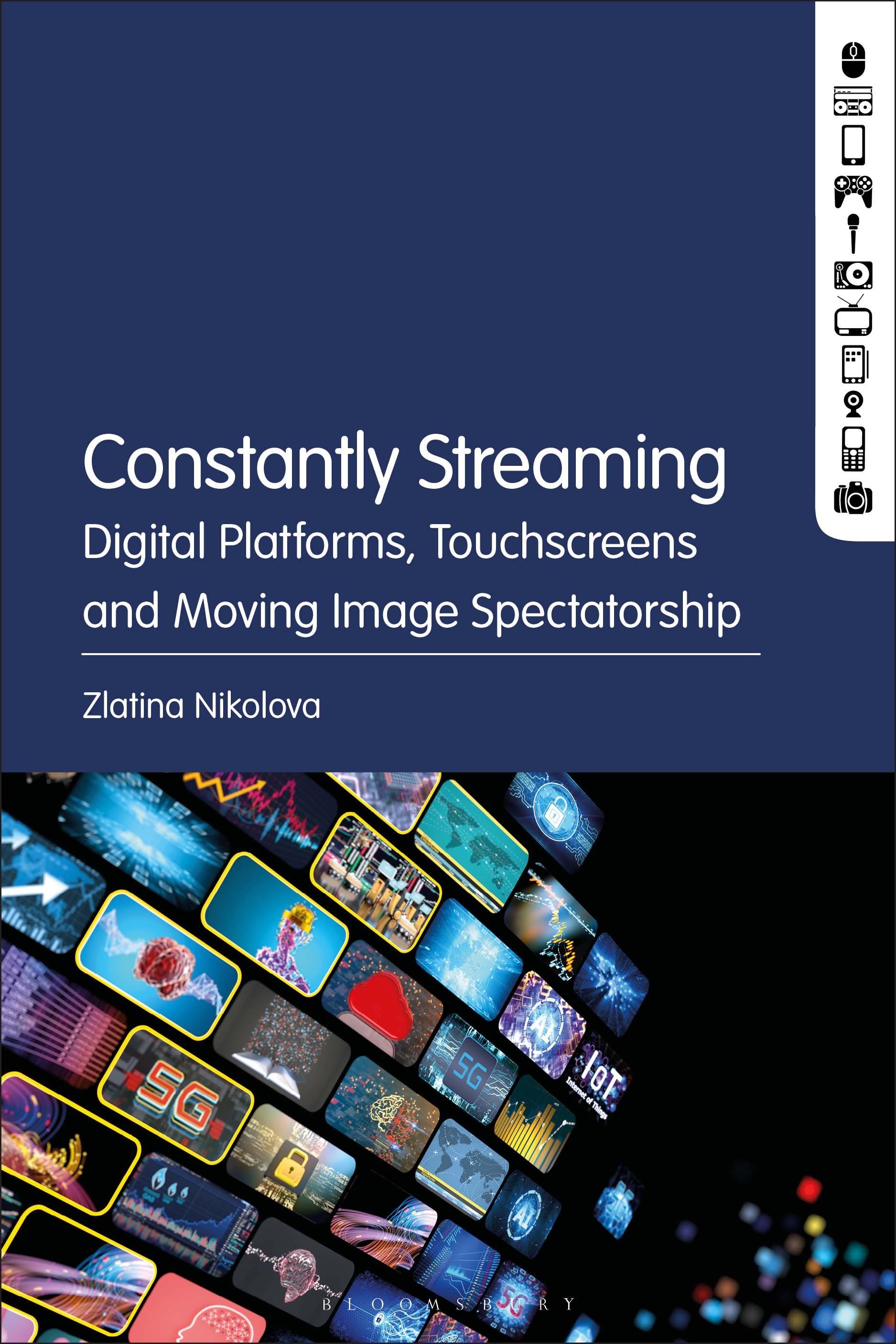
Constantly Streaming: Digital Platforms, Touchscreens and Moving Image Spectatorship explores some of the core hardware and software that enable contemporary moving image spectatorship, extending its discussion to the technological, the artistic, and the social.
Drawing on the histories of film spectatorship, affect theory, and the mechanical inception of recorded moving image, this book reflects on the ways our engagement with the medium has shifted following the advent of digital technologies, streaming, and handheld touchscreen devices. It asks questions around engagement, cinephilia and technophilia, loneliness and the social experience of cinema culture, taste, and algorithms, seeking to redefine our relationship to the moving image.
Mapping out the contexts of early film spectatorship and Western cinema cultures, this volume compares the historically social experience of the cinema and film spectatorship as a whole to the contemporary solitary activities encouraged by streaming and image and video-based social media. It demonstrates how these hardware and software innovations prompt new interactions and engagement, fuel problematic habits and excessive media consumption, and structure our viewing experience and expectations of film and TV, as well as social media. Moreover, it demonstrates that the notion of the moving image has become an inseparable part of contemporary culture and society, expanding its functions and applications and redefining its own ontology. As a result of its constant presence on devices, the moving image is now a continuous stream of information and entertainment that surrounds us, imbuing our existence with its constant digital flicker.
Drawing on the histories of film spectatorship, affect theory, and the mechanical inception of recorded moving image, this book reflects on the ways our engagement with the medium has shifted following the advent of digital technologies, streaming, and handheld touchscreen devices. It asks questions around engagement, cinephilia and technophilia, loneliness and the social experience of cinema culture, taste, and algorithms, seeking to redefine our relationship to the moving image.
Mapping out the contexts of early film spectatorship and Western cinema cultures, this volume compares the historically social experience of the cinema and film spectatorship as a whole to the contemporary solitary activities encouraged by streaming and image and video-based social media. It demonstrates how these hardware and software innovations prompt new interactions and engagement, fuel problematic habits and excessive media consumption, and structure our viewing experience and expectations of film and TV, as well as social media. Moreover, it demonstrates that the notion of the moving image has become an inseparable part of contemporary culture and society, expanding its functions and applications and redefining its own ontology. As a result of its constant presence on devices, the moving image is now a continuous stream of information and entertainment that surrounds us, imbuing our existence with its constant digital flicker.
Pay easily by card, Klarna, Apple Pay or Google Pay. Not happy? You always have a 14-day money-back guarantee. Read more in our terms. If you have any questions, email us at hello@memmo.org.
Memmo makes studying easier – wherever you are in the world. We bring your course books and smart study tools together in one place: summaries, quizzes, podcasts and flashcards. Plus Ted, your study buddy who answers anything you wonder. Over 50,000 students already study here – built to help you learn faster and stress less.