
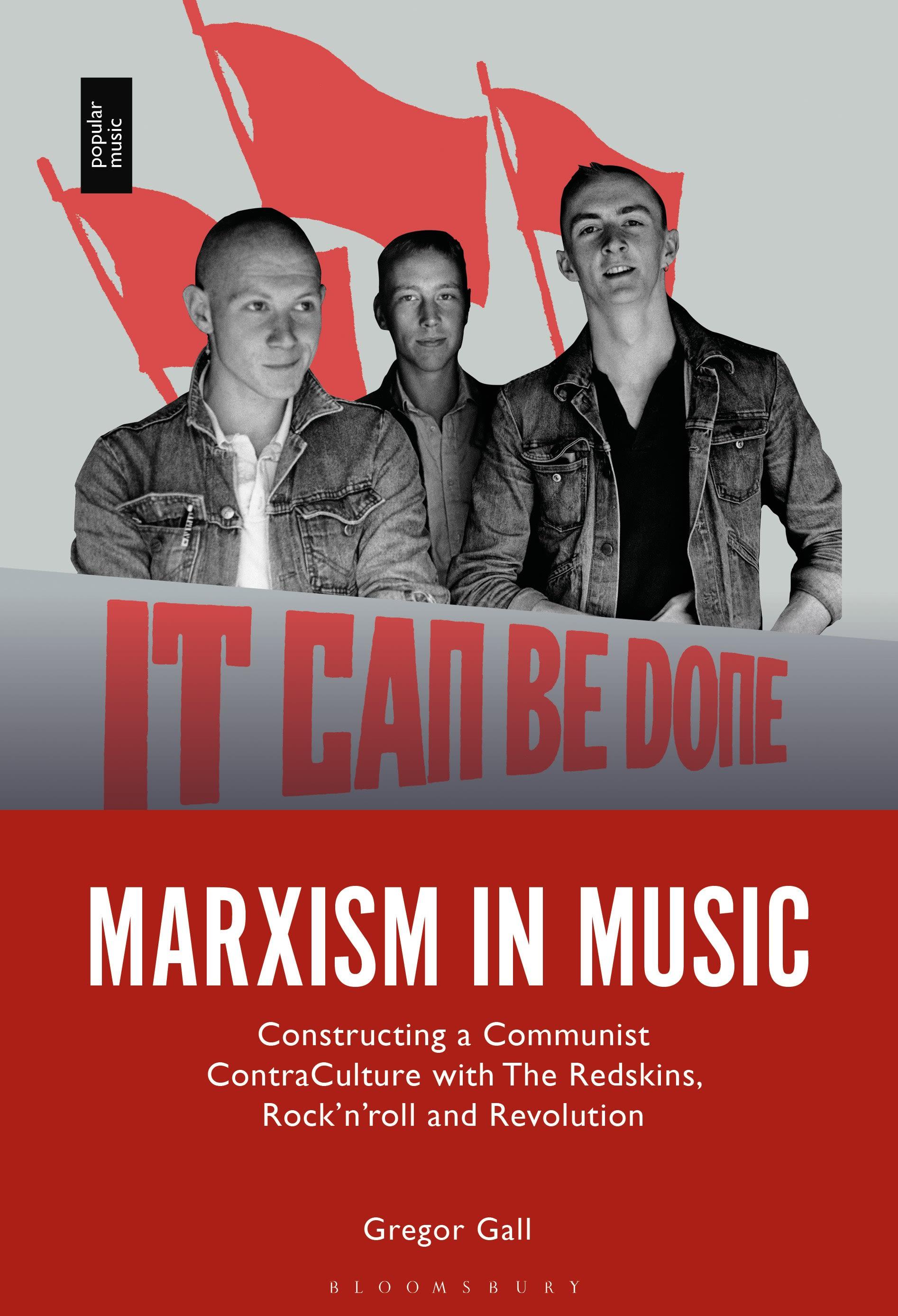
'80s British alternative band, The Redskins, are a case study for examining the relationship between music, politics and revolution and the development of a contra-culture.
In Marxism in Music: Constructing a Communist Contra-Culture with The Redskins, Rock'n'roll and Revolution, Gregor Gall examines how The Redskins, so-called for their skinhead aesthetics and commitment to a socialist ideal, were a deliberately political band and built a counter-hegemony through their music and activism.
At the height of Thatcherism in Britain, The Redskins were aligned with the politics of the Socialist Workers Party, though the party did not accept their idea of that a working-class culture could exist. Despite resistance and contradiction, The Redskins created stirring and danceable music that introduced young people to socialist politics, playing over 250 gigs between 1982 and 1986, of which one quarter were benefit gigs for, as an example, striking miners.
Featuring a foreword by Redskins bass player Martin Hewes this book analyses the band's political intentions, interpersonal and inter-party tensions and the outcomes of their ideological, political and creative choices by drawing upon interviews with Hewes, other musicians like Billy Bragg, and the band's followers.
The book uses as a comparison another left-wing band of the same period, Easterhouse, to tease out how and why The Redskins were and are influential amongst a certain milieux and how going against the grain, even among comrades, made for the group's particular contribution to music culture and politics.
In Marxism in Music: Constructing a Communist Contra-Culture with The Redskins, Rock'n'roll and Revolution, Gregor Gall examines how The Redskins, so-called for their skinhead aesthetics and commitment to a socialist ideal, were a deliberately political band and built a counter-hegemony through their music and activism.
At the height of Thatcherism in Britain, The Redskins were aligned with the politics of the Socialist Workers Party, though the party did not accept their idea of that a working-class culture could exist. Despite resistance and contradiction, The Redskins created stirring and danceable music that introduced young people to socialist politics, playing over 250 gigs between 1982 and 1986, of which one quarter were benefit gigs for, as an example, striking miners.
Featuring a foreword by Redskins bass player Martin Hewes this book analyses the band's political intentions, interpersonal and inter-party tensions and the outcomes of their ideological, political and creative choices by drawing upon interviews with Hewes, other musicians like Billy Bragg, and the band's followers.
The book uses as a comparison another left-wing band of the same period, Easterhouse, to tease out how and why The Redskins were and are influential amongst a certain milieux and how going against the grain, even among comrades, made for the group's particular contribution to music culture and politics.
Pay easily by card, Klarna, Apple Pay or Google Pay. Not happy? You always have a 14-day money-back guarantee. Read more in our terms. If you have any questions, email us at hello@memmo.org.
Memmo makes studying easier – wherever you are in the world. We bring your course books and smart study tools together in one place: summaries, quizzes, podcasts and flashcards. Plus Ted, your study buddy who answers anything you wonder. Over 50,000 students already study here – built to help you learn faster and stress less.