
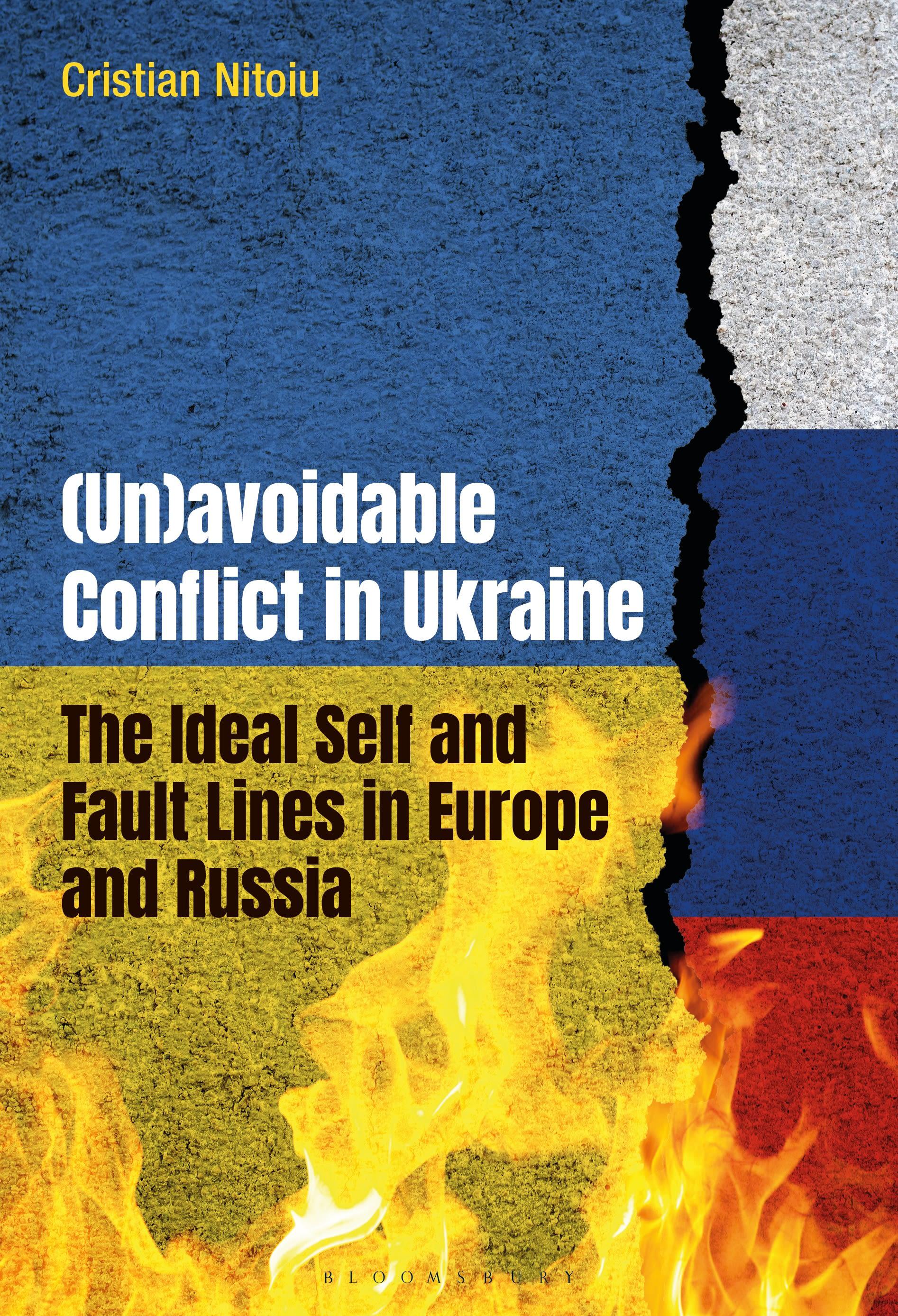
Taking a conceptual approach to European-Russian relations in the post–Cold War era, this book traces how each side's "ideal self" came into conflict with "fault lines" in international politics.
Russia's 2022 full-scale invasion of Ukraine is not only a symptom of conflict taking over the European continent but also a point of no return that will be difficult to roll back. Could the state of conflict on the European continent have been avoided?
To understand the nature and evolution of conflict with Russia, this book presents a theoretically informed discussion of the way relations between the European Union (EU) and Russia deteriorated beyond repair during the more than three decades since the collapse of the Soviet Union. First, the book develops the concept of ideal self of states and international organisations like the EU, which posits that a series of ideal perceptions about how the self should act in the world order drives the behaviour of states and their policymakers. Second, the book turns to the study of fault lines, or spaces of divergence in the world order that harbour the potential for conflict.
With these two theoretical toolkits, the book shows how leaders in the EU and Russia, by February 2022, came to view conflict as a feasible, preferable, and possibly the only option available to them. Even though neither the EU nor Russia had desired conflict, both made little effort to avoid it. As a result, the European continent has sleepwalked into conflict, with the potential for that conflict to spill over from Europe and escalate beyond a point of no return between the West and its global challengers.
Russia's 2022 full-scale invasion of Ukraine is not only a symptom of conflict taking over the European continent but also a point of no return that will be difficult to roll back. Could the state of conflict on the European continent have been avoided?
To understand the nature and evolution of conflict with Russia, this book presents a theoretically informed discussion of the way relations between the European Union (EU) and Russia deteriorated beyond repair during the more than three decades since the collapse of the Soviet Union. First, the book develops the concept of ideal self of states and international organisations like the EU, which posits that a series of ideal perceptions about how the self should act in the world order drives the behaviour of states and their policymakers. Second, the book turns to the study of fault lines, or spaces of divergence in the world order that harbour the potential for conflict.
With these two theoretical toolkits, the book shows how leaders in the EU and Russia, by February 2022, came to view conflict as a feasible, preferable, and possibly the only option available to them. Even though neither the EU nor Russia had desired conflict, both made little effort to avoid it. As a result, the European continent has sleepwalked into conflict, with the potential for that conflict to spill over from Europe and escalate beyond a point of no return between the West and its global challengers.
Pages: 232
Category: Statsvetenskap & Politik
e-ISBN: 9798765137147
Shipping weight: 1.2 kg
Ships in: 1-2 days
Pay easily by card, Klarna, Apple Pay or Google Pay. Not happy? You always have a 14-day money-back guarantee. Read more in our terms. If you have any questions, email us at hello@memmo.org.
Memmo makes studying easier – wherever you are in the world. We bring your course books and smart study tools together in one place: summaries, quizzes, podcasts and flashcards. Plus Ted, your study buddy who answers anything you wonder. Over 50,000 students already study here – built to help you learn faster and stress less.