
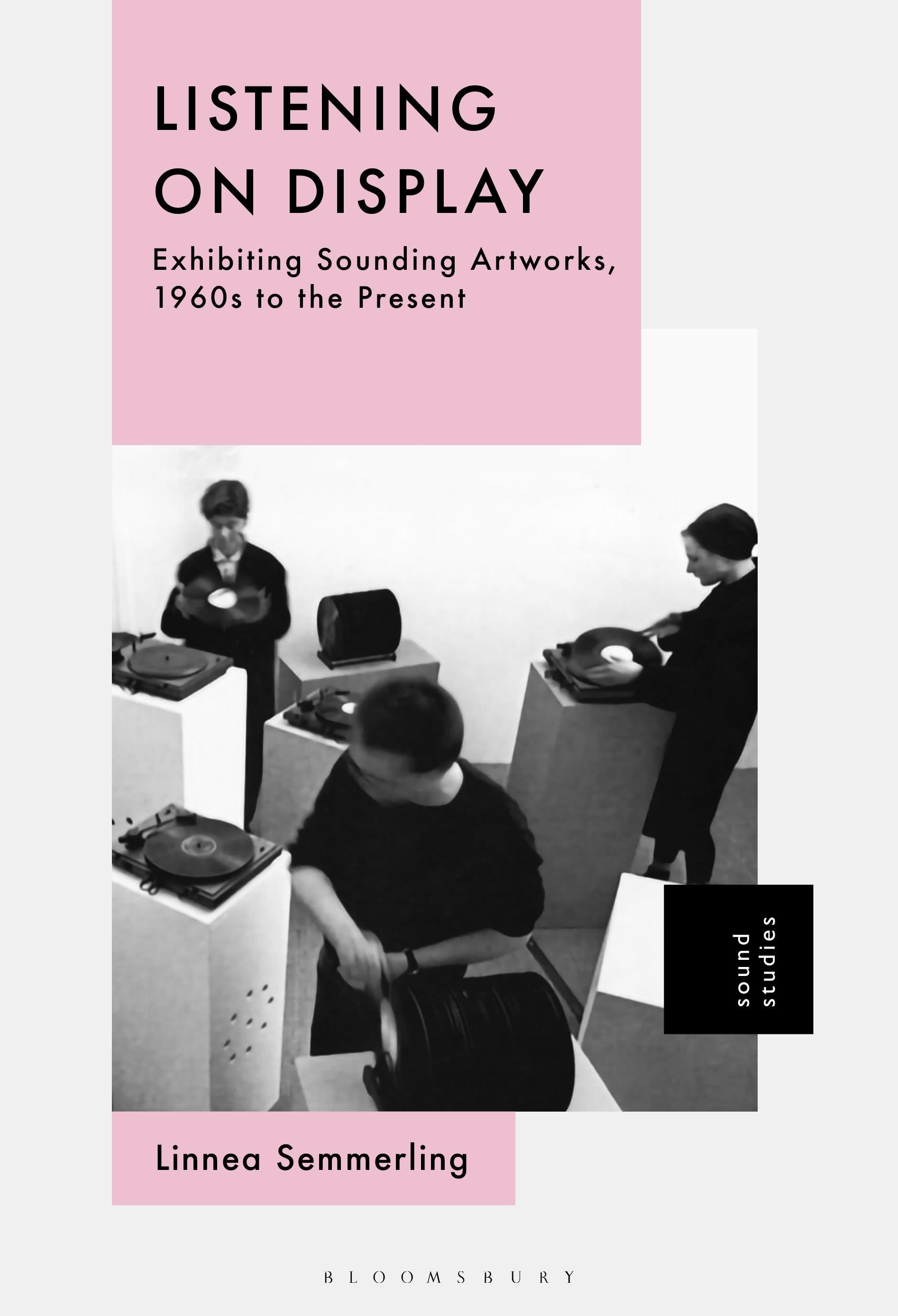
Listening on Display provides an empirical investigation of the historically, culturally, and socially contingent ways in which artists, curators, and visitors relate to sounds in contemporary art exhibitions.
Sounding artworks have appeared regularly in contemporary art exhibitions since the 1960s,
yet scholars of art history, musicology, sound studies, and museum studies have long noted
the experiential difficulties this development poses. They describe how sounds challenge the
sensory hierarchy of the museum, how they disrupt the venerable silence of the white cube,
or how they drown in the ambient noise of galleries.
This book explores the listening experiences of artists, visitors, curators, and technicians
in more than twenty exhibitions that have taken place at contemporary art museums,
alternative art spaces, and other venues in Germany and the United States since the 1960s.
Through archival research, visitor book analysis, interviews, and observations drawing on
sensory ethnography, Semmerling brings together their ideas and ideals about aesthetic
ambitions, sensory abilities, cultural conventions, and technological standards. In doing so, this
book lays the groundwork for rethinking sound in exhibition spaces.
Sounding artworks have appeared regularly in contemporary art exhibitions since the 1960s,
yet scholars of art history, musicology, sound studies, and museum studies have long noted
the experiential difficulties this development poses. They describe how sounds challenge the
sensory hierarchy of the museum, how they disrupt the venerable silence of the white cube,
or how they drown in the ambient noise of galleries.
This book explores the listening experiences of artists, visitors, curators, and technicians
in more than twenty exhibitions that have taken place at contemporary art museums,
alternative art spaces, and other venues in Germany and the United States since the 1960s.
Through archival research, visitor book analysis, interviews, and observations drawing on
sensory ethnography, Semmerling brings together their ideas and ideals about aesthetic
ambitions, sensory abilities, cultural conventions, and technological standards. In doing so, this
book lays the groundwork for rethinking sound in exhibition spaces.
Pay easily by card, Klarna, Apple Pay or Google Pay. Not happy? You always have a 14-day money-back guarantee. Read more in our terms. If you have any questions, email us at hello@memmo.org.
Memmo makes studying easier – wherever you are in the world. We bring your course books and smart study tools together in one place: summaries, quizzes, podcasts and flashcards. Plus Ted, your study buddy who answers anything you wonder. Over 50,000 students already study here – built to help you learn faster and stress less.