
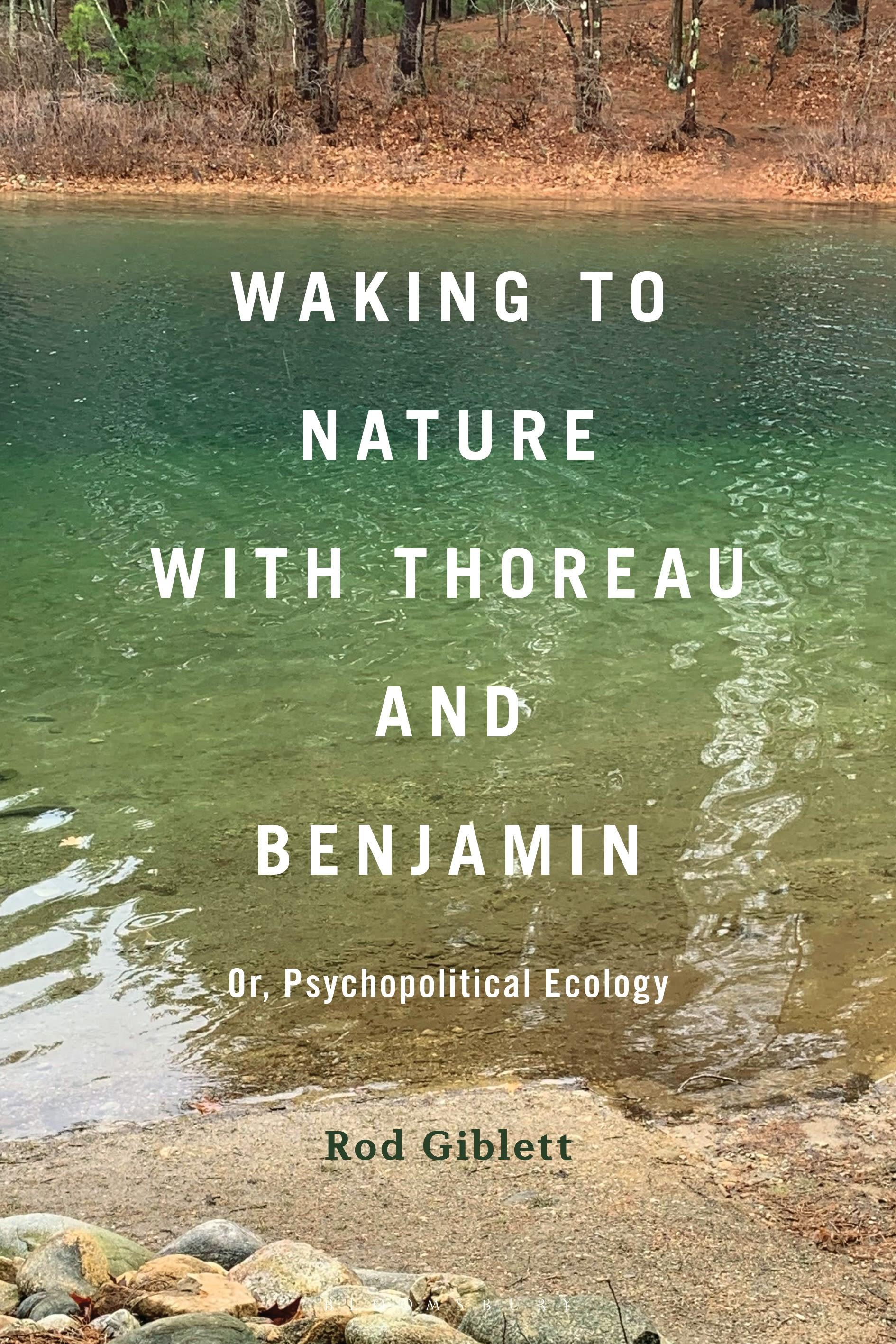
What do two white men born in the century before last have to say that could possibly be of any use or value in the current conjuncture of climate collapse, the end of the age of fossil fuels and much life on earth, and the recent re-rise of reactionary forces against progressive politics?
Turns out, a lot, especially for waking to nature, place, life, social injustice, environmental destruction, industrial capitalism and its technologies. Henry David Thoreau – an inspiration for William Melvin Kelley's writing on 'staying woke' – and Walter Benjamin suggest sensory means for waking the consumer asleep under the “phony spell” of the “putrid magic” of the commodity; provide tools of theory and critique for waking to sexism, racism, and placism; empower the weak with a robust vocabulary for telling the stories of people and places; create resources of hope and limit the prospect of despair about the future; and point to pathways for being at home with the living earth. These are all vital facets of psychopolitical ecology.
Waking to Nature with Thoreau and Benjamin discusses topics both writers share in common, such as memory, dreaming, waking, walking, water, swamps, lakes, the body, and the senses, and highlights convergences and divergences between them. It is the first book of psychopolitical ecology and the first to bring together these two timely thinkers and writers for whom life is the union of materiality and spirituality.
Turns out, a lot, especially for waking to nature, place, life, social injustice, environmental destruction, industrial capitalism and its technologies. Henry David Thoreau – an inspiration for William Melvin Kelley's writing on 'staying woke' – and Walter Benjamin suggest sensory means for waking the consumer asleep under the “phony spell” of the “putrid magic” of the commodity; provide tools of theory and critique for waking to sexism, racism, and placism; empower the weak with a robust vocabulary for telling the stories of people and places; create resources of hope and limit the prospect of despair about the future; and point to pathways for being at home with the living earth. These are all vital facets of psychopolitical ecology.
Waking to Nature with Thoreau and Benjamin discusses topics both writers share in common, such as memory, dreaming, waking, walking, water, swamps, lakes, the body, and the senses, and highlights convergences and divergences between them. It is the first book of psychopolitical ecology and the first to bring together these two timely thinkers and writers for whom life is the union of materiality and spirituality.
Pay easily by card, Klarna, Apple Pay or Google Pay. Not happy? You always have a 14-day money-back guarantee. Read more in our terms. If you have any questions, email us at hello@memmo.org.
Memmo makes studying easier – wherever you are in the world. We bring your course books and smart study tools together in one place: summaries, quizzes, podcasts and flashcards. Plus Ted, your study buddy who answers anything you wonder. Over 50,000 students already study here – built to help you learn faster and stress less.