
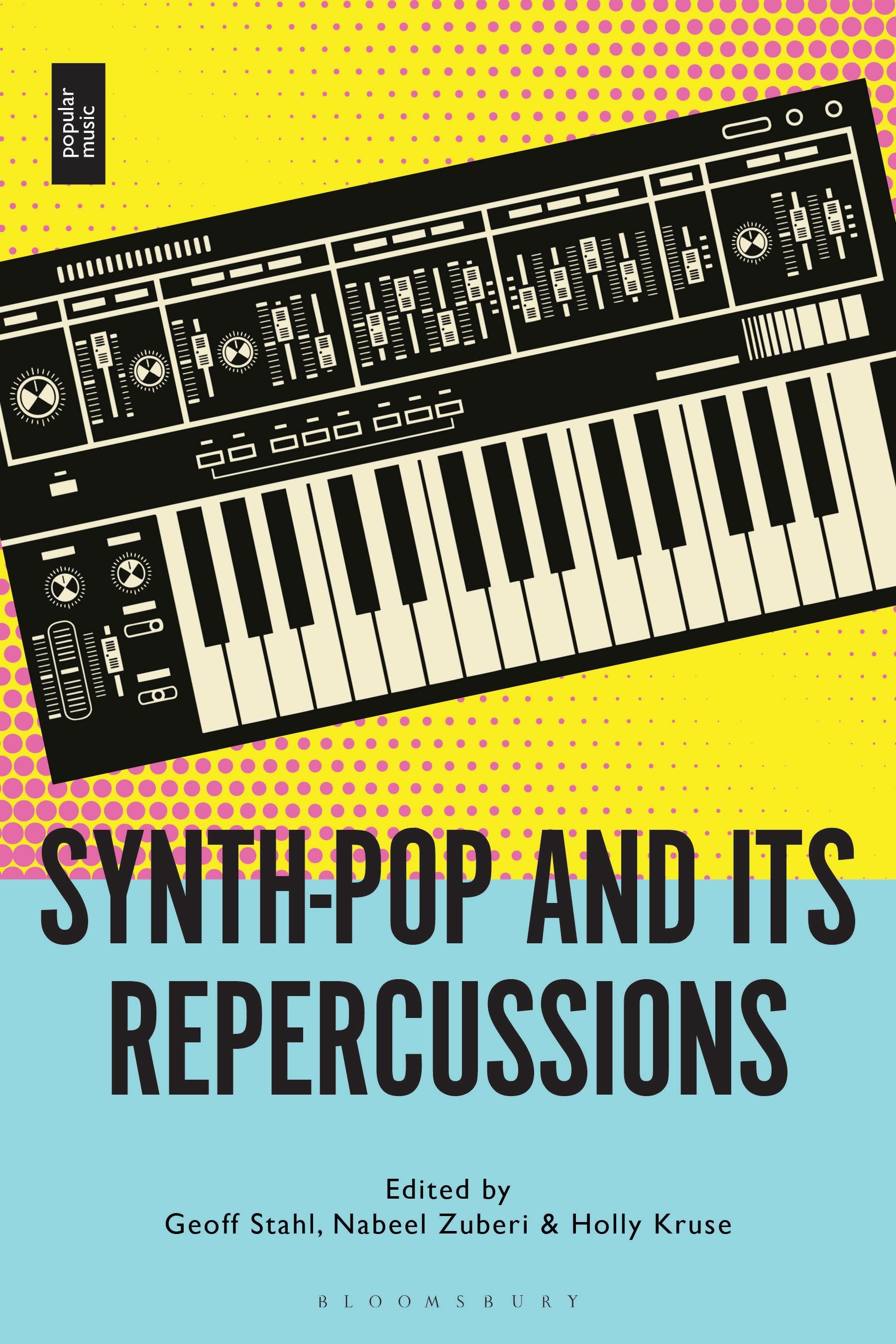
This collection explores synth-pop's sounds and its hooks, new technologies and production techniques, its media and imagery, its ideologies and discourses about art and culture, society and politics.
Synth-pop is a loose rubric that includes DIY electronic music, post-punk and sounds shot through with the tropes of futurism and dystopia during the Cold War and early neoliberalism that Mark Fisher has called "the eerie.” Synth-pop also refers to melodic hits and chart toppers such as those by a-ha, Bronski Beat, The Buggles, Eurythmics, New Order, Pet Shop Boys, Tears for Fears, Ultravox, Visage and Yazoo. This book covers synth-pop broadly defined, considering everything between its most rough-hewn and naive forms to its glossier, sophisticated incarnations.
This collection follows synth-pop's international circuits, not only in the UK and the US, but in Poland, Spain, Czech Republic, Italy, Japan, Germany, Australia, India, and through migrations and diasporas; and it opens up local, national and transnational developments and influences with critical and interdisciplinary approaches from musicology, media studies and cultural studies, among others. The volume brings together contributions that critically examine synth-pop in relation to the histories of music genres, gender, sexuality, race, class, the human, technology and politics.
Synth-pop is a loose rubric that includes DIY electronic music, post-punk and sounds shot through with the tropes of futurism and dystopia during the Cold War and early neoliberalism that Mark Fisher has called "the eerie.” Synth-pop also refers to melodic hits and chart toppers such as those by a-ha, Bronski Beat, The Buggles, Eurythmics, New Order, Pet Shop Boys, Tears for Fears, Ultravox, Visage and Yazoo. This book covers synth-pop broadly defined, considering everything between its most rough-hewn and naive forms to its glossier, sophisticated incarnations.
This collection follows synth-pop's international circuits, not only in the UK and the US, but in Poland, Spain, Czech Republic, Italy, Japan, Germany, Australia, India, and through migrations and diasporas; and it opens up local, national and transnational developments and influences with critical and interdisciplinary approaches from musicology, media studies and cultural studies, among others. The volume brings together contributions that critically examine synth-pop in relation to the histories of music genres, gender, sexuality, race, class, the human, technology and politics.
Pay easily by card, Klarna, Apple Pay or Google Pay. Not happy? You always have a 14-day money-back guarantee. Read more in our terms. If you have any questions, email us at hello@memmo.org.
Memmo makes studying easier – wherever you are in the world. We bring your course books and smart study tools together in one place: summaries, quizzes, podcasts and flashcards. Plus Ted, your study buddy who answers anything you wonder. Over 50,000 students already study here – built to help you learn faster and stress less.