
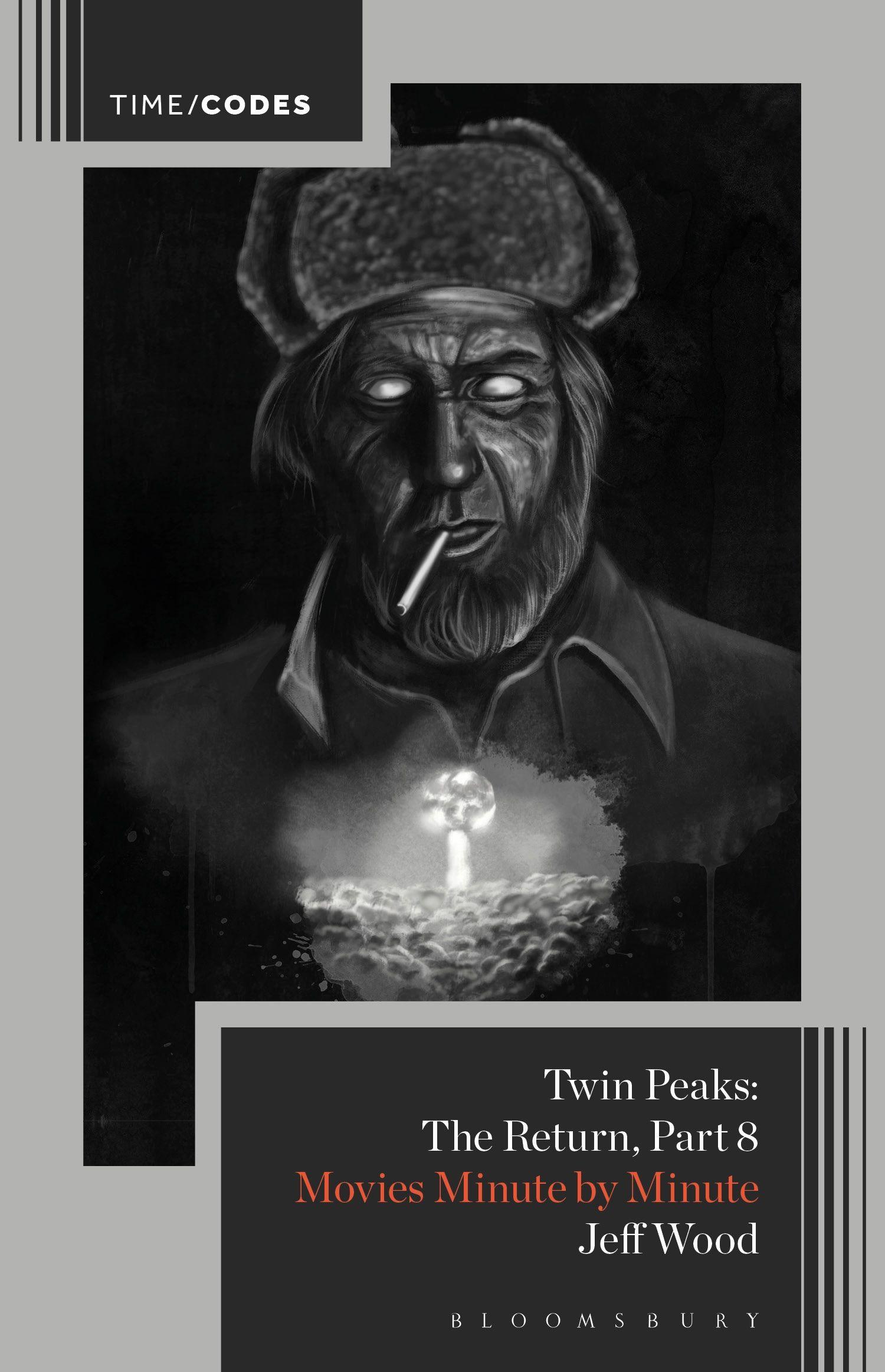
A minute-by-minute analysis of one episode (Part 8) of David Lynch's Twin Peaks: The Return (2017).
Much has been written about the work of David Lynch and existential fear in relation to Americana and the American Dream-as-American Nightmare in terms that are circular and artistically self-referential-or Lynchian. But with Part 8 of his most recent work, the 2017 series Twin Peaks: The Return, Lynch locates his singular and unsettling visual vocabulary within an epic historical context: the world's first atomic explosion, the Trinity Test. With reference to the 1983 television phenomenon The Day After, Lynch's work is newly situated in a resurgence of works reassessing the legacy of Trinity. Among them: HBO's Chernobyl, Trevor Paglen's Trinity Cube, Cormac McCarthy's The Passenger and Stella Maris, and Christopher Nolan's Oppenheimer. With David Lynch's Part 8, a cultural circuit is completed, from the idiosyncratic and personal-or Lynchian-to the shared space of what theorist Paul Virilio describes as “cosmic fear”-or an emergency of social media.
After placing the work in this specific context, this book examines every minute of Lynch's Part 8 from Twin Peaks: The Return, minute by minute-a thrilling endeavor due to the radical landscape that Lynch sets forth: a landscape of astonishing cinematic extremities, from the maddeningly abstract, absurd, and meticulous, to the lush, and terrifying. The director presents an uncanny intimacy that is an achievement even among the most critically lauded works in Lynch's catalog.
Much has been written about the work of David Lynch and existential fear in relation to Americana and the American Dream-as-American Nightmare in terms that are circular and artistically self-referential-or Lynchian. But with Part 8 of his most recent work, the 2017 series Twin Peaks: The Return, Lynch locates his singular and unsettling visual vocabulary within an epic historical context: the world's first atomic explosion, the Trinity Test. With reference to the 1983 television phenomenon The Day After, Lynch's work is newly situated in a resurgence of works reassessing the legacy of Trinity. Among them: HBO's Chernobyl, Trevor Paglen's Trinity Cube, Cormac McCarthy's The Passenger and Stella Maris, and Christopher Nolan's Oppenheimer. With David Lynch's Part 8, a cultural circuit is completed, from the idiosyncratic and personal-or Lynchian-to the shared space of what theorist Paul Virilio describes as “cosmic fear”-or an emergency of social media.
After placing the work in this specific context, this book examines every minute of Lynch's Part 8 from Twin Peaks: The Return, minute by minute-a thrilling endeavor due to the radical landscape that Lynch sets forth: a landscape of astonishing cinematic extremities, from the maddeningly abstract, absurd, and meticulous, to the lush, and terrifying. The director presents an uncanny intimacy that is an achievement even among the most critically lauded works in Lynch's catalog.
Pay easily by card, Klarna, Apple Pay or Google Pay. Not happy? You always have a 14-day money-back guarantee. Read more in our terms. If you have any questions, email us at hello@memmo.org.
Memmo makes studying easier – wherever you are in the world. We bring your course books and smart study tools together in one place: summaries, quizzes, podcasts and flashcards. Plus Ted, your study buddy who answers anything you wonder. Over 50,000 students already study here – built to help you learn faster and stress less.