
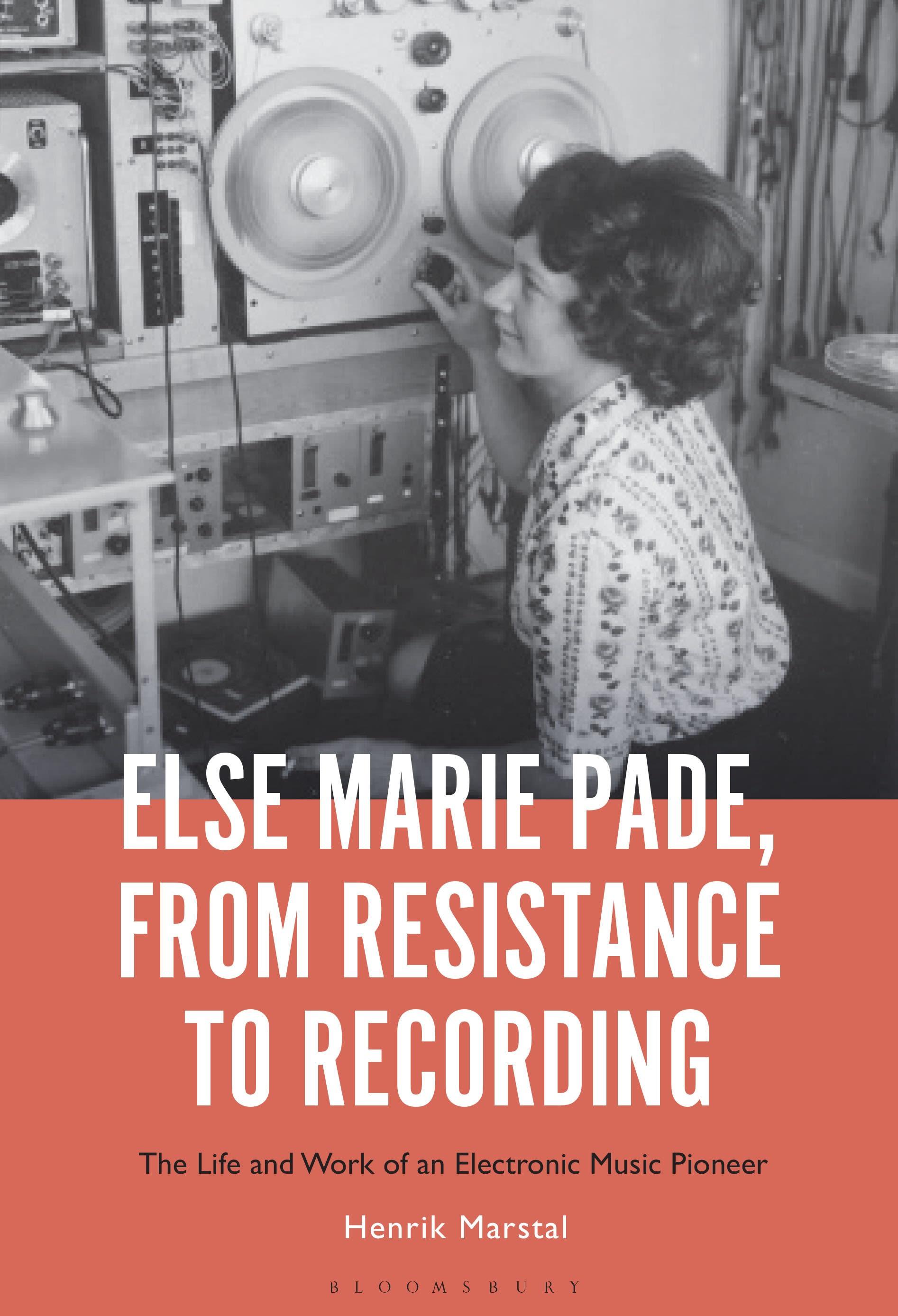
The first English-language and internationally available book-length study of the pioneering Danish composer Else Marie Pade, her major works and life story.
Credited as the first Danish composer to use electronics to make music, Else Marie Pade (1924-2016) is acknowledged as a pioneer in her field, one of the first generation of electronic music composers. However, her cutting-edge and influential work was under-recognized during her career. Pade is now considered one of the many "forgotten" 20th-century women artists who are in the 21st century finally receiving due recognition.
Starting at the beginning, this study covers the composer's childhood, which was sickly and often spent in convalescence. As a young woman, Pade joined the resistance during the Nazi occupation of Denmark. She was eventually arrested and imprisoned at Frøslevlejren. It was after the war that Pade trained as pianist before turning to composition.
Structured in the composer's preferred practice of dodecaphony (i.e. twelve-tone technique) and traditional tonal music (based on the melodic scales consisting of seven tones each), this work focuses on a number of central compositions, including Symphonie magnétophonique (1957-1958) which describes a day in the life of an ordinary Dane, as well as the predominantly instrumental electronic pieces Syv cirkler (1958), Et glasperlespil I-II (1960) and Faust (1962), interspersed by interludes and thematic readings of Pade's life and work.
Credited as the first Danish composer to use electronics to make music, Else Marie Pade (1924-2016) is acknowledged as a pioneer in her field, one of the first generation of electronic music composers. However, her cutting-edge and influential work was under-recognized during her career. Pade is now considered one of the many "forgotten" 20th-century women artists who are in the 21st century finally receiving due recognition.
Starting at the beginning, this study covers the composer's childhood, which was sickly and often spent in convalescence. As a young woman, Pade joined the resistance during the Nazi occupation of Denmark. She was eventually arrested and imprisoned at Frøslevlejren. It was after the war that Pade trained as pianist before turning to composition.
Structured in the composer's preferred practice of dodecaphony (i.e. twelve-tone technique) and traditional tonal music (based on the melodic scales consisting of seven tones each), this work focuses on a number of central compositions, including Symphonie magnétophonique (1957-1958) which describes a day in the life of an ordinary Dane, as well as the predominantly instrumental electronic pieces Syv cirkler (1958), Et glasperlespil I-II (1960) and Faust (1962), interspersed by interludes and thematic readings of Pade's life and work.
Pay easily by card, Klarna, Apple Pay or Google Pay. Not happy? You always have a 14-day money-back guarantee. Read more in our terms. If you have any questions, email us at hello@memmo.org.
Memmo makes studying easier – wherever you are in the world. We bring your course books and smart study tools together in one place: summaries, quizzes, podcasts and flashcards. Plus Ted, your study buddy who answers anything you wonder. Over 50,000 students already study here – built to help you learn faster and stress less.