
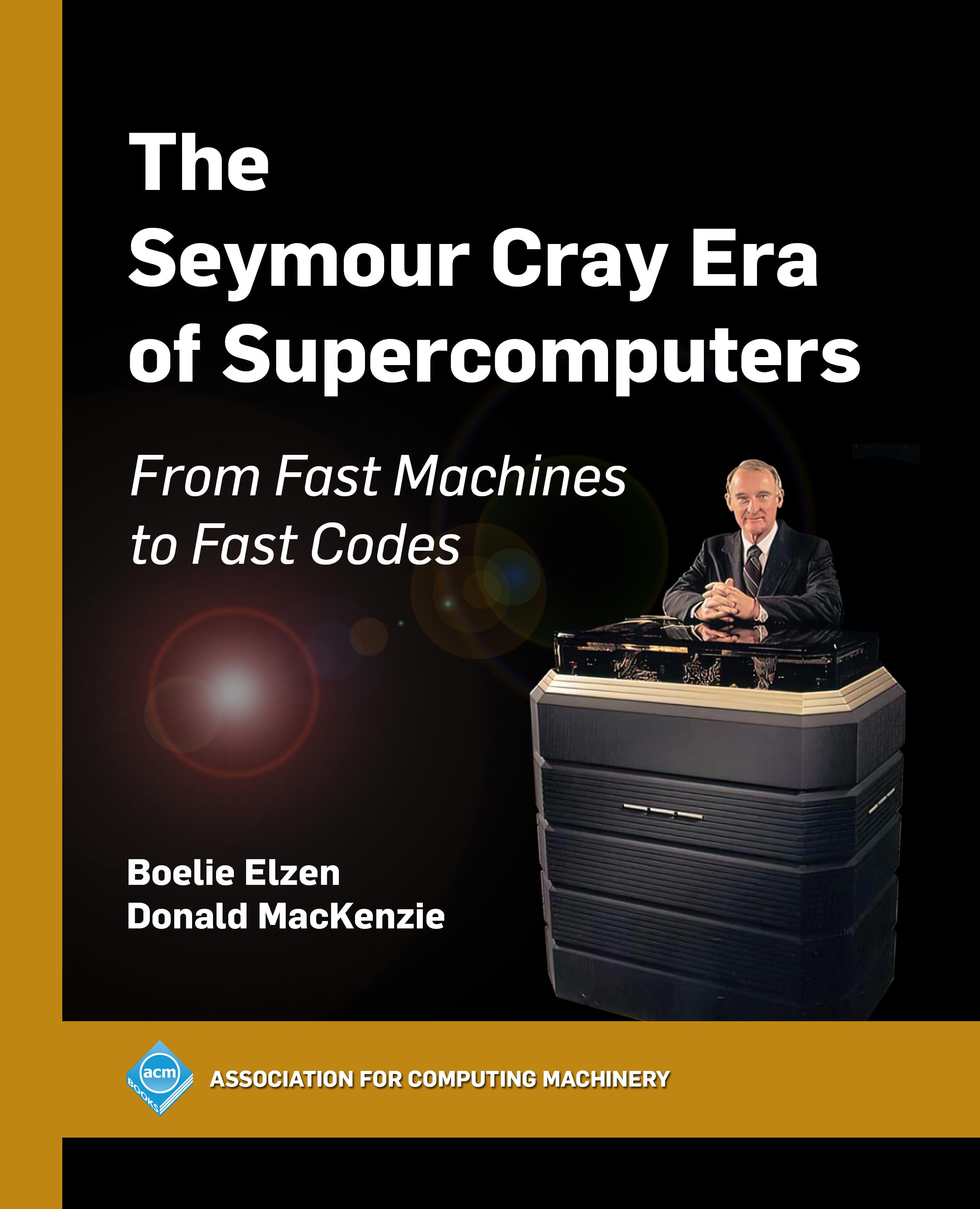
This book describes the development and use of supercomputers in the period 1960-1996, a time that can be called the Seymour Cray Era. For more than three decades, Cray’s computer designs were seen as the yardstick against which all other efforts were measured. Initially, this yardstick was sheer computing speed. However, the supercomputer world gradually became more complex and other factors became equally important.
The initial development of supercomputers was commissioned and financed by the Los Alamos and Lawrence Livermore National Laboratories, which had huge computational needs in connection with nuclear weapons development. The computers designed by Cray satisfied those needs, while these computers were also sold to a few dozen other big research organizations and weather agencies. From the 1980s, a variety of companies started to compete with the Cray designs by offering supercomputers that used a new architectural approach, MPP: massively parallel processing. This new architecture, based on using tens of thousands of relatively simple microprocessors, subsequently began to dominate high-performance computing and marked the end of the Seymour Cray Era.
This book is important reading for anyone working in the area of high-performance computing, providing essential historical context for the work of a legendary pioneer and the computers he became famous for designing. It will also be valuable to students of computing history and, more generally, to readers interested in the history of science and technology. For advanced students, the book illustrates how innovation in its very essence is a socio-technical process: not just a matter of developing the “best technology,” but also of making appropriate choices concerning the interaction of human and technical factors in product design.
Pay easily by card, Klarna, Apple Pay or Google Pay. Not happy? You always have a 14-day money-back guarantee. Read more in our terms. If you have any questions, email us at hello@memmo.org.
Memmo makes studying easier – wherever you are in the world. We bring your course books and smart study tools together in one place: summaries, quizzes, podcasts and flashcards. Plus Ted, your study buddy who answers anything you wonder. Over 75,000 students already study here – built to help you learn faster and stress less.