
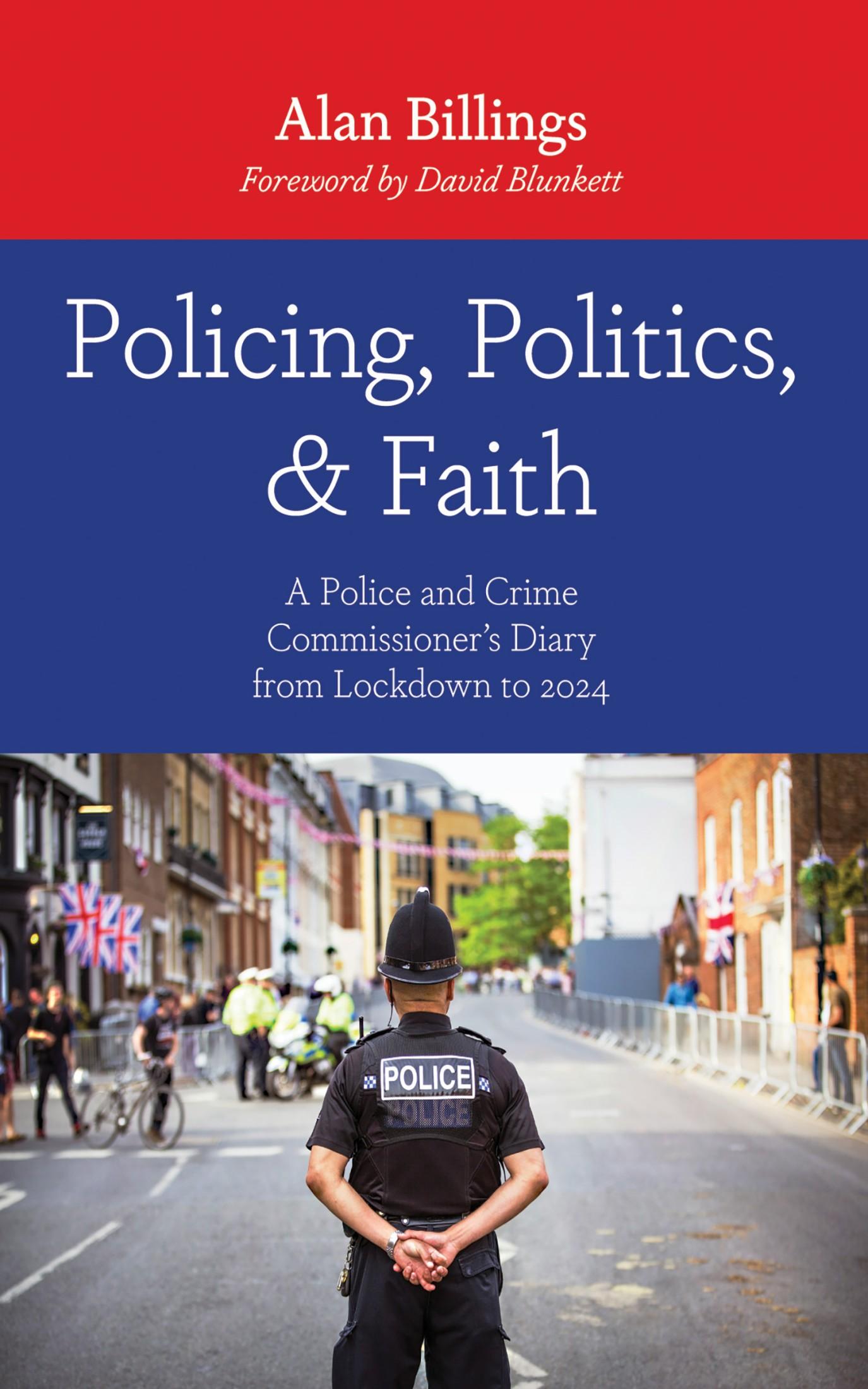
As the elected police and crime commissioner for South Yorkshire, Alan Billings was in a unique position to witness how the criminal justice system worked for victims of crime.
When Covid struck and the country went into lockdown, he began to publish a weekly diary chronicling how the police struggled to understand fast-changing government instructions and enforce the law without losing public trust. He saw the impact of the pandemic on crime and its victims and all criminal justice agencies.
As a new normality emerged, he reflected on a range of contemporary issues: the murder by a serving police officer of Sarah Everard, why police cannot admit to institutional failings, the persistence of knife crime, why stop and search matters, the growing understanding of domestic abuse, what the street protests for Palestine signify, the Orgreave Truth and Justice Campaign, the proliferation of shoplifting and antisocial behavior, and the role of chaplaincy. He took an interest in “what works” and why the public often persists in wanting “what doesn’t work.”
These diary entries will be of interest to all who are curious to know about the way police and politicians interact and to have their thinking on crime, policing, and justice challenged.
When Covid struck and the country went into lockdown, he began to publish a weekly diary chronicling how the police struggled to understand fast-changing government instructions and enforce the law without losing public trust. He saw the impact of the pandemic on crime and its victims and all criminal justice agencies.
As a new normality emerged, he reflected on a range of contemporary issues: the murder by a serving police officer of Sarah Everard, why police cannot admit to institutional failings, the persistence of knife crime, why stop and search matters, the growing understanding of domestic abuse, what the street protests for Palestine signify, the Orgreave Truth and Justice Campaign, the proliferation of shoplifting and antisocial behavior, and the role of chaplaincy. He took an interest in “what works” and why the public often persists in wanting “what doesn’t work.”
These diary entries will be of interest to all who are curious to know about the way police and politicians interact and to have their thinking on crime, policing, and justice challenged.
Pay easily by card, Klarna, Apple Pay or Google Pay. Not happy? You always have a 14-day money-back guarantee. Read more in our terms. If you have any questions, email us at hello@memmo.org.
Memmo makes studying easier – wherever you are in the world. We bring your course books and smart study tools together in one place: summaries, quizzes, podcasts and flashcards. Plus Ted, your study buddy who answers anything you wonder. Over 50,000 students already study here – built to help you learn faster and stress less.
You might also like
Buy the book0