
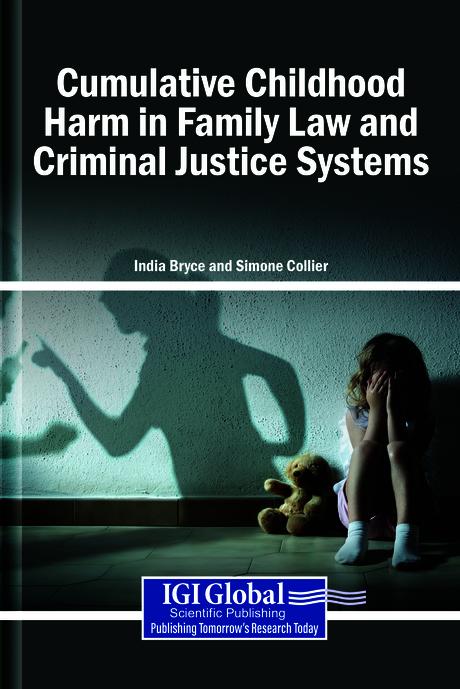
Within family law and criminal justice systems, childhood harms are often addressed in isolation, despite their interconnectedness. When legal processes fail to prioritize relational and developmental realities, they increase trauma rather than mitigate it. Understanding cumulative childhood harm reveals how legal interventions shape life experiences, influence future justice system interactions, and interrupt or reinforce cycles of vulnerability. Examining this concept highlights the need for trauma-informed, coordinated responses that recognize children as developing individuals whose experiences with these systems shape their futures. Cumulative Childhood Harm in Family Law and Criminal Justice Systems explores how repeated adverse experiences in childhood are shaped by interactions with family law and criminal justice systems. It examines whether legal responses protect children from harm or contribute to ongoing trauma, disadvantage, and system involvement. This book covers topics such as rehabilitation, civil law, and criminal justice, and is a useful resource for government officials, policymakers, academicians, researchers, and scientists.
Pay easily by card, Klarna, Apple Pay or Google Pay. Not happy? You always have a 14-day money-back guarantee. Read more in our terms. If you have any questions, email us at hello@memmo.org.
Memmo makes studying easier – wherever you are in the world. We bring your course books and smart study tools together in one place: summaries, quizzes, podcasts and flashcards. Plus Ted, your study buddy who answers anything you wonder. Over 50,000 students already study here – built to help you learn faster and stress less.
You might also like
Buy the book0