
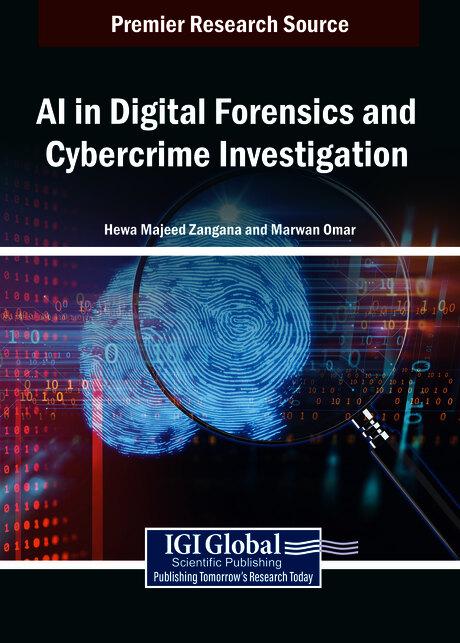
The rapid growth of cybercrime has created an urgent need for advanced tools capable of keeping pace with increasingly sophisticated threats. Artificial intelligence (AI) offers powerful capabilities for digital forensics, from accelerating threat detection and automating evidence analysis to predicting criminal behavior and improving investigative decision-making. At the same time, its adoption raises pressing ethical, legal, and privacy concerns that demand careful consideration. Addressing these opportunities and challenges is essential to strengthening cybersecurity, safeguarding digital evidence, and ensuring justice in an increasingly digital world. AI in Digital Forensics and Cybercrime Investigation: Methods, Ethics, and Emerging Technologies explores the intersection of AI and cybersecurity through both theoretical insights and practical applications. It navigates the transformative role of AI in digital forensics and cybercrime investigation, offering a comprehensive resource that bridges theoretical foundations, technical methodologies, and practical implementations. Covering topics such as autonomous forensic agents, financial fraud, and threat detection, this book is an excellent resource for academicians, researchers, graduate and postgraduate students, cybersecurity professionals, digital forensics practitioners, law enforcement agencies, policymakers, technology developers, and more.
Pay easily by card, Klarna, Apple Pay or Google Pay. Not happy? You always have a 14-day money-back guarantee. Read more in our terms. If you have any questions, email us at hello@memmo.org.
Memmo makes studying easier – wherever you are in the world. We bring your course books and smart study tools together in one place: summaries, quizzes, podcasts and flashcards. Plus Ted, your study buddy who answers anything you wonder. Over 75,000 students already study here – built to help you learn faster and stress less.
You might also like
Buy the book0