
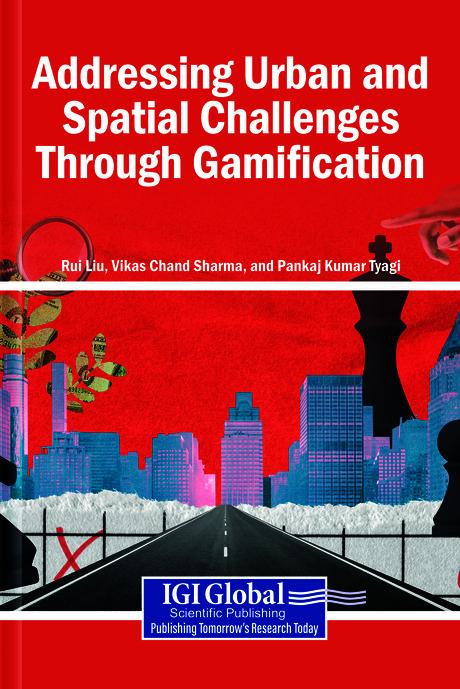
Cities increasingly turn to game-inspired strategies to engage residents and solve complex spatial and urban issues. By incorporating elements like points, interactive maps, challenges, and simulations, planners can make civic participation more accessible and motivating for diverse communities. These tools help visualize problems, test potential solutions, and encourage collaborative decision-making, transforming technical planning processes into more engaging and inclusive experiences. As a result, gamification emerges as a powerful approach for enhanced public involvement and smarter, more sustainable urban development. Addressing Urban and Spatial Challenges Through Gamification examines the role of gamification as an emerging design and planning strategy within the context of human habitats. It addresses how game-based frameworks inform the development of built environments, offering structured, interactive, and participatory approaches to urban and spatial challenges. This book covers topics such as digital games, sustainable development, and civic engagement, and is a useful resource for urban developers, business owners, sociologists, academicians, researchers, and scientists.
Pay easily by card, Klarna, Apple Pay or Google Pay. Not happy? You always have a 14-day money-back guarantee. Read more in our terms. If you have any questions, email us at hello@memmo.org.
Memmo makes studying easier – wherever you are in the world. We bring your course books and smart study tools together in one place: summaries, quizzes, podcasts and flashcards. Plus Ted, your study buddy who answers anything you wonder. Over 50,000 students already study here – built to help you learn faster and stress less.
You might also like
Buy the book0