
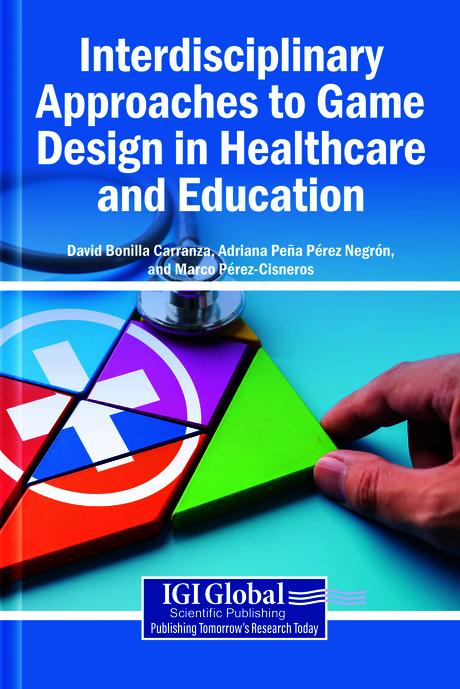
Game design is recognized as a powerful tool in healthcare and education, with immense potential in interdisciplinary collaboration. By integrating principles from psychology, cognitive science, instructional design, and user experience with cutting-edge technology, developers can create games that entertain while also promoting learning and well-being. These approaches enable the design of immersive, evidence-based experiences that improve patient engagement, support therapeutic interventions, and enhance educational outcomes. As the boundaries between disciplines blur, game design emerges as a dynamic field driving innovation in both sectors. Interdisciplinary Approaches to Game Design in Healthcare and Education explores the transformative potential of games, focusing on applications in healthcare, education, and psychology. It examines methodologies for testing game efficacy, strategies for ethical player-centered design, and studies leveraging AI, VR, and biometrics, addressing risks like bias or addiction. This book covers topics such as gamification, biotechnology, and digital technology, and is a useful resource for educators, medical and healthcare professionals, computer engineers, game designers, academicians, researchers, and scientists.
Pages: 566
Category: Webb-/Mobil-/Spelutveckling
e-ISBN: 9798337346601
Shipping weight: 1.2 kg
Ships in: 1-2 days
Pay easily by card, Klarna, Apple Pay or Google Pay. Not happy? You always have a 14-day money-back guarantee. Read more in our terms. If you have any questions, email us at hello@memmo.org.
Memmo makes studying easier – wherever you are in the world. We bring your course books and smart study tools together in one place: summaries, quizzes, podcasts and flashcards. Plus Ted, your study buddy who answers anything you wonder. Over 50,000 students already study here – built to help you learn faster and stress less.
You might also like
Buy the book0