
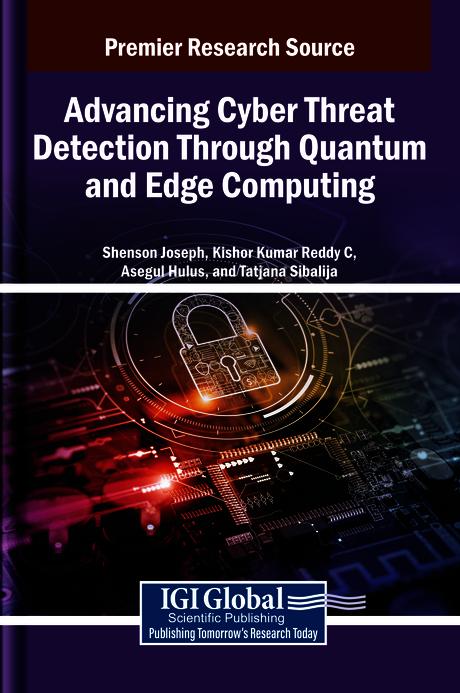
As cyber threats grow in scale, sophistication, and frequency, traditional detection methods struggle to keep pace. To address this landscape, researchers and organizations turn to emerging technologies like quantum computing and edge computing. Quantum computing offers increased processing power, capable of analyzing complex data patterns and encryptions. Meanwhile, edge computing enables real-time threat detection and increases response times. By combining these two technologies, it creates smarter, faster, and more adaptive cybersecurity systems. Further exploration into how the convergence of quantum and edge computing can revolutionize cyber threat detection may pave the way for more resilient defense mechanisms in the digital age. Advancing Cyber Threat Detection Through Quantum and Edge Computing explores how quantum computing and artificial intelligence (AI) reshape the landscape of real-time anomaly detection, predictive analytics, and next-gen cybersecurity. It examines how quantum-enhanced AI models can detect patterns, adapt to emerging threats, and revolutionize security frameworks across industries, from finance and healthcare to national security and cloud infrastructure. This book covers topics such as blockchain, threat intelligence, and neural networks, and is a useful resource for computer engineers, security professionals, academicians, researchers, and data scientists.
Pay easily by card, Klarna, Apple Pay or Google Pay. Not happy? You always have a 14-day money-back guarantee. Read more in our terms. If you have any questions, email us at hello@memmo.org.
Memmo makes studying easier – wherever you are in the world. We bring your course books and smart study tools together in one place: summaries, quizzes, podcasts and flashcards. Plus Ted, your study buddy who answers anything you wonder. Over 75,000 students already study here – built to help you learn faster and stress less.
You might also like
Buy the book0