
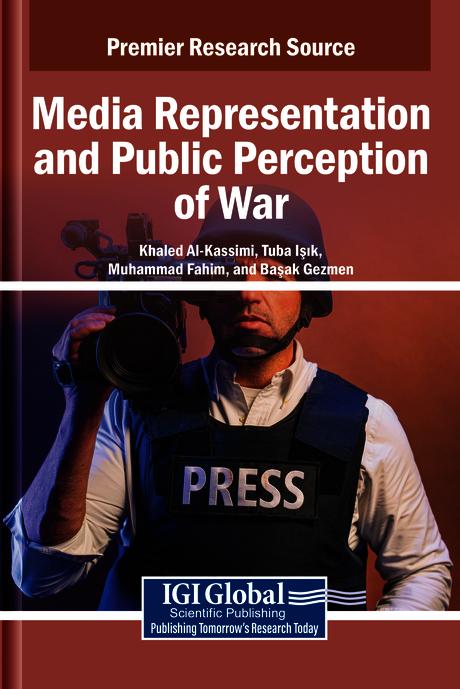
Media representation plays a role in the public perception of war, influencing how conflicts are understood and remembered. Through selective imagery, language, and framing, media outlets can portray war differently depending on political agendas, cultural narratives, or economic interests. This dynamic impacts public opinion while affecting policy decisions, national morale, and lived experiences. Examining how war is represented in the media may further reveal the relationships between information, power, and public perception in times of crisis. Media Representation and Public Perception of War explores and analyzes the media coverage of conflict, uncovering the narratives, biases, and influences that shape public opinion. It examines the complexities involved in international media coverage and its impact on global humanitarian discourse. This book covers topics such as political science, social media, and cyber warfare, and is a useful resource for government officials, policymakers, media and communications professionals, academicians, researchers, and political scientists.
Pay easily by card, Klarna, Apple Pay or Google Pay. Not happy? You always have a 14-day money-back guarantee. Read more in our terms. If you have any questions, email us at hello@memmo.org.
Memmo makes studying easier – wherever you are in the world. We bring your course books and smart study tools together in one place: summaries, quizzes, podcasts and flashcards. Plus Ted, your study buddy who answers anything you wonder. Over 75,000 students already study here – built to help you learn faster and stress less.
You might also like
Buy the book0