
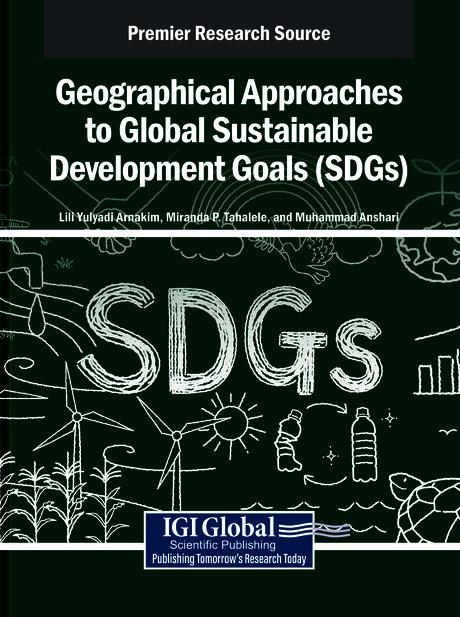
Regions are adapting and innovating planning mechanisms to meet sustainability challenges. Through the geographical approach, different regions can tailor their strategies to achieve environmental sustainability that takes into account their unique geographical factors. Emphasizing cross-jurisdictional cooperation and institutional arrangements, regions may better align their initiatives with the United Nations Sustainable Development Goals (SDGs). The paradigms surrounding the complex interaction between regional development planning and global sustainability contribute valuable insights to the evolving field of development planning theory. Geographical Approaches to Global Sustainable Development Goals (SDGs) examines how different regions across the globe are implementing development planning strategies to achieve the United Nations SDGs. By analyzing diverse regional approaches, it provides crucial insights into effective localization of global sustainability targets while acknowledging unique geographical contexts. Covering topics such as politics, social commerce, and intellectual property regime, this book is an excellent resource for regional planners, project managers, corporate sustainability consultants, sustainability coordinators, environmental impact assessors, civil society organizations, development project investors, professionals, researchers, scholars, academicians, and more.
Pay easily by card, Klarna, Apple Pay or Google Pay. Not happy? You always have a 14-day money-back guarantee. Read more in our terms. If you have any questions, email us at hello@memmo.org.
Memmo makes studying easier – wherever you are in the world. We bring your course books and smart study tools together in one place: summaries, quizzes, podcasts and flashcards. Plus Ted, your study buddy who answers anything you wonder. Over 50,000 students already study here – built to help you learn faster and stress less.
You might also like
Buy the book0