
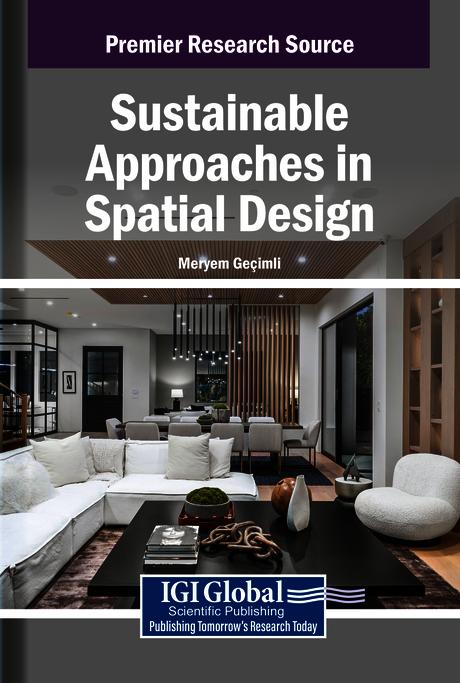
Sustainability attracts the attention of spatial design disciplines and other academics. The spatial design and structural activities of sustainability have three main sections, which are ecological, economic, and socio-cultural sustainability. These sections take into account factors such as the life cycle of people and materials, the influence of different lifestyles, and energy consumption. The insights from sustainability have important implications for housing models that balance flexibility, sustainability, and cultural relevance. Sustainable Approaches in Spatial Design explores the shifting changes in the dynamics of and environmental concerns surrounding the rapid increase in urbanization. It highlights the need for mindful consumption in diverse geographical and socio-economic settings to support global sustainability. Covering topics such as cost-effective sampling, greenhouse gas (GHG), and daylight calculation methods, this book is an excellent resource for architects, urban planners, policymakers, sustainability experts, engineers, economists, sociologists, professionals, researchers, scholars, academicians, and more.
Pay easily by card, Klarna, Apple Pay or Google Pay. Not happy? You always have a 14-day money-back guarantee. Read more in our terms. If you have any questions, email us at hello@memmo.org.
Memmo makes studying easier – wherever you are in the world. We bring your course books and smart study tools together in one place: summaries, quizzes, podcasts and flashcards. Plus Ted, your study buddy who answers anything you wonder. Over 50,000 students already study here – built to help you learn faster and stress less.
You might also like
Buy the book0