
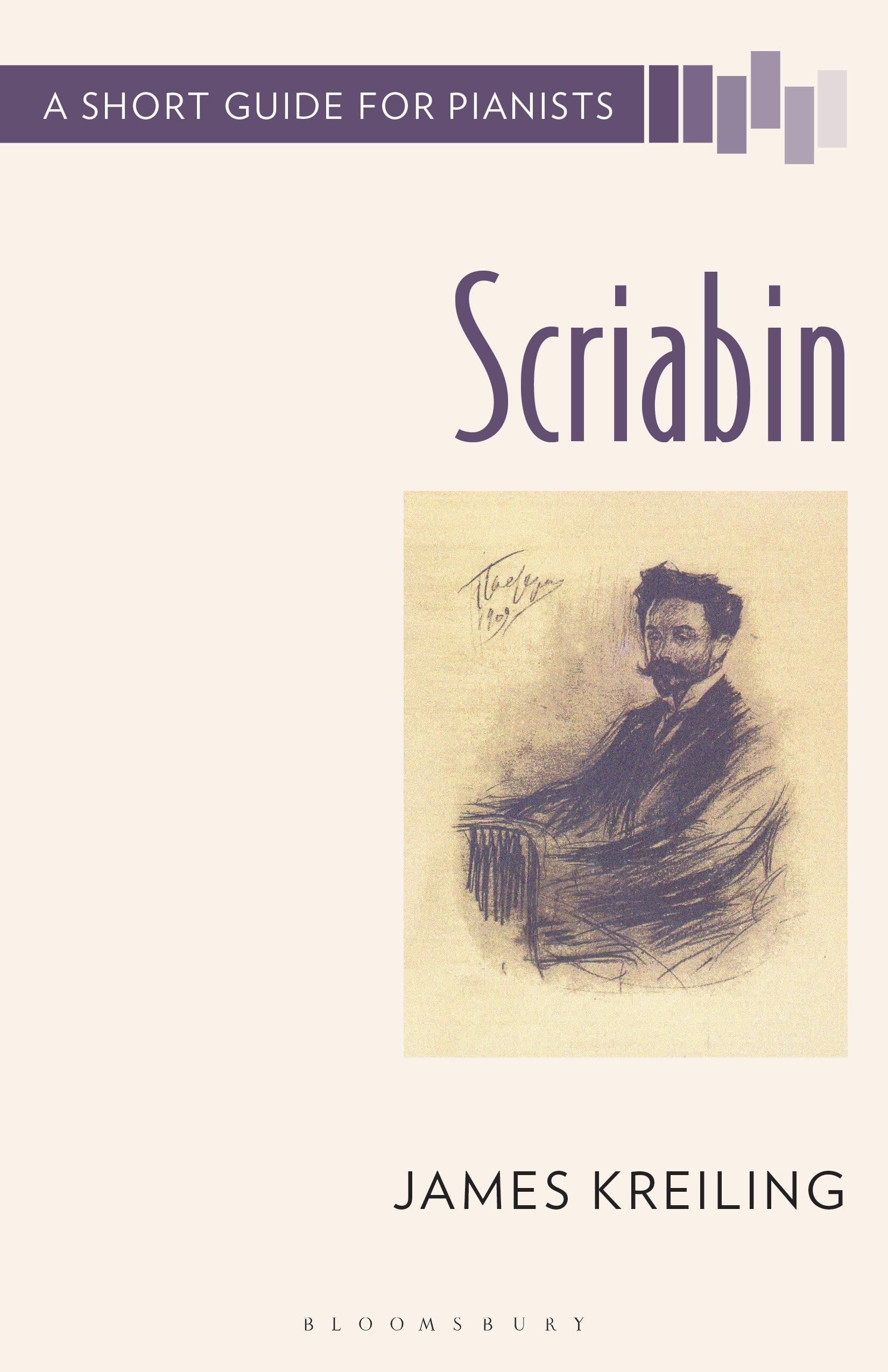
Scriabin: pianist, thinker, symbolist, radical, romantic, and often misunderstood composer – immerse yourself in his mystical world and develop an informed interpretation of his piano works.
Among pianists, the popularity of a handful of his youthful works – from preludes and etudes to sonatas – contrasts starkly with a general ambivalence, verging on animosity, toward his notorious later style. James Kreiling sets out not only to inform and advise but also to persuade. He illuminates the genius of Scriabin's highly individual style while focusing on performance and interpretation.
Considering the various piano-roll recordings of Scriabin left to us as well as first-hand accounts from contemporaries, this book pieces together how a late 19th-century approach to rubato and improvisation is inherent in Scriabin's notation, how notions of Scriabin's orchestration and synesthesia are pianistic tools, and how all of this can influence performance. Kreiling also contemplates the development of Scriabin as “Thinker.” He looks at how the gradual evolution of his thought to apocalyptic heights – from brushes with theosophy and Russian cosmism to mysticism – was born from growing social and political tensions of the epoch, exploring their musical manifestations such as the “Mystic” chord and musical symbolism.
Among pianists, the popularity of a handful of his youthful works – from preludes and etudes to sonatas – contrasts starkly with a general ambivalence, verging on animosity, toward his notorious later style. James Kreiling sets out not only to inform and advise but also to persuade. He illuminates the genius of Scriabin's highly individual style while focusing on performance and interpretation.
Considering the various piano-roll recordings of Scriabin left to us as well as first-hand accounts from contemporaries, this book pieces together how a late 19th-century approach to rubato and improvisation is inherent in Scriabin's notation, how notions of Scriabin's orchestration and synesthesia are pianistic tools, and how all of this can influence performance. Kreiling also contemplates the development of Scriabin as “Thinker.” He looks at how the gradual evolution of his thought to apocalyptic heights – from brushes with theosophy and Russian cosmism to mysticism – was born from growing social and political tensions of the epoch, exploring their musical manifestations such as the “Mystic” chord and musical symbolism.
Pay easily by card, Klarna, Apple Pay or Google Pay. Not happy? You always have a 14-day money-back guarantee. Read more in our terms. If you have any questions, email us at hello@memmo.org.
Memmo makes studying easier – wherever you are in the world. We bring your course books and smart study tools together in one place: summaries, quizzes, podcasts and flashcards. Plus Ted, your study buddy who answers anything you wonder. Over 50,000 students already study here – built to help you learn faster and stress less.