
What does it look like for host communities in international health research to be treated fairly?
Multinational pharmaceutical companies and research funding institutions from high-income countries frequently sponsor clinical trials in low- and middle-income countries, where underdeveloped health and welfare systems raise significant ethical concerns. The power asymmetry between well-resourced foreign sponsors and local communities with limited bargaining power further amplifies concerns of unjust treatment and fears of exploitation.
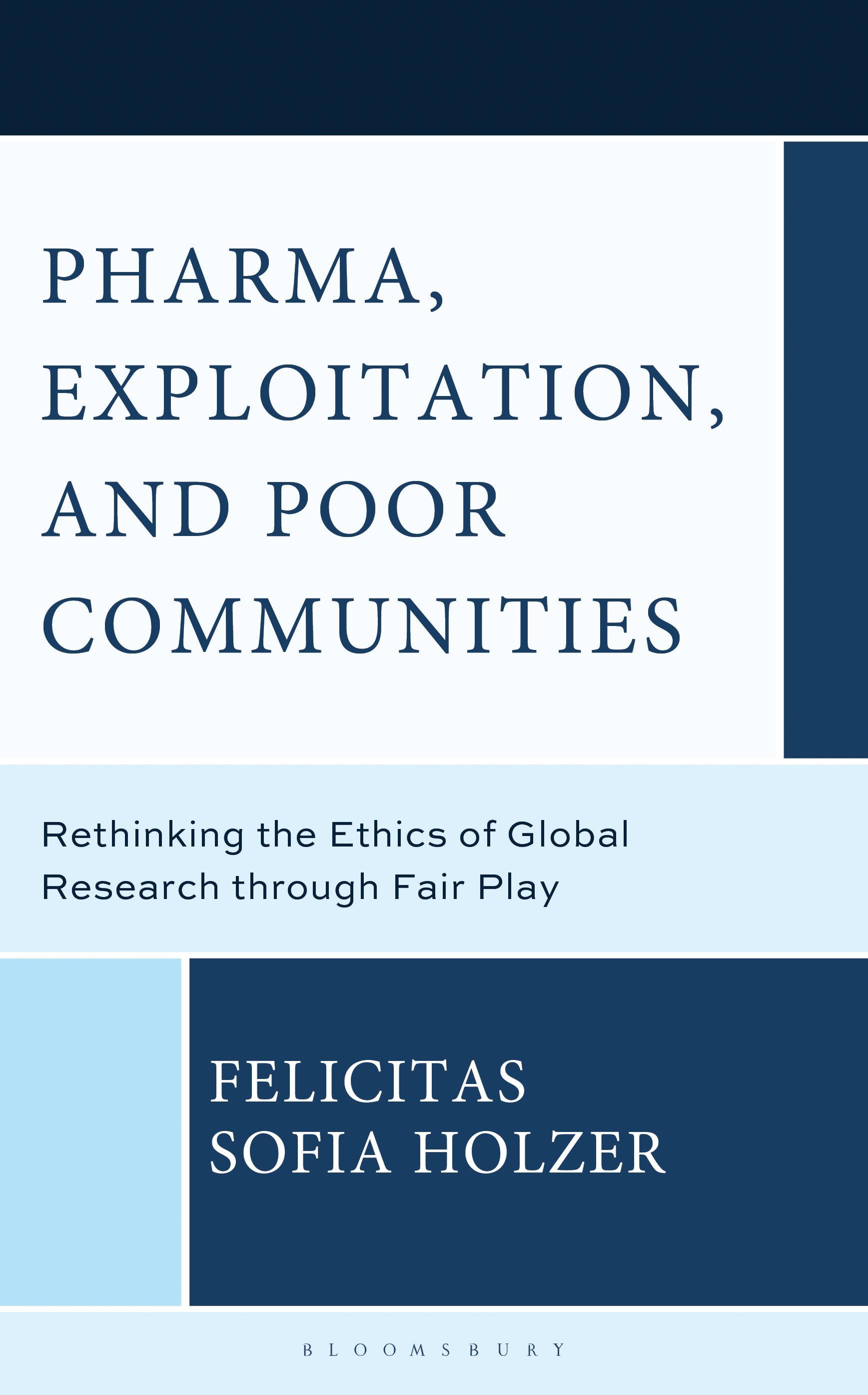
By drawing upon arguments from health research ethics; political philosophy, particularly global distributive justice; and the literature on the principle of fair play, this book addresses a significant gap in the current discourse: the lack of a solid conceptual foundation for the claim that host communities are entitled to fair benefits. Felicitas Holzer discusses concerns related to structural injustice and proposes alternative mechanisms to secure fair benefits for host communities. Ultimately, Holzer argues that obligations of fair benefit-sharing arise from the requirements of fair cooperation between distinct stakeholders.
Multinational pharmaceutical companies and research funding institutions from high-income countries frequently sponsor clinical trials in low- and middle-income countries, where underdeveloped health and welfare systems raise significant ethical concerns. The power asymmetry between well-resourced foreign sponsors and local communities with limited bargaining power further amplifies concerns of unjust treatment and fears of exploitation.
By drawing upon arguments from health research ethics; political philosophy, particularly global distributive justice; and the literature on the principle of fair play, this book addresses a significant gap in the current discourse: the lack of a solid conceptual foundation for the claim that host communities are entitled to fair benefits. Felicitas Holzer discusses concerns related to structural injustice and proposes alternative mechanisms to secure fair benefits for host communities. Ultimately, Holzer argues that obligations of fair benefit-sharing arise from the requirements of fair cooperation between distinct stakeholders.
Pay easily by card, Klarna, Apple Pay or Google Pay. Not happy? You always have a 14-day money-back guarantee. Read more in our terms. If you have any questions, email us at hello@memmo.org.
Memmo makes studying easier – wherever you are in the world. We bring your course books and smart study tools together in one place: summaries, quizzes, podcasts and flashcards. Plus Ted, your study buddy who answers anything you wonder. Over 50,000 students already study here – built to help you learn faster and stress less.