
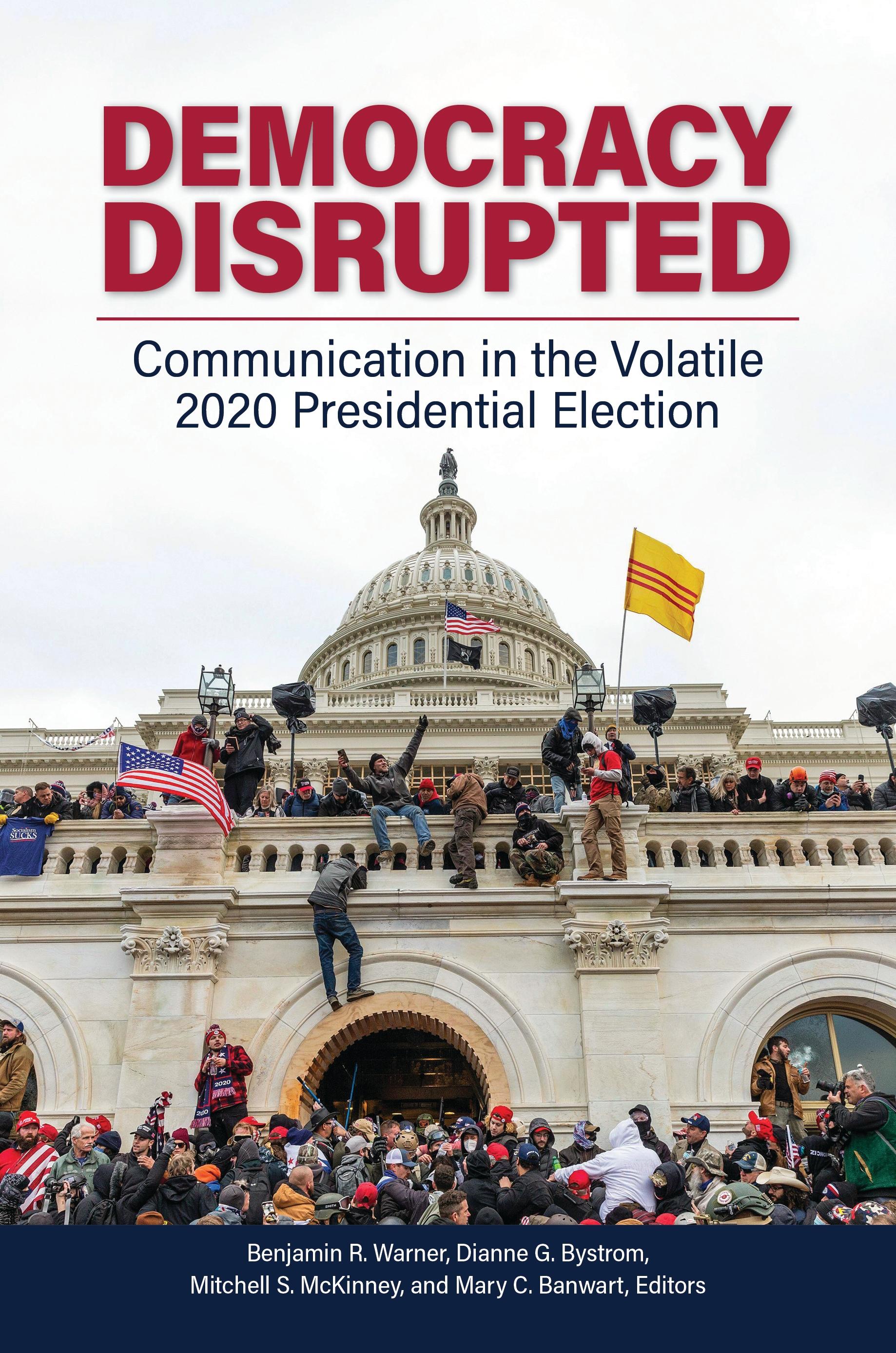
Leading scholars analyze three disruptions in the 2020 presidential campaign and election: disruptions to the status quo caused by the renewed quest for racial justice and greater diversity of candidates, pandemic disruptions to traditional campaigning, and disruptions to democratic norms.
Democracy Disrupted documents the most significant features of the 2020 U.S. presidential election through research conducted by leading scholars in political communication. Chapters consider the coinciding of three historical events in 2020: a 100-year pandemic co-occurring with the presidential campaign, the reinvigorated call for social and racial justice in response to the killing of George Floyd and other Black men and women, and the authoritarian lurch that emerged in reaction to Donald Trump's norm-challenging rhetoric. The Democratic Party's campaign stood out because of the historically diverse field of presidential candidates and the election of the first female vice president.
Chapter authors adopt diverse scientific methodologies and field-leading theories of political communication to understand the way these events forced candidates, campaigns, and voters to adapt to these extraordinary circumstances. Experiments, surveys, case studies, and textual analysis illuminate essential features of this once-in-a-generation campaign. The four editors of this timely volume have been central to describing and contextualizing each recent presidential contest.
Democracy Disrupted documents the most significant features of the 2020 U.S. presidential election through research conducted by leading scholars in political communication. Chapters consider the coinciding of three historical events in 2020: a 100-year pandemic co-occurring with the presidential campaign, the reinvigorated call for social and racial justice in response to the killing of George Floyd and other Black men and women, and the authoritarian lurch that emerged in reaction to Donald Trump's norm-challenging rhetoric. The Democratic Party's campaign stood out because of the historically diverse field of presidential candidates and the election of the first female vice president.
Chapter authors adopt diverse scientific methodologies and field-leading theories of political communication to understand the way these events forced candidates, campaigns, and voters to adapt to these extraordinary circumstances. Experiments, surveys, case studies, and textual analysis illuminate essential features of this once-in-a-generation campaign. The four editors of this timely volume have been central to describing and contextualizing each recent presidential contest.
Pay easily by card, Klarna, Apple Pay or Google Pay. Not happy? You always have a 14-day money-back guarantee. Read more in our terms. If you have any questions, email us at hello@memmo.org.
Memmo makes studying easier – wherever you are in the world. We bring your course books and smart study tools together in one place: summaries, quizzes, podcasts and flashcards. Plus Ted, your study buddy who answers anything you wonder. Over 50,000 students already study here – built to help you learn faster and stress less.