
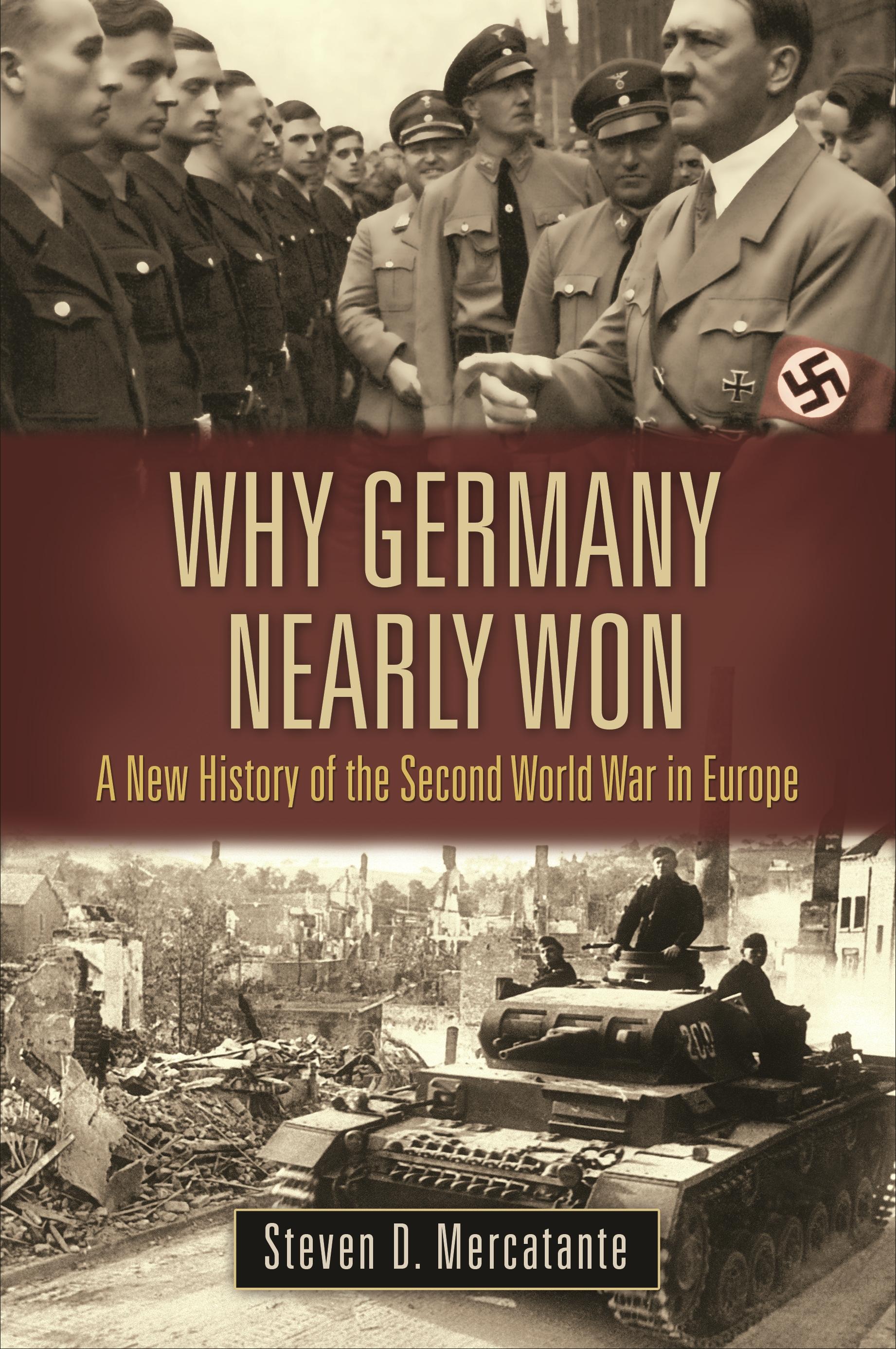
This book offers a unique perspective for understanding how and why the Second World War in Europe ended as it did—and why Germany, in attacking the Soviet Union, came far closer to winning the war than is often perceived.
Why Germany Nearly Won: A New History of the Second World War in Europe challenges this conventional wisdom in highlighting how the re-establishment of the traditional German art of war—updated to accommodate new weapons systems—paved the way for Germany to forge a considerable military edge over its much larger potential rivals by playing to its qualitative strengths as a continental power. Ironically, these methodologies also created and exacerbated internal contradictions that undermined the same war machine and left it vulnerable to enemies with the capacity to adapt and build on potent military traditions of their own.
The book begins by examining topics such as the methods by which the German economy and military prepared for war, the German military establishment's formidable strengths, and its weaknesses. The book then takes an entirely new perspective on explaining the Second World War in Europe. It demonstrates how Germany, through its invasion of the Soviet Union, came within a whisker of cementing a European-based empire that would have allowed the Third Reich to challenge the Anglo-American alliance for global hegemony—an outcome that by commonly cited measures of military potential Germany never should have had even a remote chance of accomplishing. The book's last section explores the final year of the war and addresses how Germany was able to hang on against the world's most powerful nations working in concert to engineer its defeat.
Why Germany Nearly Won: A New History of the Second World War in Europe challenges this conventional wisdom in highlighting how the re-establishment of the traditional German art of war—updated to accommodate new weapons systems—paved the way for Germany to forge a considerable military edge over its much larger potential rivals by playing to its qualitative strengths as a continental power. Ironically, these methodologies also created and exacerbated internal contradictions that undermined the same war machine and left it vulnerable to enemies with the capacity to adapt and build on potent military traditions of their own.
The book begins by examining topics such as the methods by which the German economy and military prepared for war, the German military establishment's formidable strengths, and its weaknesses. The book then takes an entirely new perspective on explaining the Second World War in Europe. It demonstrates how Germany, through its invasion of the Soviet Union, came within a whisker of cementing a European-based empire that would have allowed the Third Reich to challenge the Anglo-American alliance for global hegemony—an outcome that by commonly cited measures of military potential Germany never should have had even a remote chance of accomplishing. The book's last section explores the final year of the war and addresses how Germany was able to hang on against the world's most powerful nations working in concert to engineer its defeat.
Pay easily by card, Klarna, Apple Pay or Google Pay. Not happy? You always have a 14-day money-back guarantee. Read more in our terms. If you have any questions, email us at hello@memmo.org.
Memmo makes studying easier – wherever you are in the world. We bring your course books and smart study tools together in one place: summaries, quizzes, podcasts and flashcards. Plus Ted, your study buddy who answers anything you wonder. Over 50,000 students already study here – built to help you learn faster and stress less.