
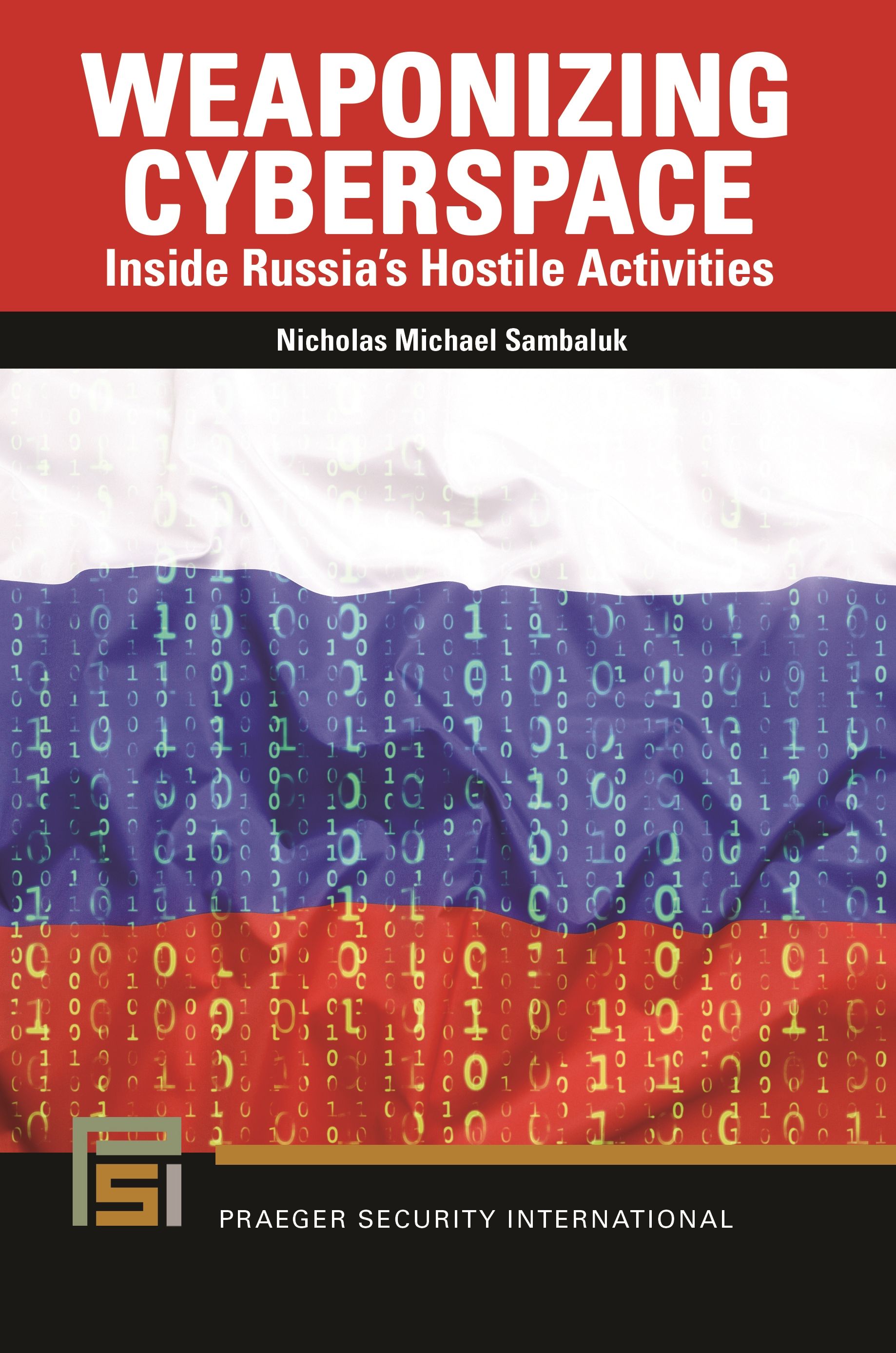
The Russian regime's struggle for internal control drives multifaceted actions in cyberspace that do not stop at national borders. Cybercrime, technical hacking, and disinformation are complementary tools to preserve national power internally while projecting effects onto myriad neighbors and rivals.
Russian activity in the cyber domain is infamous in the United States and other Western countries. Weaponizing Cyberspace explores the Russian proclivity, particularly in the 21st century, for using cyberspace as an environment in which to launch technical attacks and disinformation campaigns that sow chaos and distraction in ways that provide short-term advantage to autocrats in the Kremlin.
Arguing that Russia's goal is to divide people, Sambaluk explains that Russia's modus operandi in disinformation campaigning is specifically to find and exploit existing sore spots in other countries. In the U.S., this often means inflaming political tensions among people on the far left and far right. Russia's actions have taken different forms, including the sophisticated surveillance and sabotage of critical infrastructure, the ransoming of data by criminal groups, and a welter of often mutually contradictory disinformation messages that pollute online discourse within and beyond Russia. Whether deployed to contribute to hybrid war or to psychological fracture and disillusionment in targeted societies, the threat is real and must be understood and effectively addressed.
Russian activity in the cyber domain is infamous in the United States and other Western countries. Weaponizing Cyberspace explores the Russian proclivity, particularly in the 21st century, for using cyberspace as an environment in which to launch technical attacks and disinformation campaigns that sow chaos and distraction in ways that provide short-term advantage to autocrats in the Kremlin.
Arguing that Russia's goal is to divide people, Sambaluk explains that Russia's modus operandi in disinformation campaigning is specifically to find and exploit existing sore spots in other countries. In the U.S., this often means inflaming political tensions among people on the far left and far right. Russia's actions have taken different forms, including the sophisticated surveillance and sabotage of critical infrastructure, the ransoming of data by criminal groups, and a welter of often mutually contradictory disinformation messages that pollute online discourse within and beyond Russia. Whether deployed to contribute to hybrid war or to psychological fracture and disillusionment in targeted societies, the threat is real and must be understood and effectively addressed.
Pay easily by card, Klarna, Apple Pay or Google Pay. Not happy? You always have a 14-day money-back guarantee. Read more in our terms. If you have any questions, email us at hello@memmo.org.
Memmo makes studying easier – wherever you are in the world. We bring your course books and smart study tools together in one place: summaries, quizzes, podcasts and flashcards. Plus Ted, your study buddy who answers anything you wonder. Over 75,000 students already study here – built to help you learn faster and stress less.