
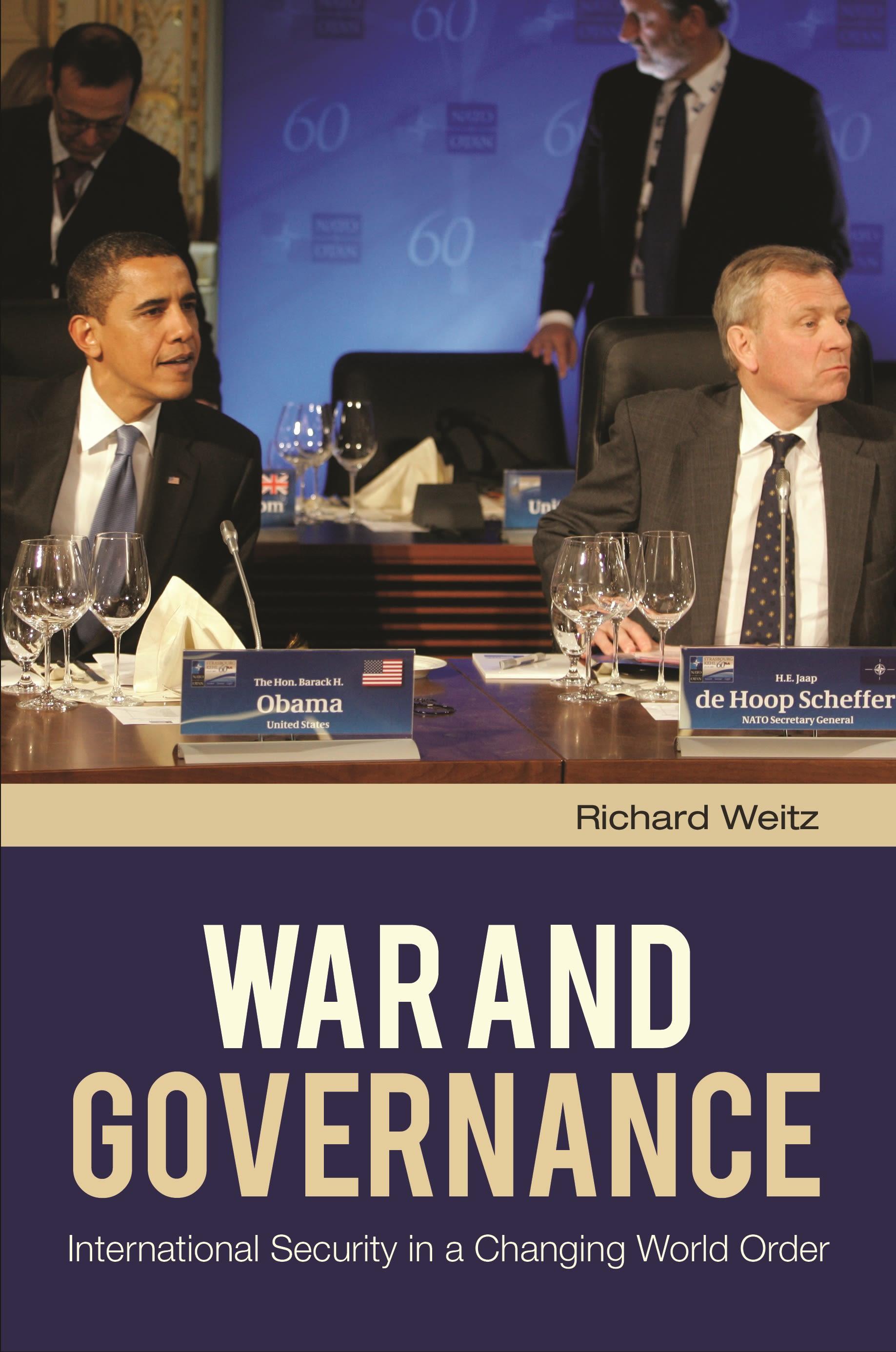
An insightful and expert assessment examines how best to end—and avert—wars.
How do we avoid war? To arrive at an answer, master analyst Richard Weitz explores the ways nations, international organizations, and individuals have sought to bring order to an inherently disorderly phenomenon—potential and actual violent conflict among organized political entities.
Specifically, War and Governance: International Security in a Changing World Order analyzes a number of critical issues such as whether regional security institutions have distinct advantages and liabilities in promoting international security, as compared with universal organizations like the United Nations. Other important questions are addressed, as well. How will international organizations, such as the UN, EU, and NATO, change the nature of war in the 21st century—and be changed by it? What role might less formal institutions and nongovernmental organizations play in peacemaking? Will the nation-state remain the most important international security actor? The book ends with a gap analysis that identifies incongruities between international needs and capabilities—and suggests ways to overcome them.
How do we avoid war? To arrive at an answer, master analyst Richard Weitz explores the ways nations, international organizations, and individuals have sought to bring order to an inherently disorderly phenomenon—potential and actual violent conflict among organized political entities.
Specifically, War and Governance: International Security in a Changing World Order analyzes a number of critical issues such as whether regional security institutions have distinct advantages and liabilities in promoting international security, as compared with universal organizations like the United Nations. Other important questions are addressed, as well. How will international organizations, such as the UN, EU, and NATO, change the nature of war in the 21st century—and be changed by it? What role might less formal institutions and nongovernmental organizations play in peacemaking? Will the nation-state remain the most important international security actor? The book ends with a gap analysis that identifies incongruities between international needs and capabilities—and suggests ways to overcome them.
Pages: 232
Category: Statsvetenskap & Politik
e-ISBN: 9798216163145
Shipping weight: 1.2 kg
Ships in: 1-2 days
Pay easily by card, Klarna, Apple Pay or Google Pay. Not happy? You always have a 14-day money-back guarantee. Read more in our terms. If you have any questions, email us at hello@memmo.org.
Memmo makes studying easier – wherever you are in the world. We bring your course books and smart study tools together in one place: summaries, quizzes, podcasts and flashcards. Plus Ted, your study buddy who answers anything you wonder. Over 50,000 students already study here – built to help you learn faster and stress less.