
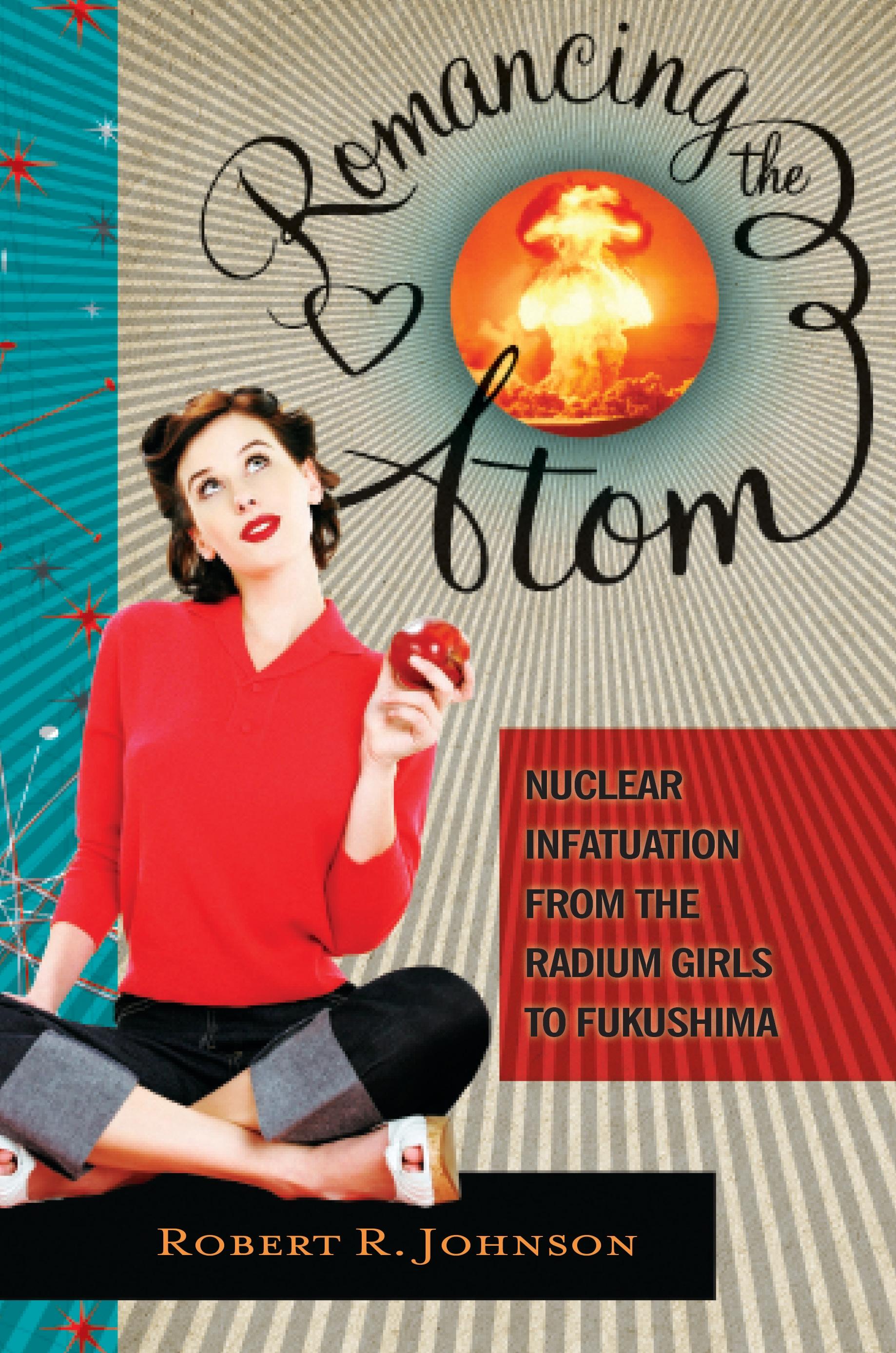
This book presents a compelling account of atomic development over the last century that demonstrates how humans have repeatedly chosen to ignore the associated impacts for the sake of technological, scientific, military, and economic expediency.
In 1945, Albert Einstein said, "The release of atomic power has changed everything except our way of thinking … the solution to this problem lies in the heart of mankind." This statement seems more valid today than ever. Romancing the Atom: Nuclear Infatuation from the Radium Girls to Fukushima presents compelling moments that clearly depict the folly and shortsightedness of our "atomic mindset" and shed light upon current issues of nuclear power, waste disposal, and weapons development.
The book consists of ten nonfiction historical vignettes, including the women radium dial painters of the 1920s, the expulsion of the Bikini Island residents to create a massive "petri dish" for post-World War II bomb and radiation testing, the government-subsidized uranium rush of the 1950s and its effects on Native American communities, and the secret radioactive material development facilities in residential neighborhoods. In addition, the book includes original interviews of prominent historians, writers, and private citizens involved with these poignant stories.
More information is available online at www.romancingtheatom.com.
In 1945, Albert Einstein said, "The release of atomic power has changed everything except our way of thinking … the solution to this problem lies in the heart of mankind." This statement seems more valid today than ever. Romancing the Atom: Nuclear Infatuation from the Radium Girls to Fukushima presents compelling moments that clearly depict the folly and shortsightedness of our "atomic mindset" and shed light upon current issues of nuclear power, waste disposal, and weapons development.
The book consists of ten nonfiction historical vignettes, including the women radium dial painters of the 1920s, the expulsion of the Bikini Island residents to create a massive "petri dish" for post-World War II bomb and radiation testing, the government-subsidized uranium rush of the 1950s and its effects on Native American communities, and the secret radioactive material development facilities in residential neighborhoods. In addition, the book includes original interviews of prominent historians, writers, and private citizens involved with these poignant stories.
More information is available online at www.romancingtheatom.com.
Pay easily by card, Klarna, Apple Pay or Google Pay. Not happy? You always have a 14-day money-back guarantee. Read more in our terms. If you have any questions, email us at hello@memmo.org.
Memmo makes studying easier – wherever you are in the world. We bring your course books and smart study tools together in one place: summaries, quizzes, podcasts and flashcards. Plus Ted, your study buddy who answers anything you wonder. Over 75,000 students already study here – built to help you learn faster and stress less.