
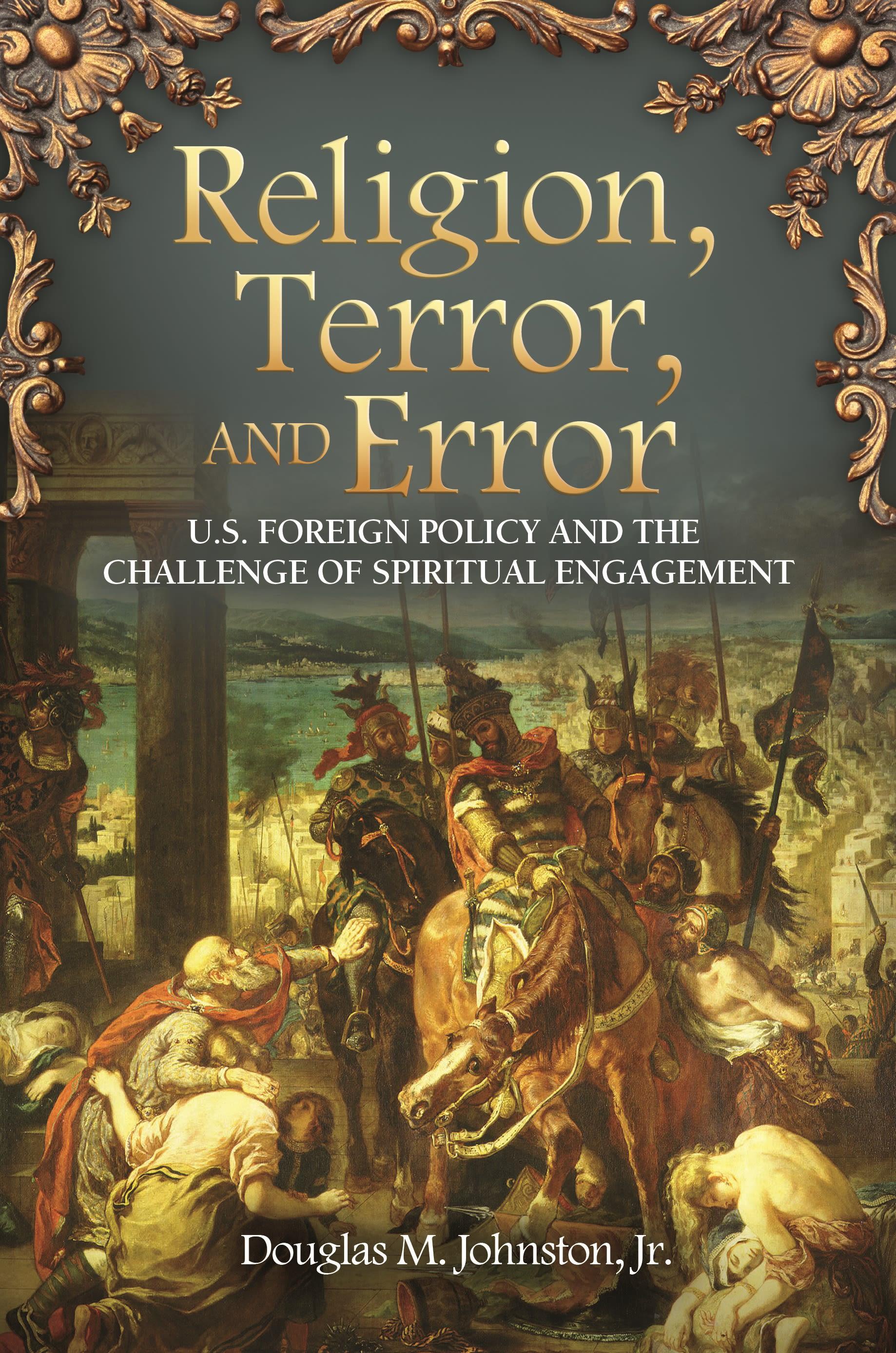
This book describes how the United States can integrate religious considerations into its foreign policy, moving towards a new leadership paradigm that effectively counters the challenge of Islamist extremism.
How should the United States deal with the jihadist challenge and other religious imperatives that permeate today's geopolitical landscape? Religion, Terror, and Error: U.S. Foreign Policy and the Challenge of Spiritual Engagement argues that what is required is a longer-term strategy of cultural engagement, backed by a deeper understanding of how others view the world and what is important to them. The means by which that can be accomplished are the subject of this book.
This work achieves three important goals. It shows how religious considerations can be incorporated into the practice of U.S. foreign policy; offers a successor to the rational-actor model of decision-making that has heretofore excluded "irrational" factors like religion; and suggests a new paradigm for U.S. leadership in anticipation of tomorrow's multipolar world. In describing how the United States should realign itself to deal more effectively with the causal factors that underlying religious extremism, this innovative treatise explains how existing capabilities can be redirected to respond to the challenge and identifies additional capabilities that will be needed to complete the task.
How should the United States deal with the jihadist challenge and other religious imperatives that permeate today's geopolitical landscape? Religion, Terror, and Error: U.S. Foreign Policy and the Challenge of Spiritual Engagement argues that what is required is a longer-term strategy of cultural engagement, backed by a deeper understanding of how others view the world and what is important to them. The means by which that can be accomplished are the subject of this book.
This work achieves three important goals. It shows how religious considerations can be incorporated into the practice of U.S. foreign policy; offers a successor to the rational-actor model of decision-making that has heretofore excluded "irrational" factors like religion; and suggests a new paradigm for U.S. leadership in anticipation of tomorrow's multipolar world. In describing how the United States should realign itself to deal more effectively with the causal factors that underlying religious extremism, this innovative treatise explains how existing capabilities can be redirected to respond to the challenge and identifies additional capabilities that will be needed to complete the task.
Pages: 312
Category: Statsvetenskap & Politik
e-ISBN: 9798216138136
Shipping weight: 1.2 kg
Ships in: 1-2 days
Pay easily by card, Klarna, Apple Pay or Google Pay. Not happy? You always have a 14-day money-back guarantee. Read more in our terms. If you have any questions, email us at hello@memmo.org.
Memmo makes studying easier – wherever you are in the world. We bring your course books and smart study tools together in one place: summaries, quizzes, podcasts and flashcards. Plus Ted, your study buddy who answers anything you wonder. Over 50,000 students already study here – built to help you learn faster and stress less.