
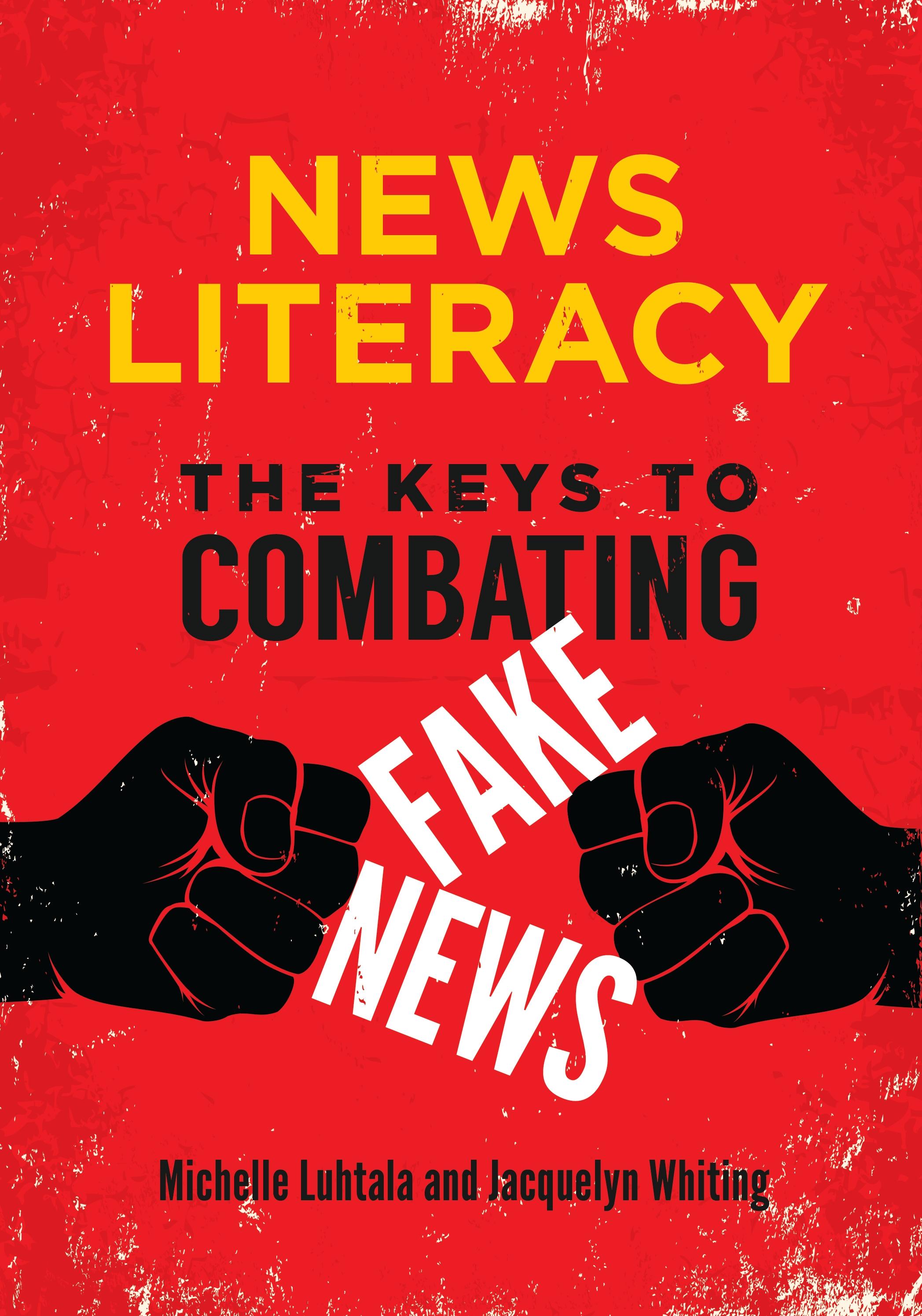
At a time when misinformation in the media is abundant, this book explains the difficulty in nurturing students to become critical researchers and offers practical lessons that empower students to excavate information that will help them learn.
This guide to teaching news literacy explores a wealth of resources and classroom-tested lessons that educators in grades 7–12 can use in their own libraries and classrooms. To introduce the concept of news literacy, the authors explain the steps of the inquiry and research process in detail and examine the Stanford History Education Group (SHEG) 2016 report "Evaluating Information: The Cornerstone of Civic Online Reasoning" and related research studies.
Lesson plans corresponding to each stage of the process are coordinated to relevant standards from the CCSS and ISTE and are accompanied by rubrics for providing students feedback on their progress as well as samples of student work as it evolved through the stages. Furthermore, the authors' anecdotal insights from their experiences in collaboratively implementing the lessons with colleagues are an invaluable addition for any librarian seeking to work with teachers to help students become critical researchers.
This guide to teaching news literacy explores a wealth of resources and classroom-tested lessons that educators in grades 7–12 can use in their own libraries and classrooms. To introduce the concept of news literacy, the authors explain the steps of the inquiry and research process in detail and examine the Stanford History Education Group (SHEG) 2016 report "Evaluating Information: The Cornerstone of Civic Online Reasoning" and related research studies.
Lesson plans corresponding to each stage of the process are coordinated to relevant standards from the CCSS and ISTE and are accompanied by rubrics for providing students feedback on their progress as well as samples of student work as it evolved through the stages. Furthermore, the authors' anecdotal insights from their experiences in collaboratively implementing the lessons with colleagues are an invaluable addition for any librarian seeking to work with teachers to help students become critical researchers.
Pay easily by card, Klarna, Apple Pay or Google Pay. Not happy? You always have a 14-day money-back guarantee. Read more in our terms. If you have any questions, email us at hello@memmo.org.
Memmo makes studying easier – wherever you are in the world. We bring your course books and smart study tools together in one place: summaries, quizzes, podcasts and flashcards. Plus Ted, your study buddy who answers anything you wonder. Over 75,000 students already study here – built to help you learn faster and stress less.