
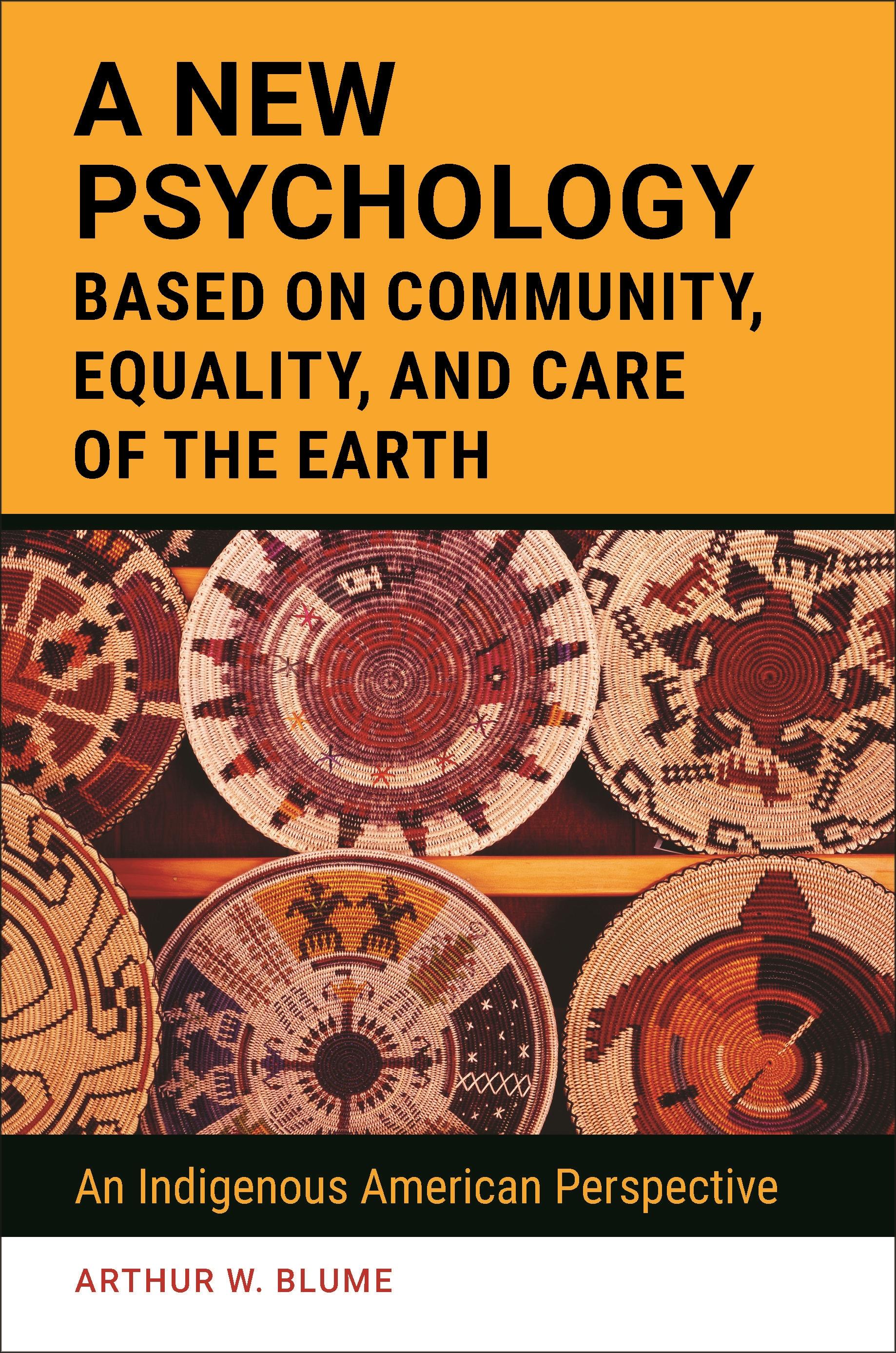
Explains Native American psychology and how its unique perspectives on mind and behavior can bring a focus to better heal individual, social, and global disorders.
Psychology is a relatively new discipline, with foundations formed narrowly and near-exclusively by white, European males. But in this increasingly diverse nation and world, those foundations filled with implicit bias are too narrow to best help our people and society, says author Arthur Blume, a fellow of the American Psychological Association. According to Blume, a narrowly based perspective prevents "out-of-the-box" thinking, research, and treatment that could well power greater healing and avoidance of disorders.
In this text, Blume explains the Native American perspective on psychology, detailing why that needs to be incorporated as a new model for this field. A Native American psychologist, he contrasts the original culture of psychology's creators—as it includes individualism, autonomy, independence, and hierarchal relationships—with that of Native Americans in the context of communalism, interdependence, earth-centeredness, and egalitarianism. As Blume explains, psychological happiness is redefined by the reality of our interdependence rather than materialism and individualism, and how we do things becomes as important as what we accomplish.
Psychology is a relatively new discipline, with foundations formed narrowly and near-exclusively by white, European males. But in this increasingly diverse nation and world, those foundations filled with implicit bias are too narrow to best help our people and society, says author Arthur Blume, a fellow of the American Psychological Association. According to Blume, a narrowly based perspective prevents "out-of-the-box" thinking, research, and treatment that could well power greater healing and avoidance of disorders.
In this text, Blume explains the Native American perspective on psychology, detailing why that needs to be incorporated as a new model for this field. A Native American psychologist, he contrasts the original culture of psychology's creators—as it includes individualism, autonomy, independence, and hierarchal relationships—with that of Native Americans in the context of communalism, interdependence, earth-centeredness, and egalitarianism. As Blume explains, psychological happiness is redefined by the reality of our interdependence rather than materialism and individualism, and how we do things becomes as important as what we accomplish.
Pay easily by card, Klarna, Apple Pay or Google Pay. Not happy? You always have a 14-day money-back guarantee. Read more in our terms. If you have any questions, email us at hello@memmo.org.
Memmo makes studying easier – wherever you are in the world. We bring your course books and smart study tools together in one place: summaries, quizzes, podcasts and flashcards. Plus Ted, your study buddy who answers anything you wonder. Over 50,000 students already study here – built to help you learn faster and stress less.