
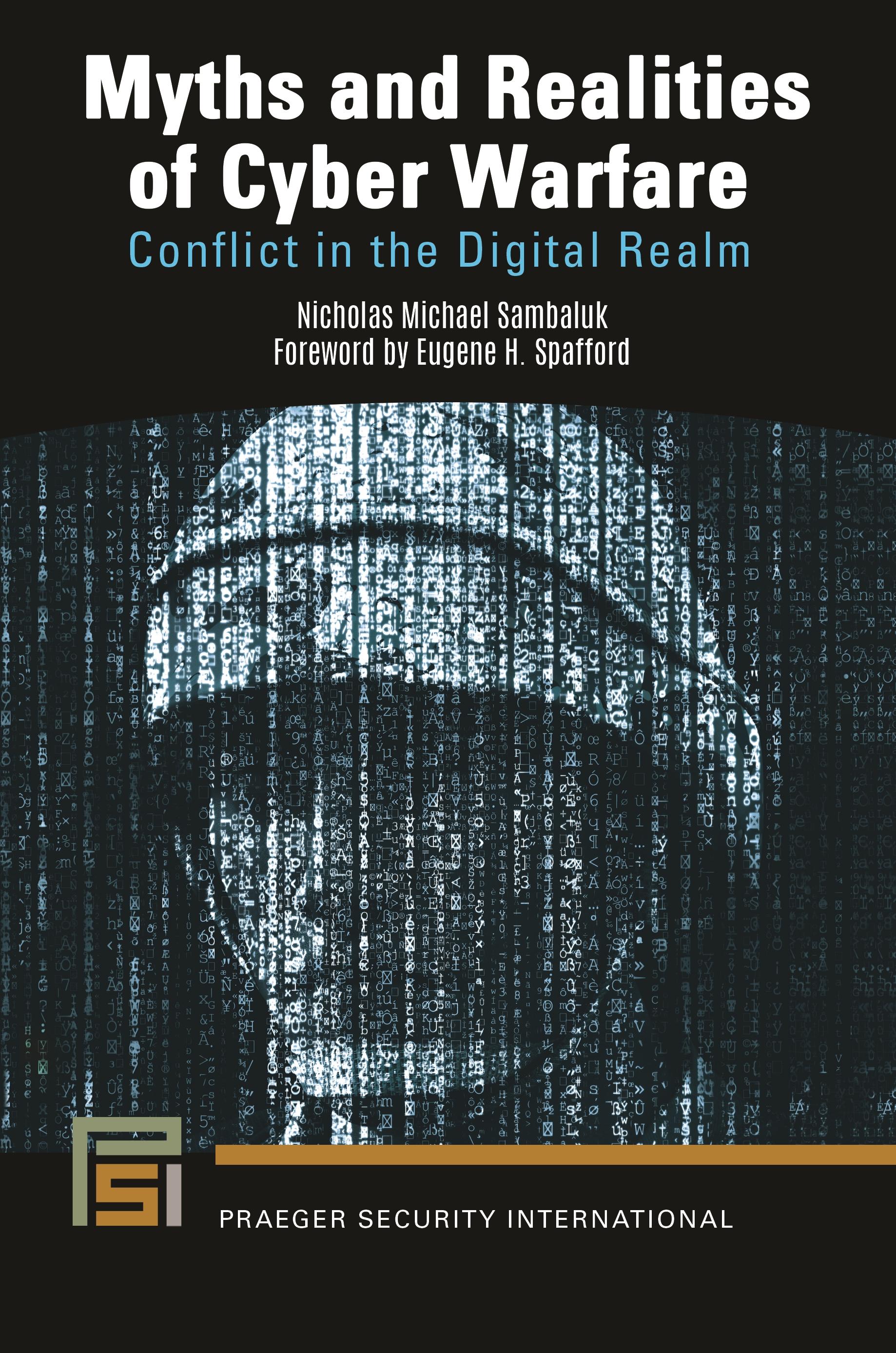
This illuminating book examines and refines the commonplace "wisdom" about cyber conflict-its effects, character, and implications for national and individual security in the 21st century.
"Cyber warfare" evokes different images to different people. This book deals with the technological aspects denoted by "cyber" and also with the information operations connected to social media's role in digital struggle.
The author discusses numerous mythologies about cyber warfare, including its presumptively instantaneous speed, that it makes distance and location irrelevant, and that victims of cyber attacks deserve blame for not defending adequately against attacks. The author outlines why several widespread beliefs about cyber weapons need modification and suggests more nuanced and contextualized conclusions about how cyber domain hostility impacts conflict in the modern world.
After distinguishing between the nature of warfare and the character of wars, chapters will probe the widespread assumptions about cyber weapons themselves. The second half of the book explores the role of social media and the consequences of the digital realm being a battlespace in 21st-century conflicts. The book also considers how trends in computing and cyber conflict impact security affairs as well as the practicality of people's relationships with institutions and trends, ranging from democracy to the Internet of Things.
"Cyber warfare" evokes different images to different people. This book deals with the technological aspects denoted by "cyber" and also with the information operations connected to social media's role in digital struggle.
The author discusses numerous mythologies about cyber warfare, including its presumptively instantaneous speed, that it makes distance and location irrelevant, and that victims of cyber attacks deserve blame for not defending adequately against attacks. The author outlines why several widespread beliefs about cyber weapons need modification and suggests more nuanced and contextualized conclusions about how cyber domain hostility impacts conflict in the modern world.
After distinguishing between the nature of warfare and the character of wars, chapters will probe the widespread assumptions about cyber weapons themselves. The second half of the book explores the role of social media and the consequences of the digital realm being a battlespace in 21st-century conflicts. The book also considers how trends in computing and cyber conflict impact security affairs as well as the practicality of people's relationships with institutions and trends, ranging from democracy to the Internet of Things.
Pay easily by card, Klarna, Apple Pay or Google Pay. Not happy? You always have a 14-day money-back guarantee. Read more in our terms. If you have any questions, email us at hello@memmo.org.
Memmo makes studying easier – wherever you are in the world. We bring your course books and smart study tools together in one place: summaries, quizzes, podcasts and flashcards. Plus Ted, your study buddy who answers anything you wonder. Over 75,000 students already study here – built to help you learn faster and stress less.