
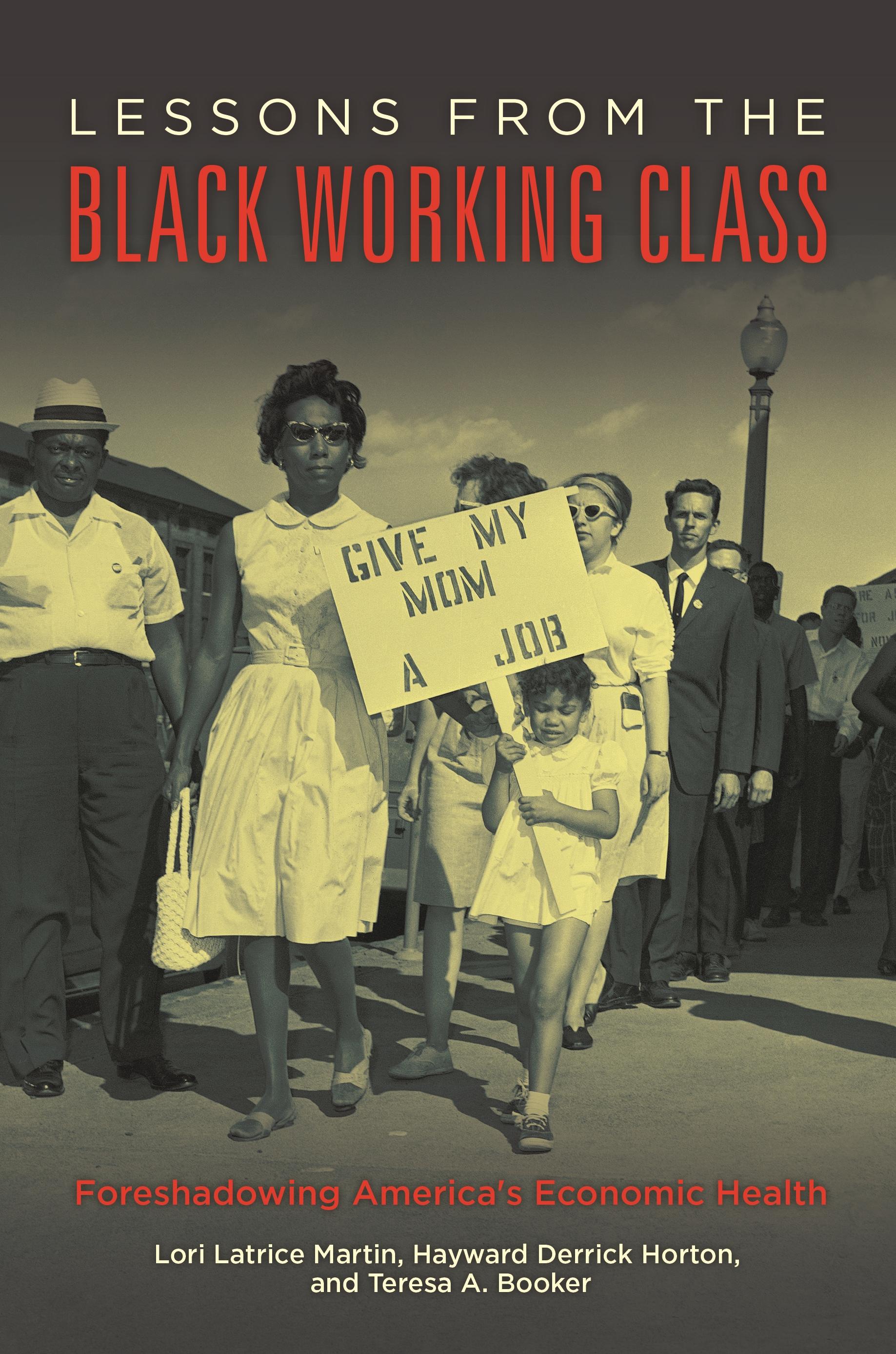
This book enables readers to better understand, explain, and predict the future of the nation's overall economic health through its examination of the black working class—especially the experiences of black women and black working-class residents outside of urban areas.
How have the experiences of black working-class women and men residing in urban, suburban, and rural settings impacted U.S. labor relations and the broader American society? This book asserts that a comprehensive and critical examination of the black working class can be used to forecast whether economic troubles are on the horizon. It documents how the increasing incidence of attacks on unions, the dwindling availability of working-class jobs, and the clamoring by the working class for a minimum wage hike is proof that the atmospheric pressure in America is rising, and that efforts to prepare for the approaching financial storm require attention to the individuals and households who are often overlooked: the black working class.
Presenting information of great importance to sociologists, political scientists, and economists, the authors of this work explore the impact of the recent Great Recession on working-class African Americans and argue that the intersections of race and class for this particular group uncover the state of equity and justice in America. This book will also be of interest to public policymakers as well as students in graduate-level courses in the areas of African American studies, American society and labor, labor relations, labor and the Civil Rights Movement, and studies on race, class, and gender.
How have the experiences of black working-class women and men residing in urban, suburban, and rural settings impacted U.S. labor relations and the broader American society? This book asserts that a comprehensive and critical examination of the black working class can be used to forecast whether economic troubles are on the horizon. It documents how the increasing incidence of attacks on unions, the dwindling availability of working-class jobs, and the clamoring by the working class for a minimum wage hike is proof that the atmospheric pressure in America is rising, and that efforts to prepare for the approaching financial storm require attention to the individuals and households who are often overlooked: the black working class.
Presenting information of great importance to sociologists, political scientists, and economists, the authors of this work explore the impact of the recent Great Recession on working-class African Americans and argue that the intersections of race and class for this particular group uncover the state of equity and justice in America. This book will also be of interest to public policymakers as well as students in graduate-level courses in the areas of African American studies, American society and labor, labor relations, labor and the Civil Rights Movement, and studies on race, class, and gender.
Pay easily by card, Klarna, Apple Pay or Google Pay. Not happy? You always have a 14-day money-back guarantee. Read more in our terms. If you have any questions, email us at hello@memmo.org.
Memmo makes studying easier – wherever you are in the world. We bring your course books and smart study tools together in one place: summaries, quizzes, podcasts and flashcards. Plus Ted, your study buddy who answers anything you wonder. Over 50,000 students already study here – built to help you learn faster and stress less.