
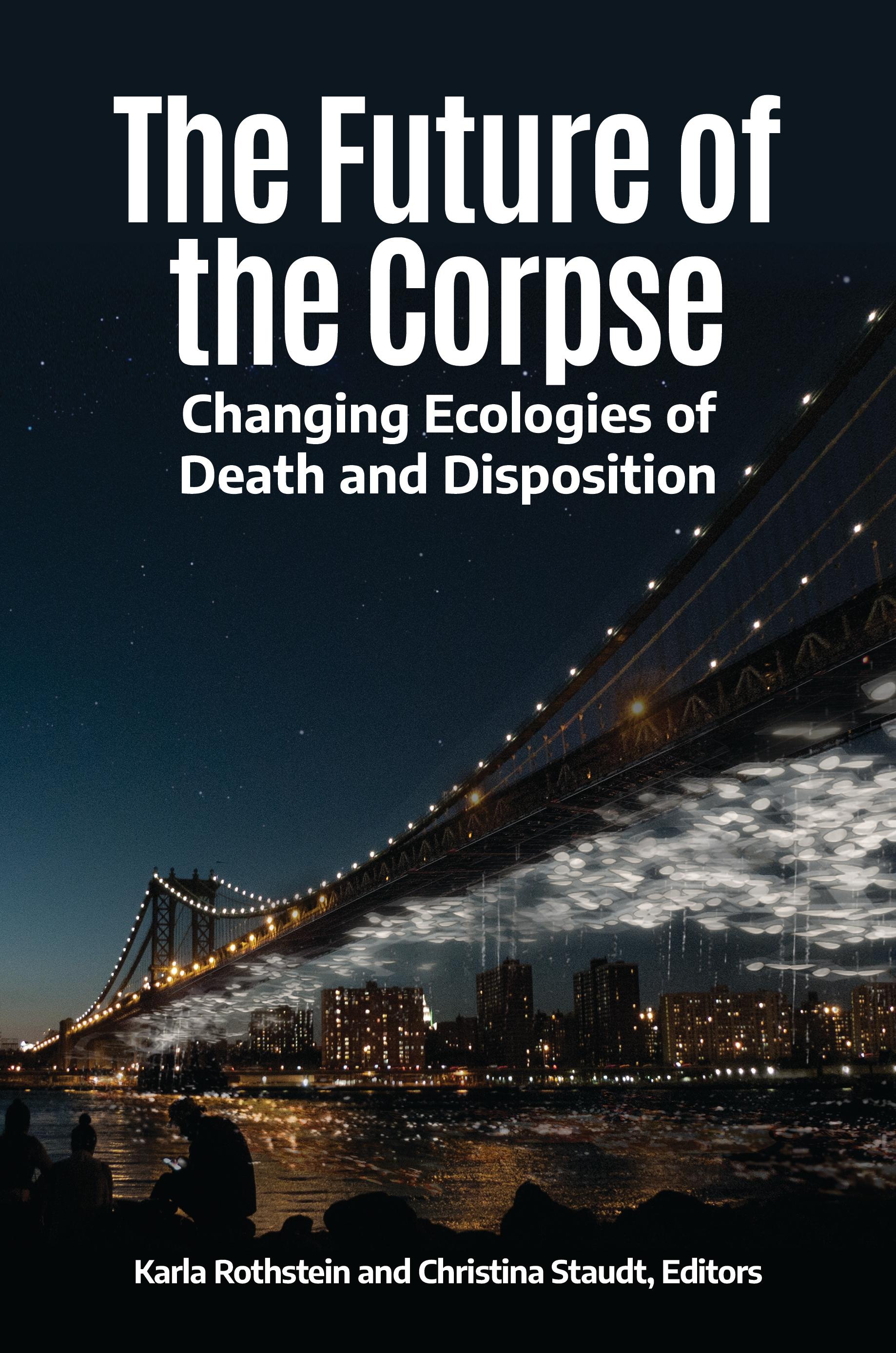
This book reviews the spectrum of death, from when the living person turns to corpse until the person lives in the memory of mourners, and its impact on the ecology of the socio-cultural community and physical environment.
This book demonstrates that American society today is in a pivotal period for re-imaging end-of-life care, funerary services, human disposition methods, memorializing, and mourning. The editors and contributors outline the past, present, and future of death care rituals, pointing to promising new practices and innovative projects that show how we can better integrate the dying and dead with the living and create positive change that supports sustainable stewardship of our environment. Individual chapters describe prevailing practices and issues in different settings where people die and in postmortem rituals; disposition and current ecologically and, in urban areas, spatially unsustainable methods; law of human remains; customs and trends among key stakeholders, such as cemeteries and funeral directors; and relevant technological advances. The book culminates in a presentation of emerging sustainable disposition technologies and innovative designs for proposed public memorial projects that respond to shifting values, beliefs, and priorities among an increasingly diverse population.
This book demonstrates that American society today is in a pivotal period for re-imaging end-of-life care, funerary services, human disposition methods, memorializing, and mourning. The editors and contributors outline the past, present, and future of death care rituals, pointing to promising new practices and innovative projects that show how we can better integrate the dying and dead with the living and create positive change that supports sustainable stewardship of our environment. Individual chapters describe prevailing practices and issues in different settings where people die and in postmortem rituals; disposition and current ecologically and, in urban areas, spatially unsustainable methods; law of human remains; customs and trends among key stakeholders, such as cemeteries and funeral directors; and relevant technological advances. The book culminates in a presentation of emerging sustainable disposition technologies and innovative designs for proposed public memorial projects that respond to shifting values, beliefs, and priorities among an increasingly diverse population.
Pay easily by card, Klarna, Apple Pay or Google Pay. Not happy? You always have a 14-day money-back guarantee. Read more in our terms. If you have any questions, email us at hello@memmo.org.
Memmo makes studying easier – wherever you are in the world. We bring your course books and smart study tools together in one place: summaries, quizzes, podcasts and flashcards. Plus Ted, your study buddy who answers anything you wonder. Over 50,000 students already study here – built to help you learn faster and stress less.