
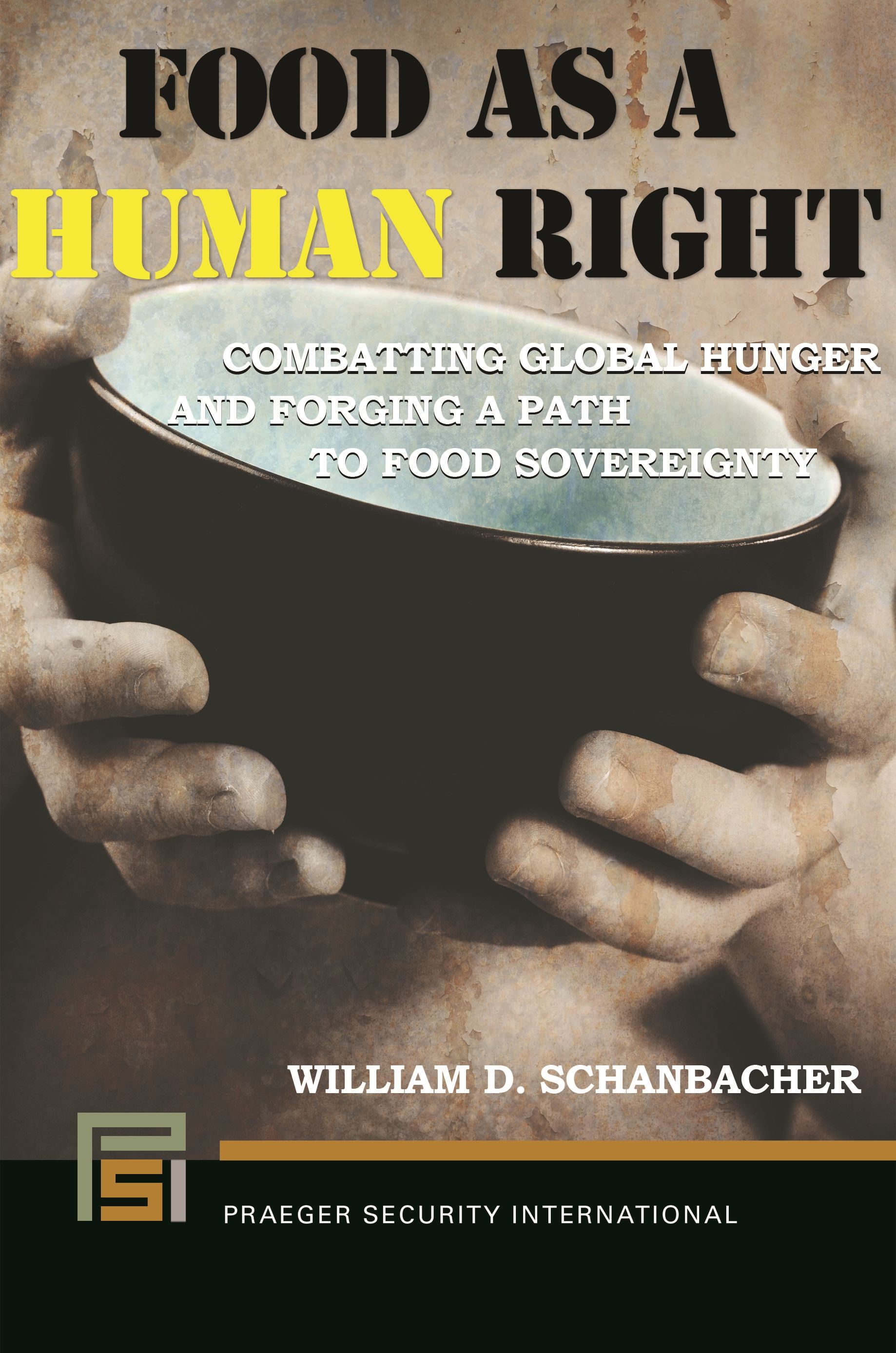
This important work addresses the difficult ethical issues surrounding the accessibility of food to all people as a human right, and not a privilege that emerges because of social structure or benefit of geography.
Food sovereignty—the right of peoples to define their own chosen food and agriculture, free of monopolization or threats—is the path to stopping global hunger. This book approaches the topic from a solutions-based perspective, discussing concrete policy providing for sovereignty, or control, of one's own food sources as a solution that, while controversial, offers more promise than do the actions of international organizations and trade agreements. Providing access to safe, healthy food is an ethical responsibility of the world's nations, not just a right of the elite or wealthy.
This book presses the need to formulate policies that address the problems of poverty and hunger on a more humane and meaningful level. Organized thematically, chapters are based on such topics as food security, food sovereignty, human rights, and sustainability that focus on the global food system. Specific case studies provide examples of global hunger and poverty issues. Taken in its entirety, the book informs readers of how their food consumption might negatively affect the global poor, while its concluding chapters offer solutions for alleviating problems in the global food system.
Food sovereignty—the right of peoples to define their own chosen food and agriculture, free of monopolization or threats—is the path to stopping global hunger. This book approaches the topic from a solutions-based perspective, discussing concrete policy providing for sovereignty, or control, of one's own food sources as a solution that, while controversial, offers more promise than do the actions of international organizations and trade agreements. Providing access to safe, healthy food is an ethical responsibility of the world's nations, not just a right of the elite or wealthy.
This book presses the need to formulate policies that address the problems of poverty and hunger on a more humane and meaningful level. Organized thematically, chapters are based on such topics as food security, food sovereignty, human rights, and sustainability that focus on the global food system. Specific case studies provide examples of global hunger and poverty issues. Taken in its entirety, the book informs readers of how their food consumption might negatively affect the global poor, while its concluding chapters offer solutions for alleviating problems in the global food system.
Pages: 232
Category: Statsvetenskap & Politik
e-ISBN: 9798216085522
Shipping weight: 1.2 kg
Ships in: 1-2 days
Pay easily by card, Klarna, Apple Pay or Google Pay. Not happy? You always have a 14-day money-back guarantee. Read more in our terms. If you have any questions, email us at hello@memmo.org.
Memmo makes studying easier – wherever you are in the world. We bring your course books and smart study tools together in one place: summaries, quizzes, podcasts and flashcards. Plus Ted, your study buddy who answers anything you wonder. Over 50,000 students already study here – built to help you learn faster and stress less.