
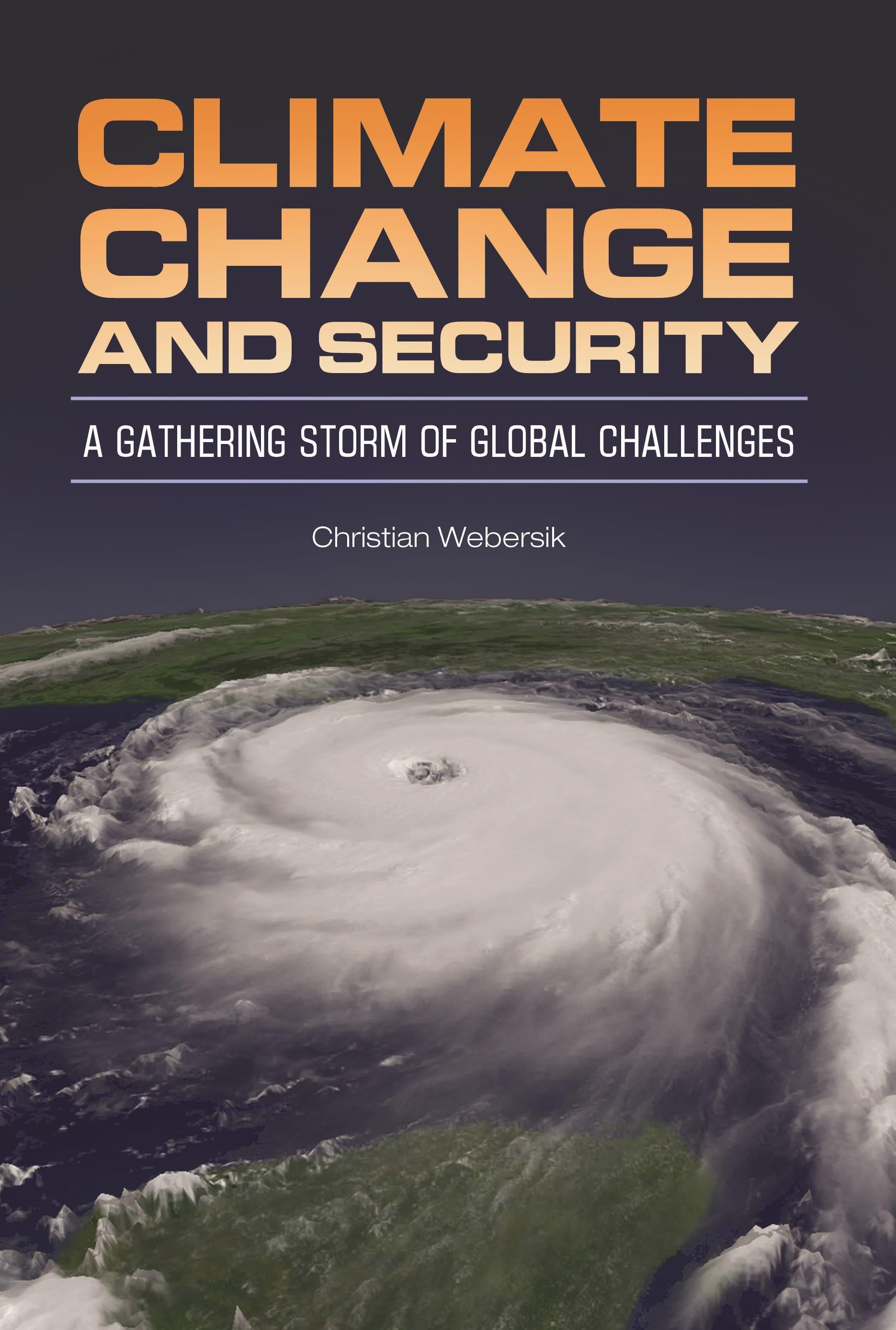
Human-induced climate change is causing resource scarcities, natural disasters, and mass migrations, which in turn destabilize national, international, and human security structures and multiply the human inputs to climate change.
Alarms about the expanding role of climate change as a force multiplier of existing threats to national, international, and human security structures studies are being raised at all levels of governance and intelligence—national (including the U.S. Senate, the Director of National Intelligence, the Central Intelligence Agency, and the Pentagon), transnational (including the European Union and the United Nations), and private (such as the Central News Agency and the American Security Project). Climate Change and Security: A Gathering Storm of Global Challenges focuses on the three major feedback effects of human-induced climate change on human and international security—resource scarcity, natural disasters, and sea-level rise.
Decreasing per capita availability of renewable resources due to such regional effects of climate change as drought and desertification leads to intensified competition for these resources and may result in armed violence—especially when compounded by conditions of rapid population growth, tribalism, and sectarianism, as in Darfur and Somalia. The increase in the frequency and intensity of meteorological disasters associated with global warming weakens already debilitated tropical societies and makes them still more vulnerable to political instability, as in Haiti. Sea-level rise will lead to disruptive mass migrations of climate refugees as dense littoral populations are forced to abandon low-lying coastal regions, as in Bangladesh.
Alarms about the expanding role of climate change as a force multiplier of existing threats to national, international, and human security structures studies are being raised at all levels of governance and intelligence—national (including the U.S. Senate, the Director of National Intelligence, the Central Intelligence Agency, and the Pentagon), transnational (including the European Union and the United Nations), and private (such as the Central News Agency and the American Security Project). Climate Change and Security: A Gathering Storm of Global Challenges focuses on the three major feedback effects of human-induced climate change on human and international security—resource scarcity, natural disasters, and sea-level rise.
Decreasing per capita availability of renewable resources due to such regional effects of climate change as drought and desertification leads to intensified competition for these resources and may result in armed violence—especially when compounded by conditions of rapid population growth, tribalism, and sectarianism, as in Darfur and Somalia. The increase in the frequency and intensity of meteorological disasters associated with global warming weakens already debilitated tropical societies and makes them still more vulnerable to political instability, as in Haiti. Sea-level rise will lead to disruptive mass migrations of climate refugees as dense littoral populations are forced to abandon low-lying coastal regions, as in Bangladesh.
Pay easily by card, Klarna, Apple Pay or Google Pay. Not happy? You always have a 14-day money-back guarantee. Read more in our terms. If you have any questions, email us at hello@memmo.org.
Memmo makes studying easier – wherever you are in the world. We bring your course books and smart study tools together in one place: summaries, quizzes, podcasts and flashcards. Plus Ted, your study buddy who answers anything you wonder. Over 50,000 students already study here – built to help you learn faster and stress less.