
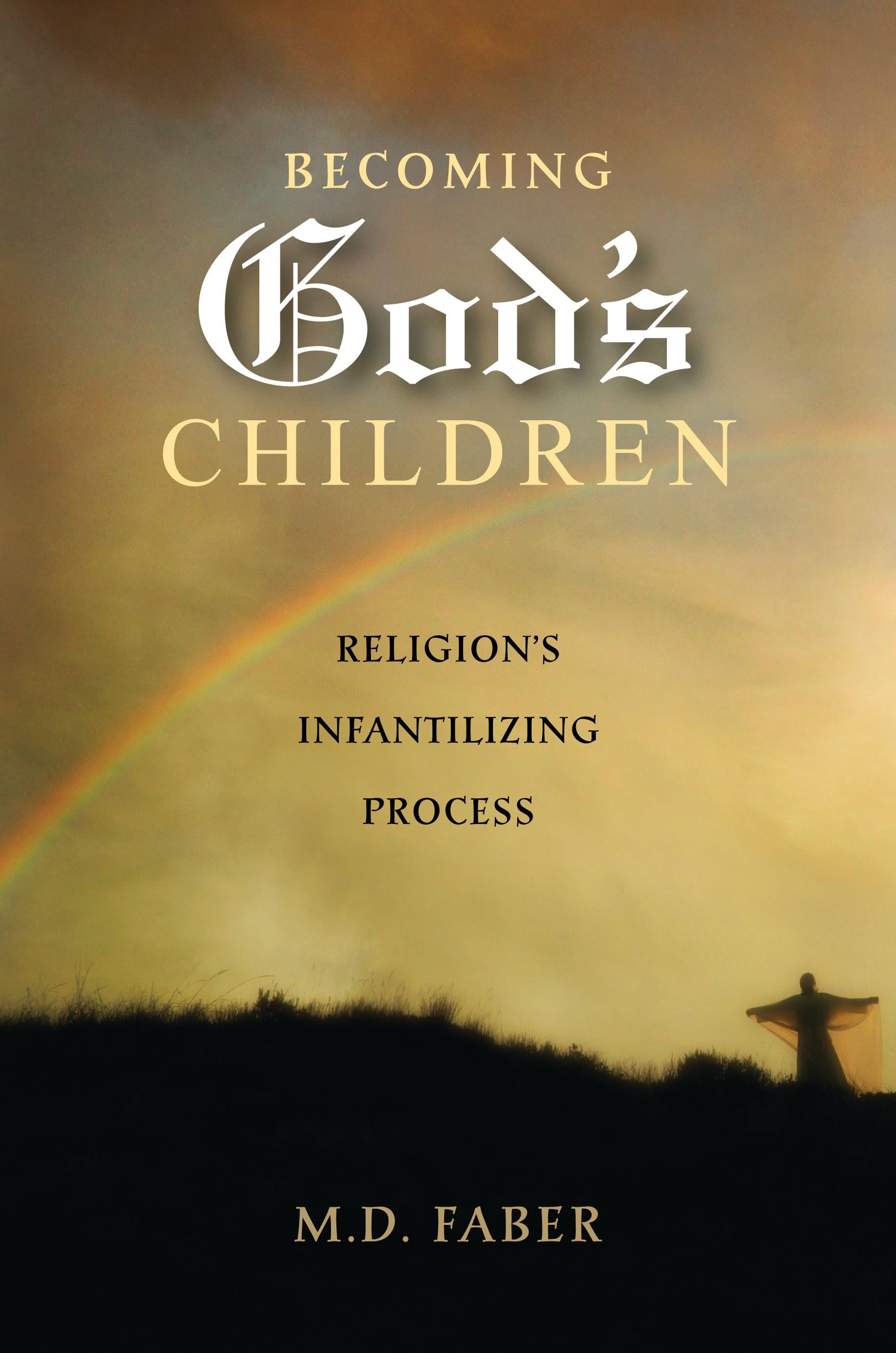
M. D. Faber presents a meticulous, unremitting inquiry into the psychological direction from which Christianity derives its power to attract and hold its followers.
Becoming God's Children: Religion's Infantilizing Process was written, its author says, to alert readers to the role of infantilization in the Judeo-Christian tradition generally and in Christian rite and doctrine particularly. Because religion plays such an important role in so may lives, it is essential to understand the underlying appeal and significance of religious doctrines.
To that end, Becoming God's Children offers the reader an in-depth account of human neuropsychological development, while unearthing the Judeo-Christian tradition's explicitly infantilizing doctrines and rites. This compelling perspective on the nature and meaning of religious behavior explores issues such as: to what extent religious faith is grounded in the mnemonic recesses of the worshipper's brain, whether believers are predisposed by both genetic makeup and environmental prompting to adhere to their religious convictions, and why some individuals are powerfully drawn to religious faith while others reject it. A final chapter explores the implications of religion's infantilizing process vis-a-vis the role of reason and scientific thought in the contemporary world.
Becoming God's Children: Religion's Infantilizing Process was written, its author says, to alert readers to the role of infantilization in the Judeo-Christian tradition generally and in Christian rite and doctrine particularly. Because religion plays such an important role in so may lives, it is essential to understand the underlying appeal and significance of religious doctrines.
To that end, Becoming God's Children offers the reader an in-depth account of human neuropsychological development, while unearthing the Judeo-Christian tradition's explicitly infantilizing doctrines and rites. This compelling perspective on the nature and meaning of religious behavior explores issues such as: to what extent religious faith is grounded in the mnemonic recesses of the worshipper's brain, whether believers are predisposed by both genetic makeup and environmental prompting to adhere to their religious convictions, and why some individuals are powerfully drawn to religious faith while others reject it. A final chapter explores the implications of religion's infantilizing process vis-a-vis the role of reason and scientific thought in the contemporary world.
Pages: 224
Category: Religion & Teologi
e-ISBN: 9798216052104
Shipping weight: 1.2 kg
Ships in: 1-2 days
Pay easily by card, Klarna, Apple Pay or Google Pay. Not happy? You always have a 14-day money-back guarantee. Read more in our terms. If you have any questions, email us at hello@memmo.org.
Memmo makes studying easier – wherever you are in the world. We bring your course books and smart study tools together in one place: summaries, quizzes, podcasts and flashcards. Plus Ted, your study buddy who answers anything you wonder. Over 50,000 students already study here – built to help you learn faster and stress less.