
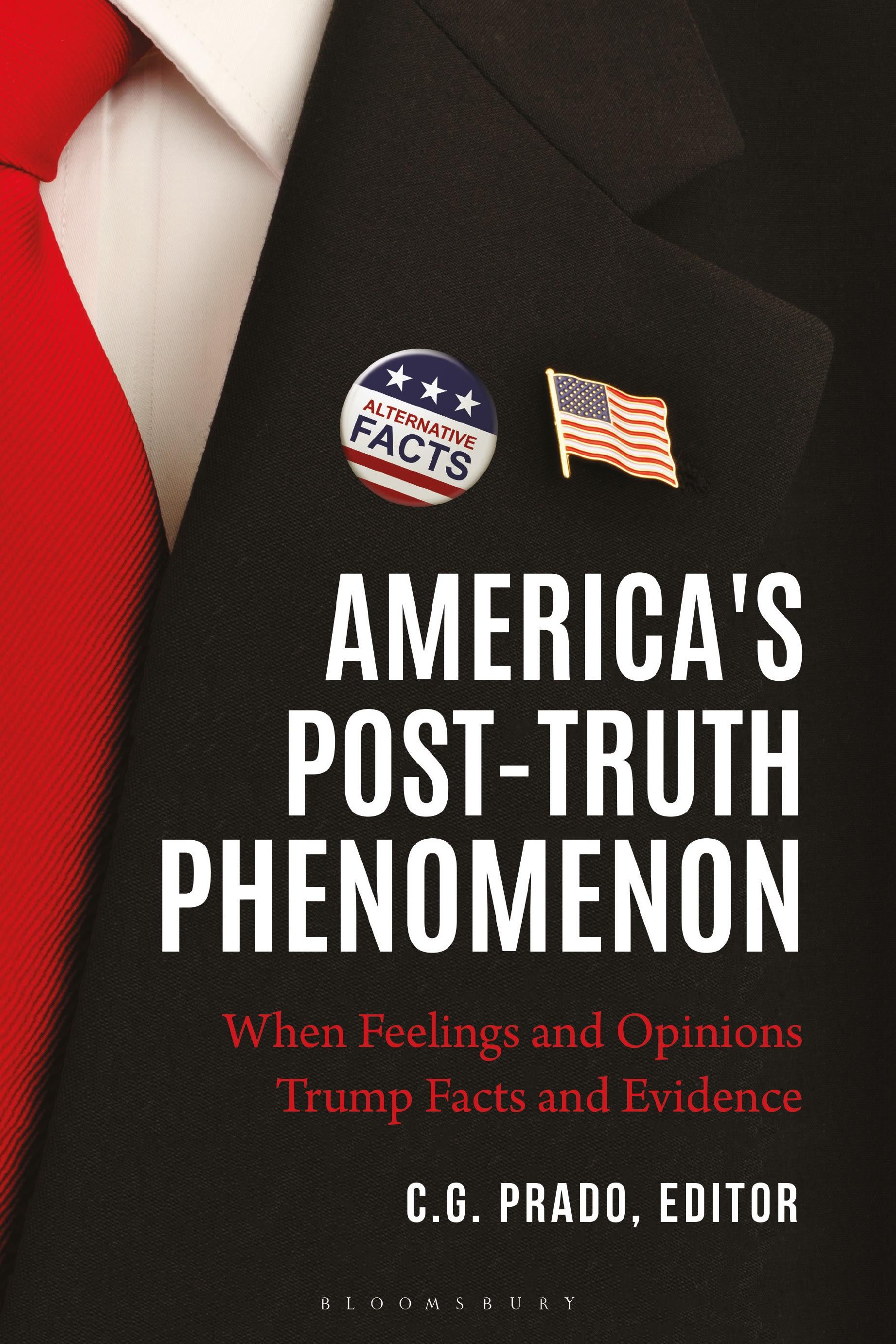
This book presents absorbing and critical expert perspectives on the post-truth phenomenon that has infiltrated the U.S. political system, media, and populace.
Deception in politics is nothing new, but the quantity of unsubstantiated statements in America today is unprecedented. False notions, fake news, "alternative facts," and opinions are being pitched from sources including the White House, Congress, and the American population via Twitter, Facebook, and online news sites as well as print, television, and radio. Such a widespread spectacle instantly captures the attention of people nationwide, but disagreement has the nation almost bordering on civil war over the definition of "the truth" and what this book calls "post-truth."
In this text, C.G. Prado and expert contributors present varied perspectives on post-truth, its authoritarian implications for the nation, and how we can approach information to differentiate between truth and post-truth. Speaking to general readers, students, and scholars alike, chapters include text on the historical and social events that initiated and developed post-truth and why some people are more prone than others to accept and perpetuate post-truth. They also discuss post-truth as a threat to democracy.
Deception in politics is nothing new, but the quantity of unsubstantiated statements in America today is unprecedented. False notions, fake news, "alternative facts," and opinions are being pitched from sources including the White House, Congress, and the American population via Twitter, Facebook, and online news sites as well as print, television, and radio. Such a widespread spectacle instantly captures the attention of people nationwide, but disagreement has the nation almost bordering on civil war over the definition of "the truth" and what this book calls "post-truth."
In this text, C.G. Prado and expert contributors present varied perspectives on post-truth, its authoritarian implications for the nation, and how we can approach information to differentiate between truth and post-truth. Speaking to general readers, students, and scholars alike, chapters include text on the historical and social events that initiated and developed post-truth and why some people are more prone than others to accept and perpetuate post-truth. They also discuss post-truth as a threat to democracy.
Pay easily by card, Klarna, Apple Pay or Google Pay. Not happy? You always have a 14-day money-back guarantee. Read more in our terms. If you have any questions, email us at hello@memmo.org.
Memmo makes studying easier – wherever you are in the world. We bring your course books and smart study tools together in one place: summaries, quizzes, podcasts and flashcards. Plus Ted, your study buddy who answers anything you wonder. Over 50,000 students already study here – built to help you learn faster and stress less.