
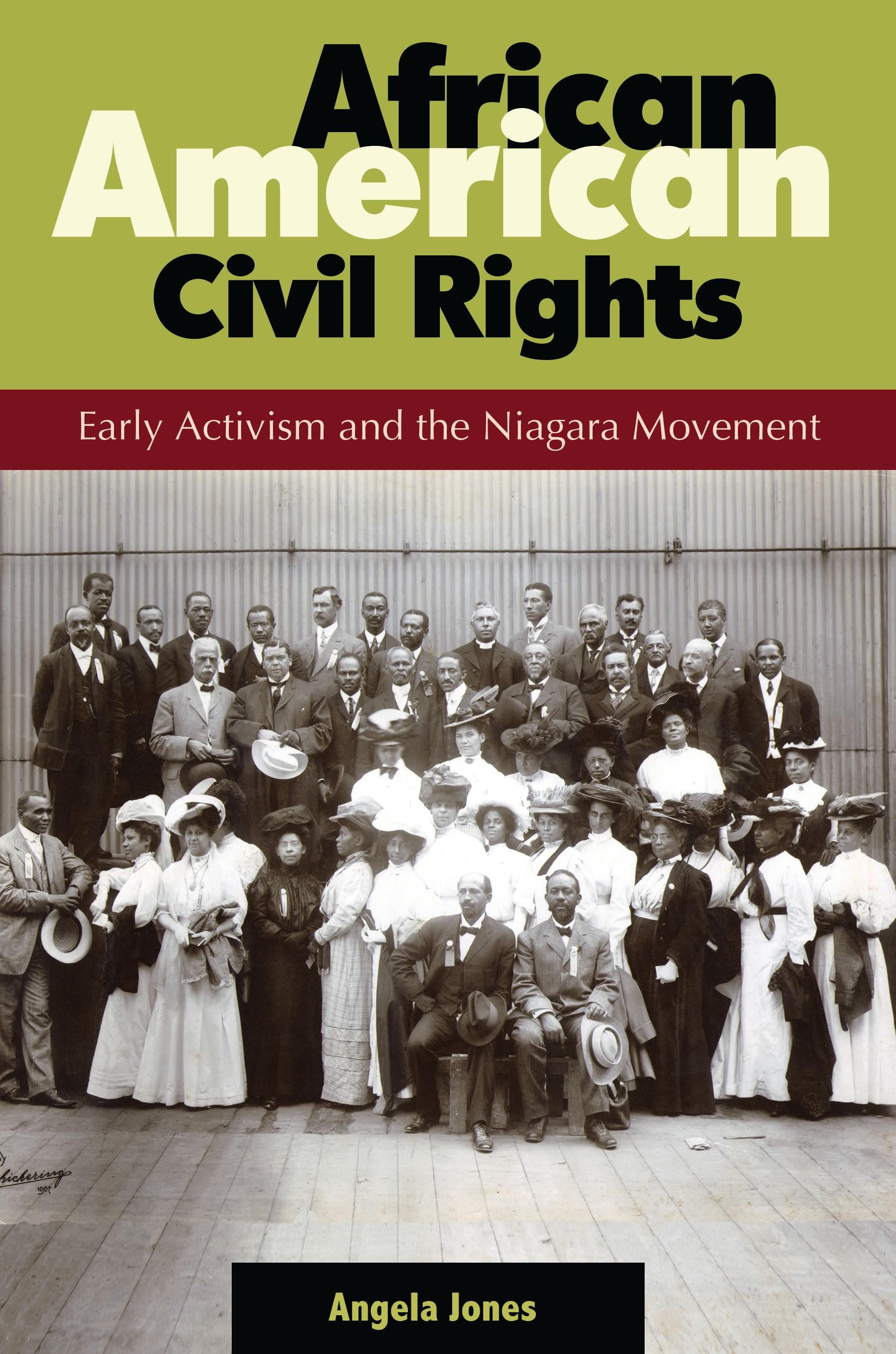
This fresh and invigorating analysis illuminates the often-neglected story of early African American civil rights activism.
African American Civil Rights: Early Activism and the Niagara Movement tells a fascinating story, one that is too frequently marginalized. Offering the first full-length, comprehensive sociological analysis of the Niagara Movement, which existed between 1905 and 1910, the book demonstrates that, although short-lived, the movement was far from a failure. Rather, it made the need to annihilate Jim Crow and address the atrocities caused by slavery publicly visible, creating a foundation for more widely celebrated mid-20th-century achievements.
This unique study focuses on what author Angela Jones terms black publics, groups of concerned citizens—men and women, alike—who met to shift public opinion. The book explores their pivotal role in initiating the civil rights movement, specifically examining secular organizations, intellectual circles, the secular black press, black honor societies and clubs, and prestigious educational networks. All of these, Jones convincingly demonstrates, were seminal to the development of civil rights protest in the early 20th century.
African American Civil Rights: Early Activism and the Niagara Movement tells a fascinating story, one that is too frequently marginalized. Offering the first full-length, comprehensive sociological analysis of the Niagara Movement, which existed between 1905 and 1910, the book demonstrates that, although short-lived, the movement was far from a failure. Rather, it made the need to annihilate Jim Crow and address the atrocities caused by slavery publicly visible, creating a foundation for more widely celebrated mid-20th-century achievements.
This unique study focuses on what author Angela Jones terms black publics, groups of concerned citizens—men and women, alike—who met to shift public opinion. The book explores their pivotal role in initiating the civil rights movement, specifically examining secular organizations, intellectual circles, the secular black press, black honor societies and clubs, and prestigious educational networks. All of these, Jones convincingly demonstrates, were seminal to the development of civil rights protest in the early 20th century.
Pay easily by card, Klarna, Apple Pay or Google Pay. Not happy? You always have a 14-day money-back guarantee. Read more in our terms. If you have any questions, email us at hello@memmo.org.
Memmo makes studying easier – wherever you are in the world. We bring your course books and smart study tools together in one place: summaries, quizzes, podcasts and flashcards. Plus Ted, your study buddy who answers anything you wonder. Over 50,000 students already study here – built to help you learn faster and stress less.