
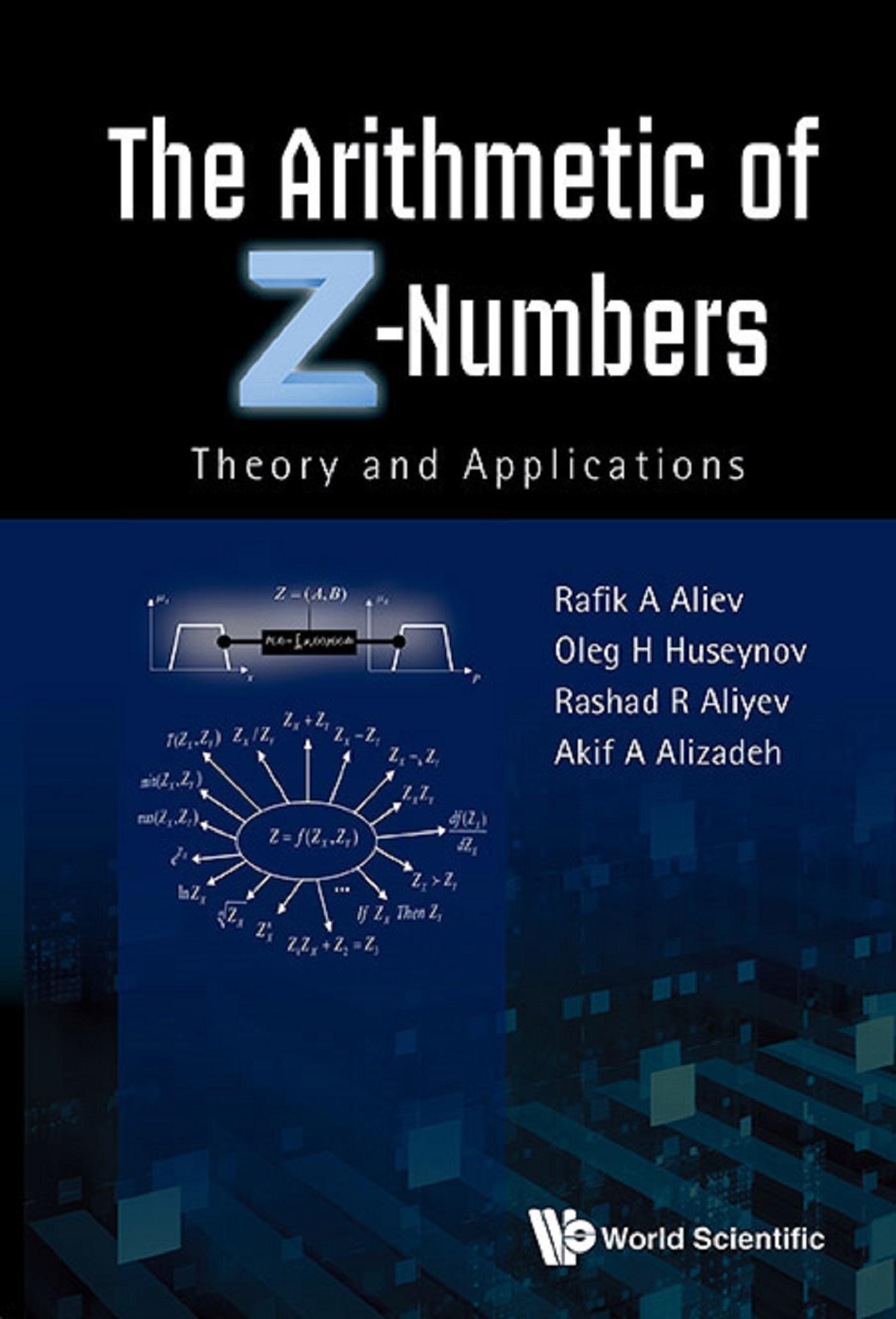
Real-world information is imperfect and is usually described in natural language (NL). Moreover, this information is often partially reliable and a degree of reliability is also expressed in NL. In view of this, the concept of a Z-number is a more adequate concept for the description of real-world information. The main critical problem that naturally arises in processing Z-numbers-based information is the computation with Z-numbers. Nowadays, there is no arithmetic of Z-numbers suggested in existing literature.This book is the first to present a comprehensive and self-contained theory of Z-arithmetic and its applications. Many of the concepts and techniques described in the book, with carefully worked-out examples, are original and appear in the literature for the first time.The book will be helpful for professionals, academics, managers and graduate students in fuzzy logic, decision sciences, artificial intelligence, mathematical economics, and computational economics.
Pay easily by card, Klarna, Apple Pay or Google Pay. Not happy? You always have a 14-day money-back guarantee. Read more in our terms. If you have any questions, email us at hello@memmo.org.
Memmo makes studying easier – wherever you are in the world. We bring your course books and smart study tools together in one place: summaries, quizzes, podcasts and flashcards. Plus Ted, your study buddy who answers anything you wonder. Over 75,000 students already study here – built to help you learn faster and stress less.
You might also like
Buy the book0