
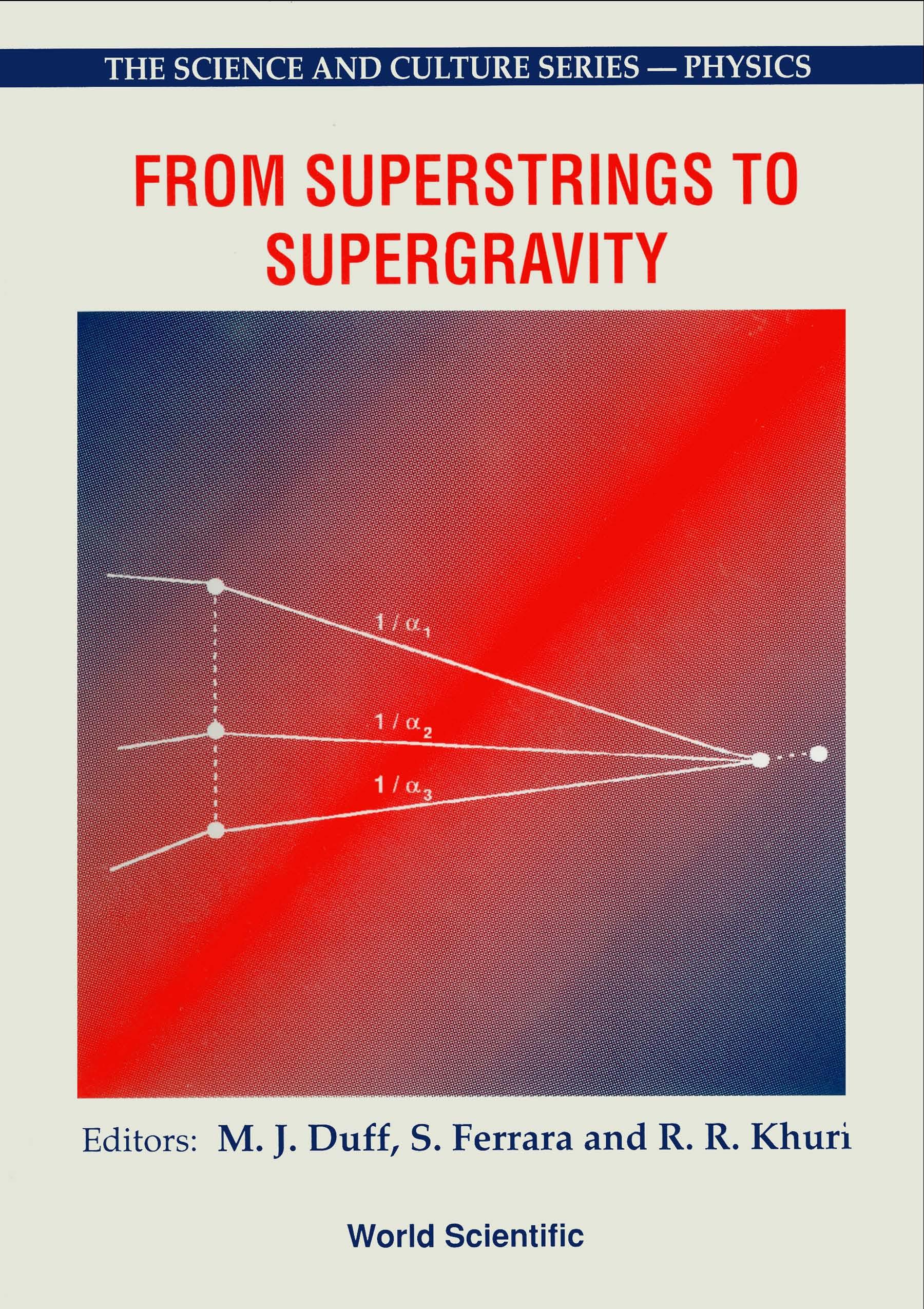
The success of the standard model in explaining low energy (≈ 100GeV) physics within the framework of spontaneously broken Yang-Mills theory has given physicists the hope that the Einstein dream of a unified theory of fundamental interactions might be achieved using geometrical methods of local symmetry principles supplemented by consistency requirements such as renormalization, unitarity and, most crucially, compatibility with present low energy data.Merging these principles with the quantum-mechanical notions of spin and statistics led physicists further to develop new theories in the last fifteen years for which the gauge symmetry principle is extended to incorporate supersymmetry and relativistic extended objects - the most famous example being superstrings propagating in curved space-time and having supergravity as their effective field theory.The proceedings represent the latest highlights in the field reported on by active researchers working in this particular area in addition to discussions on future perspectives.
Pay easily by card, Klarna, Apple Pay or Google Pay. Not happy? You always have a 14-day money-back guarantee. Read more in our terms. If you have any questions, email us at hello@memmo.org.
Memmo makes studying easier – wherever you are in the world. We bring your course books and smart study tools together in one place: summaries, quizzes, podcasts and flashcards. Plus Ted, your study buddy who answers anything you wonder. Over 50,000 students already study here – built to help you learn faster and stress less.
You might also like
Buy the book0