
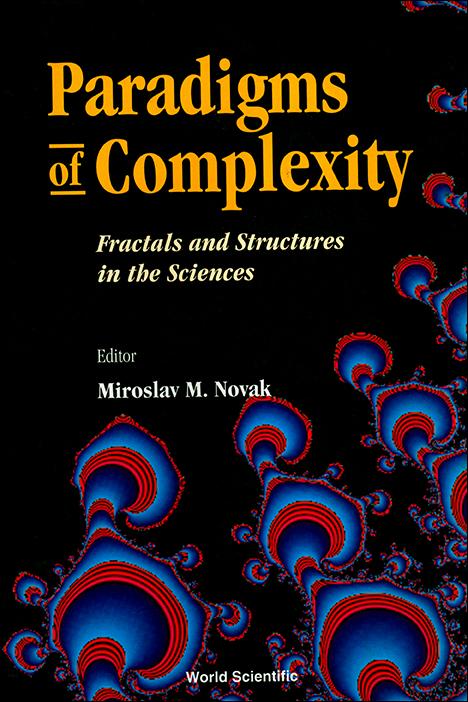
Every reader will find something of interest in this book — from superdiffusion of the ocean surface to fetal heartbeats, from solar wind to the wearing-out of tools, from radioactive contamination to texture analysis, from image rendering to neural developments. The all-pervading link connecting these disparate disciplines is the realization that a linear approach to the majority of natural processes is at best only an approximation that can frequently be downright misleading. Consequently, the rise of what is broadly called the theory of complexity has gained tremendous momentum in the last decade or two. This modern approach aims at, and frequently succeeds in, correctly explaining many natural processes.The papers in this volume are based on presentations of the sixth international conference exploring the above-mentioned issues. These conferences are now regular and well established among the nonlinear series of conferences. This conference series is organized in different geographical regions, to encourage international collaboration. Among the distinguishing features of the series is its multidisciplinary nature, which has been growing steadily.
Pay easily by card, Klarna, Apple Pay or Google Pay. Not happy? You always have a 14-day money-back guarantee. Read more in our terms. If you have any questions, email us at hello@memmo.org.
Memmo makes studying easier – wherever you are in the world. We bring your course books and smart study tools together in one place: summaries, quizzes, podcasts and flashcards. Plus Ted, your study buddy who answers anything you wonder. Over 50,000 students already study here – built to help you learn faster and stress less.
You might also like
Buy the book0