
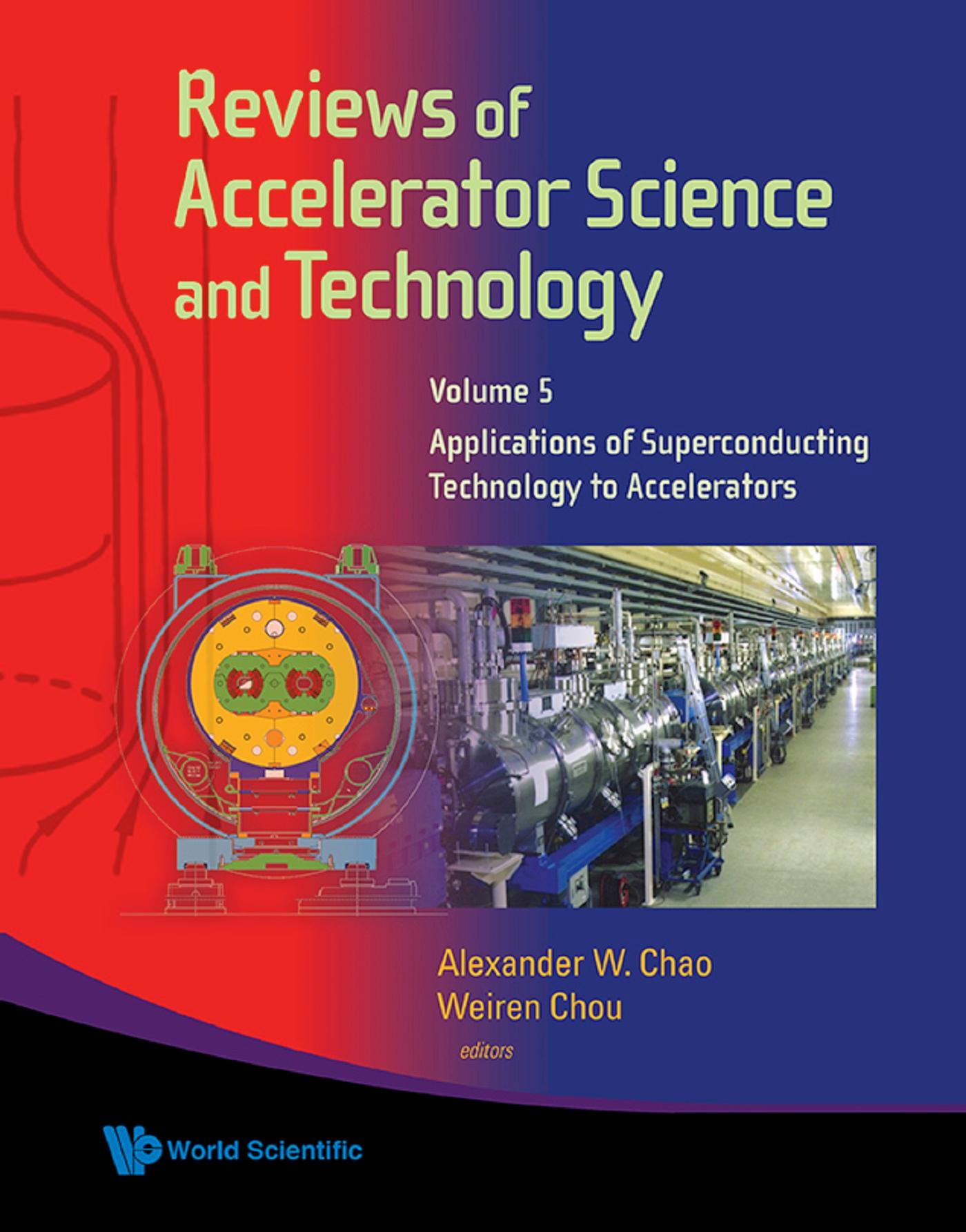
Over the past several decades major advances in accelerators have resulted from breakthroughs in accelerator science and accelerator technology. After the introduction of a new accelerator physics concept or the implementation of a new technology, a leap in accelerator performance followed. A well-known representation of these advances is the Livingston chart, which shows an exponential growth of accelerator performance over the last seven or eight decades. One of the breakthrough accelerator technologies that support this exponential growth is superconducting technology. Recognizing this major technological advance, we dedicate Volume 5 of Reviews of Accelerator Science and Technology (RAST) to superconducting technology and its applications.Two major applications are superconducting magnets (SC magnets) and superconducting radio-frequency (SRF) cavities. SC magnets provide much higher magnetic field than their room-temperature counterparts, thus allowing accelerators to reach higher energies with comparable size as well as much reduced power consumption. SRF technology allows field energy storage for continuous wave applications and energy recovery, in addition to the advantage of tremendous power savings and better particle beam quality. In this volume, we describe both technologies and their applications. We also include discussion of the associated R&D in superconducting materials and the future prospects for these technologies.
Pay easily by card, Klarna, Apple Pay or Google Pay. Not happy? You always have a 14-day money-back guarantee. Read more in our terms. If you have any questions, email us at hello@memmo.org.
Memmo makes studying easier – wherever you are in the world. We bring your course books and smart study tools together in one place: summaries, quizzes, podcasts and flashcards. Plus Ted, your study buddy who answers anything you wonder. Over 50,000 students already study here – built to help you learn faster and stress less.
You might also like
Buy the book0