
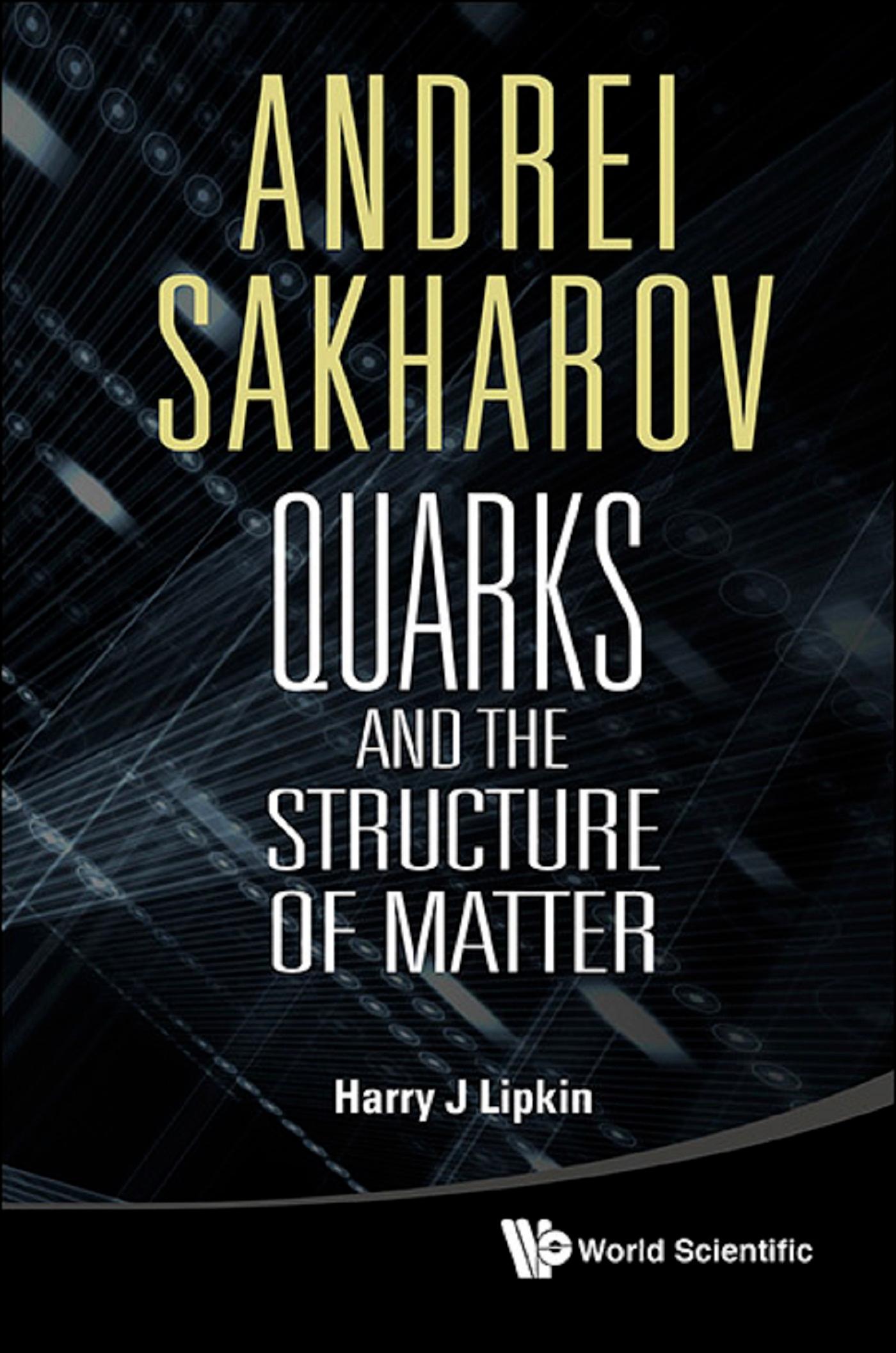
In 1980, the Cold War was in full bloom. The Soviet father of the hydrogen bomb and Nobel Peace Laureate turned dissident physicist, Andrei Sakharov, had been exiled to Gorki by the Soviet authorities. Called “senile” and under heavy Soviet censorship, Sakharov had a hard time communicating his latest scientific results to readers outside of Gorki. Some smuggled results reached the author, Harry Lipkin, who then realized that he and Sakharov were both pioneers in a new revolution on our understanding the structure of matter. The particle physics community had resisted their revelation that the accepted building blocks of matter, neutrons and protons, were composed of tinier building blocks called “quarks”. What followed was a remarkable adventure in which both scientists fought the Soviet censors, smuggling postcards and manuscripts into and out of the Soviet Union while trying to further scientific progress.Against a backdrop of politics, suppression, and genius, Andrei Sakharov, Quarks and the Structure of Matter details the search for the basic building blocks of matter, the path to understanding the forces that bind them together, and how scientific knowledge is learned, communicated and passed from one group of investigators to another.
Pay easily by card, Klarna, Apple Pay or Google Pay. Not happy? You always have a 14-day money-back guarantee. Read more in our terms. If you have any questions, email us at hello@memmo.org.
Memmo makes studying easier – wherever you are in the world. We bring your course books and smart study tools together in one place: summaries, quizzes, podcasts and flashcards. Plus Ted, your study buddy who answers anything you wonder. Over 50,000 students already study here – built to help you learn faster and stress less.
You might also like
Buy the book0