
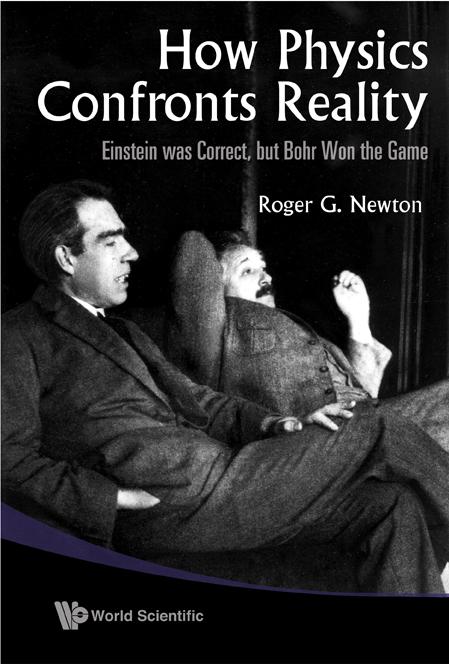
This book recalls, for nonscientific readers, the history of quantum mechanics, the main points of its interpretation, and Einstein's objections to it, together with the responses engendered by his arguments. Most popular discussions on the strange aspects of quantum mechanics ignore the fundamental fact that Einstein was correct in his insistence that the theory does not directly describe reality. While that fact does not remove the theory's counterintuitive features, it casts them in a different light.Context is provided by following the history of two central aspects of physics: the elucidation of the basic structure of the world made up of particles, and the explanation, as well as the prediction, of how objects move. This history, prior to quantum mechanics, reveals that whereas theories and discoveries concerning the structure of nature became increasingly realistic, the laws of motion, even as they became more powerful, became more and more abstract and remote from intuitive notions of reality. Newton's laws of motion gained their abstract power by sacrificing direct and intuitive contact with real experience. Arriving 250 years after Newton, the break with a direct description of reality embodied in quantum mechanics was nevertheless profound.
Pay easily by card, Klarna, Apple Pay or Google Pay. Not happy? You always have a 14-day money-back guarantee. Read more in our terms. If you have any questions, email us at hello@memmo.org.
Memmo makes studying easier – wherever you are in the world. We bring your course books and smart study tools together in one place: summaries, quizzes, podcasts and flashcards. Plus Ted, your study buddy who answers anything you wonder. Over 50,000 students already study here – built to help you learn faster and stress less.
You might also like
Buy the book0