
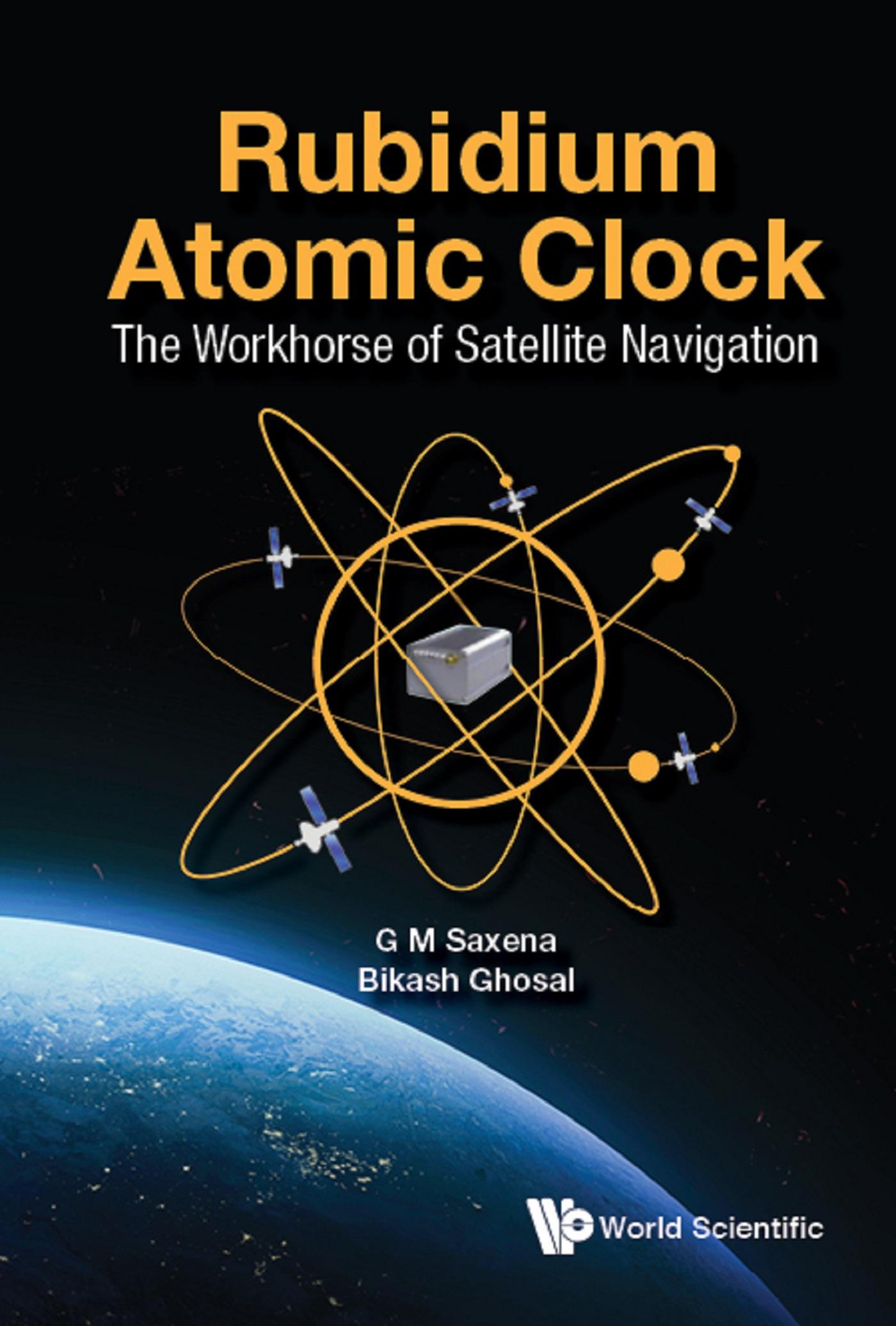
The Rubidium atomic clock (Rb) is the workhorse of the satellite navigation systems of which GPS is now a household name. With just the tap of a few keys, drivers and navigators all over the world are able to reach their destination effortlessly with high precision. People are now curious to know what makes this possible. Hence, the need to explain in simplistic terms the Rb atomic clocks that are onboard these satellite navigation systems because no good satellite navigation system is possible without such clocks.But why only Rb atomic clocks when far better and exotic atomic clocks are available? The reasons are as simple as that they are slim, low in weight, easy to build inexpensively. They are also used in numerous military applications such as secure communications, electronic warfare, command and control, telemetry and navigation. Besides, they are used in the measurements of the variation in fine-structure constant, test of relativity, precise spectroscopy and scientific research.This book details the history of time keeping and the chronological development of the Rb atomic clocks, with special focus on the physics Package that accounts for the actual performance of the clock. Researchers and industrialists will find that producing such clocks is relatively simple and inexpensive.
Pay easily by card, Klarna, Apple Pay or Google Pay. Not happy? You always have a 14-day money-back guarantee. Read more in our terms. If you have any questions, email us at hello@memmo.org.
Memmo makes studying easier – wherever you are in the world. We bring your course books and smart study tools together in one place: summaries, quizzes, podcasts and flashcards. Plus Ted, your study buddy who answers anything you wonder. Over 50,000 students already study here – built to help you learn faster and stress less.
You might also like
Buy the book0