
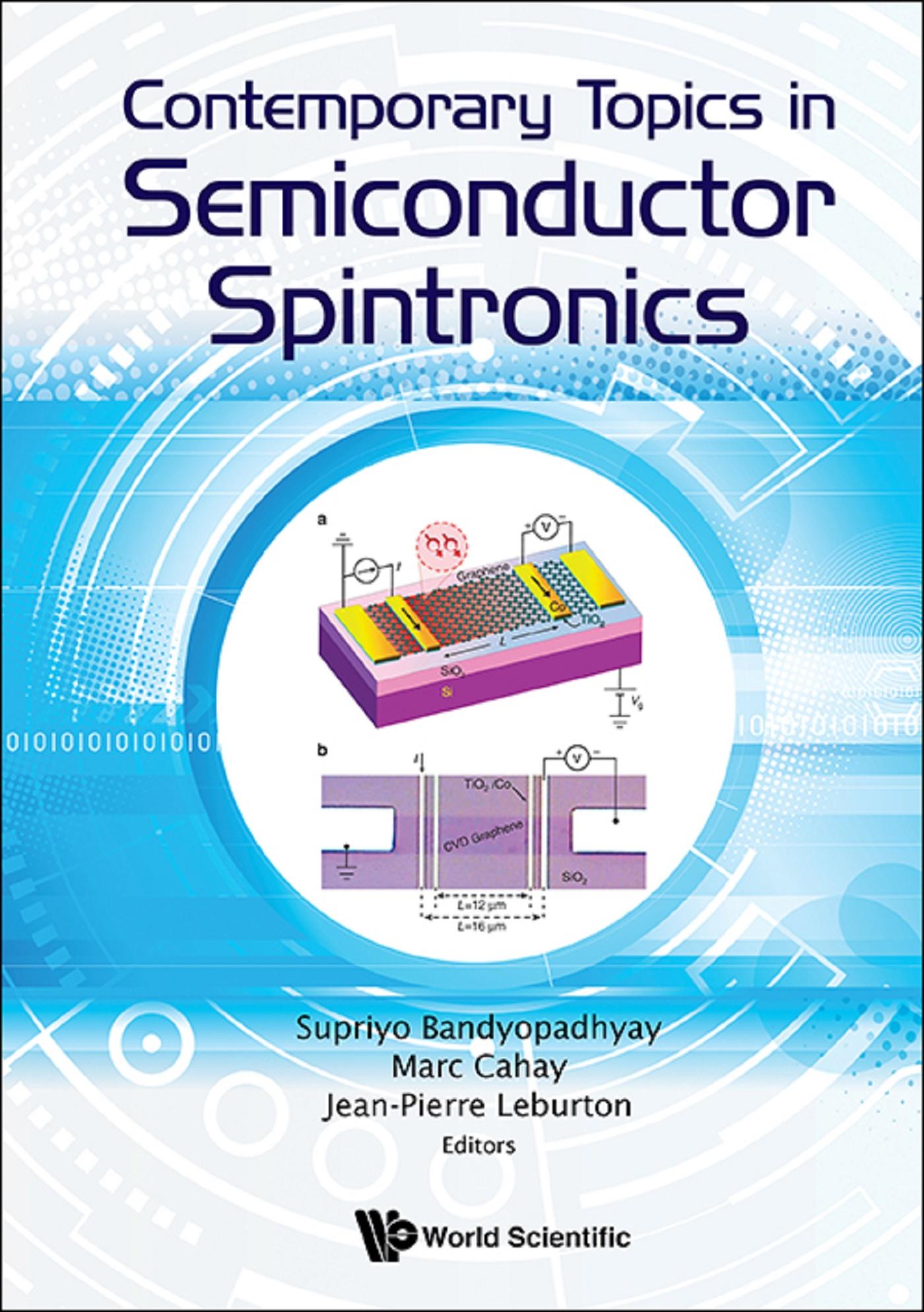
The success of spintronics — the science and technology of storing, processing, sensing and communicating information using the quantum mechanical spin degree of freedom of an electron — is critically dependent on the ability to inject, detect and manipulate spins in semiconductors either by incorporating ferromagnetic materials into device architectures or by using external magnetic and electric fields. In spintronics, the controlled generation and manipulation of spin polarization in nonmagnetic semiconductors is required for the design of spin-sensitive devices ranging from spin-qubit hosts, quantum memory and gates, quantum teleporters, spin polarizers and filters, spin-field-effect-transistors, and spin-splitters, among others. One of the major challenges of spintronics is to control the creation, manipulation, and detection of spin polarized currents by purely electrical means. Another challenge is to preserve spin coherence in a device for the longest time or over the longest distance in order to produce reliable spintronic processors. These challenges remain daunting, but some progress has been made recently in overcoming some of the steepest obstacles. This book covers some of the recent advances in the field of spintronics using semiconductors.
Pay easily by card, Klarna, Apple Pay or Google Pay. Not happy? You always have a 14-day money-back guarantee. Read more in our terms. If you have any questions, email us at hello@memmo.org.
Memmo makes studying easier – wherever you are in the world. We bring your course books and smart study tools together in one place: summaries, quizzes, podcasts and flashcards. Plus Ted, your study buddy who answers anything you wonder. Over 50,000 students already study here – built to help you learn faster and stress less.
You might also like
Buy the book0