
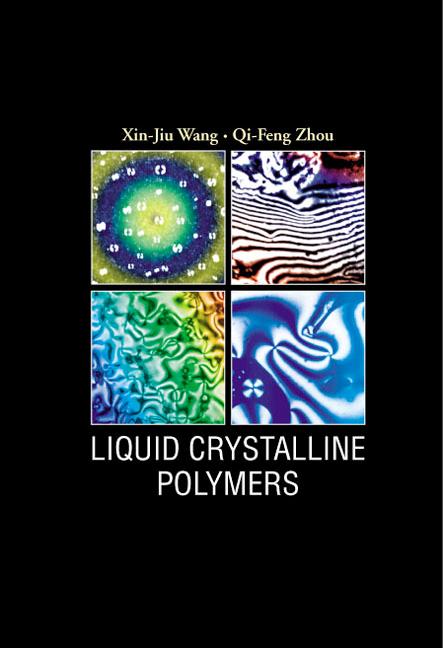
This textbook consists of six chapters. The first chapter highlights the concept of liquid crystals, including chemical structure, phase classification, defect and texture, and continuum theory. It has been carefully written to meet the needs of readers who do not specialize in liquid crystals. The second chapter is related to the theoretical description of liquid crystalline polymers, networks, and gels, which deals with subjects such as the formation of liquid crystallinity in the polymer system, the phase transition and phase diagram, the molecular weight effect, chain conformation, physics properties, etc. In Chapter 3, the molecular engineering of liquid crystalline polymers is introduced. The molecular composition and the molecular weight play essential roles in the molecular design, which are reviewed in detail. In addition, some unusual liquid crystalline polymers are discussed. Chapter 4 is devoted to the phase identification of liquid crystalline polymers. The techniques involved cover polarizing microscopy, thermal analysis, X-ray diffraction, and other areas. Chapters 5 and 6 summarize the properties and applications of liquid crystalline polymers: Chapter 5 deals mainly with mechanical performance in fiber and composites; Chapter 6 presents the elasticity, viscosity and rheology of liquid crystalline polymers, as well as other important properties.
Pay easily by card, Klarna, Apple Pay or Google Pay. Not happy? You always have a 14-day money-back guarantee. Read more in our terms. If you have any questions, email us at hello@memmo.org.
Memmo makes studying easier – wherever you are in the world. We bring your course books and smart study tools together in one place: summaries, quizzes, podcasts and flashcards. Plus Ted, your study buddy who answers anything you wonder. Over 75,000 students already study here – built to help you learn faster and stress less.