
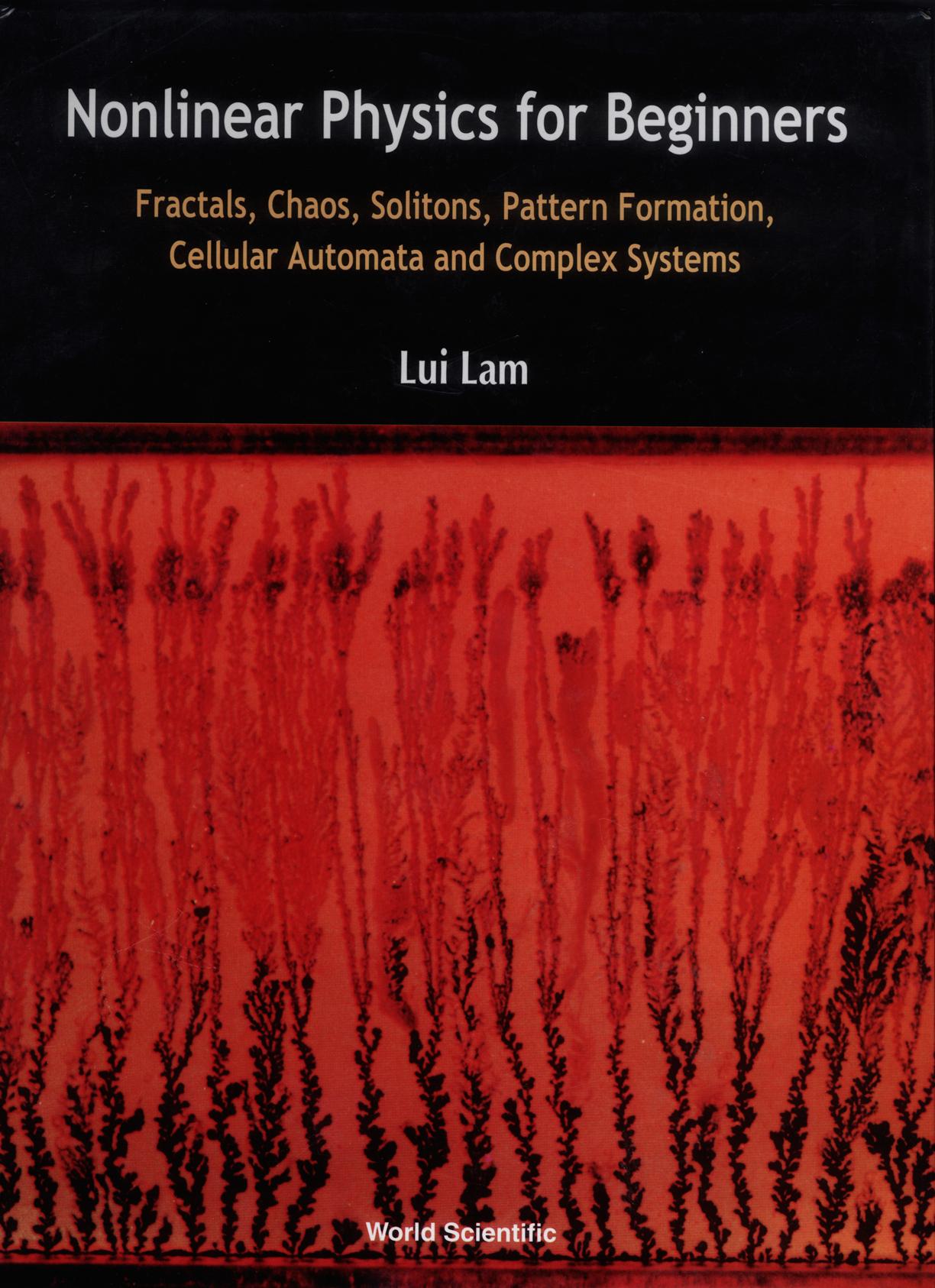
Almost all real systems are nonlinear. For a nonlinear system the superposition principle breaks down: The system's response is not proportional to the stimulus it receives; the whole is more than the sum of its parts. The three parts of this book contains the basics of nonlinear science, with applications in physics. Part I contains an overview of fractals, chaos, solitons, pattern formation, cellular automata and complex systems. In Part II, 14 reviews and essays by pioneers, as well as 10 research articles are reprinted. Part III collects 17 students projects, with computer algorithms for simulation models included.
The book can be used for self-study, as a textbook for a one-semester course, or as supplement to other courses in linear or nonlinear systems. The reader should have some knowledge in introductory college physics. No mathematics beyond calculus and no computer literacy are assumed.
Pay easily by card, Klarna, Apple Pay or Google Pay. Not happy? You always have a 14-day money-back guarantee. Read more in our terms. If you have any questions, email us at hello@memmo.org.
Memmo makes studying easier – wherever you are in the world. We bring your course books and smart study tools together in one place: summaries, quizzes, podcasts and flashcards. Plus Ted, your study buddy who answers anything you wonder. Over 50,000 students already study here – built to help you learn faster and stress less.