
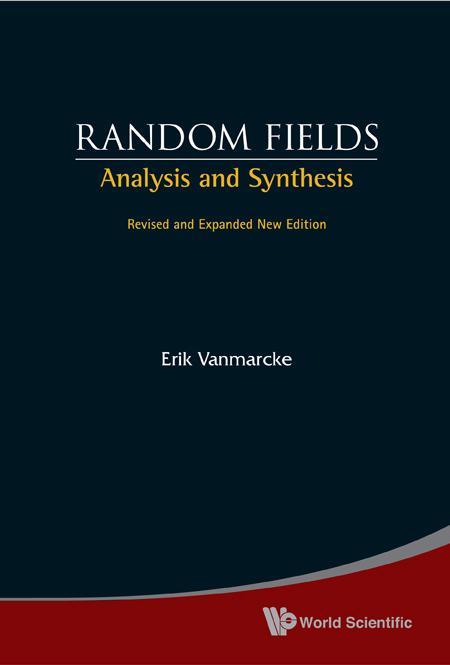
Random variation is a fact of life that provides substance to a wide range of problems in the sciences, engineering, and economics. There is a growing need in diverse disciplines to model complex patterns of variation and interdependence using random fields, as both deterministic treatment and conventional statistics are often insufficient. An ideal random field model will capture key features of complex random phenomena in terms of a minimum number of physically meaningful and experimentally accessible parameters. This volume, a revised and expanded edition of an acclaimed book first published by the M I T Press, offers a synthesis of methods to describe and analyze and, where appropriate, predict and control random fields. There is much new material, covering both theory and applications, notably on a class of probability distributions derived from quantum mechanics, relevant to stochastic modeling in fields such as cosmology, biology and system reliability, and on discrete-unit or agent-based random processes.
Random Fields is self-contained and unified in presentation. The first edition was found, in a review in EOS (American Geophysical Union) to be “both technically interesting and a pleasure to read … the presentation is clear and the book should be useful to almost anyone who uses random processes to solve problems in engineering or science … and (there is) continued emphasis on describing the mathematics in physical terms.”
Pay easily by card, Klarna, Apple Pay or Google Pay. Not happy? You always have a 14-day money-back guarantee. Read more in our terms. If you have any questions, email us at hello@memmo.org.
Memmo makes studying easier – wherever you are in the world. We bring your course books and smart study tools together in one place: summaries, quizzes, podcasts and flashcards. Plus Ted, your study buddy who answers anything you wonder. Over 75,000 students already study here – built to help you learn faster and stress less.