
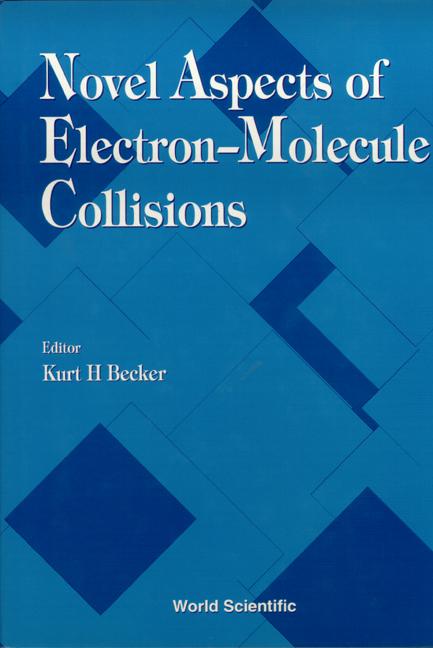
Electron-molecule collisions have been studied extensively by both experimentalists and theorists since the early years of this century. The past ten years have seen a remarkable renaissance in experimental and theoretical activities in the study of electron collision processes with molecules. This was stimulated (i) by the advent of more powerful computers and new theoretical concepts that allow the study of complex targets and collision processes with a multitude of final states (such as ionization and dissociation) and the investigation of collisions with oriented and aligned molecules, (ii) by advances in experimental instrumentation (improved electron spectrometers, intense sources of spin-polarized electrons, position-sensitive detectors), and (iii) by the discovery of a new class of species, e.g. large stable carbon clusters or “fullerenes”, which opened up a new field of theoretical and experimental research in which collisions involving fullerenes as targets or as projectiles constitute an important component. Lastly, electron-molecule collisions are a key component in efforts to characterize, diagnose, describe and model the complex processes in low-temperature plasmas, which are of ever-increasing importance in many rapidly developing high-tech applications (such as the fabrication of microelectronic chips), in the controlled deposition of thin films and in plasma-assisted surface-modification processes. This book covers the activities in all those areas.
Pay easily by card, Klarna, Apple Pay or Google Pay. Not happy? You always have a 14-day money-back guarantee. Read more in our terms. If you have any questions, email us at hello@memmo.org.
Memmo makes studying easier – wherever you are in the world. We bring your course books and smart study tools together in one place: summaries, quizzes, podcasts and flashcards. Plus Ted, your study buddy who answers anything you wonder. Over 50,000 students already study here – built to help you learn faster and stress less.
You might also like
Buy the book0