
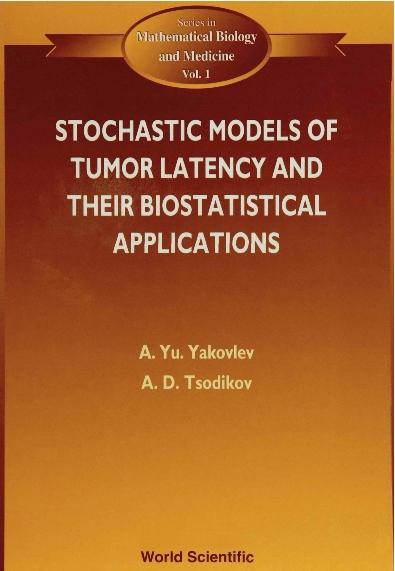
This research monograph discusses newly developed mathematical models and methods that provide biologically meaningful inferences from data on cancer latency produced by follow-up and discrete surveillance studies. Methods for designing optimal strategies of cancer surveillance are systematically presented for the first time in this book. It offers new approaches to the stochastic description of tumor latency, employs biologically-based models for making statistical inference from data on tumor recurrence and also discusses methods of statistical analysis of data resulting from discrete surveillance strategies. It also offers insight into the role of prognostic factors based on the interpretation of their effects in terms of parameters endowed with biological meaning, as well as methods for designing optimal schedules of cancer screening and surveillance. Last but not least, it discusses survival models allowing for cure rates and the choice of optimal treatment based on covariate information, and presents numerous examples of real data analysis.
Pay easily by card, Klarna, Apple Pay or Google Pay. Not happy? You always have a 14-day money-back guarantee. Read more in our terms. If you have any questions, email us at hello@memmo.org.
Memmo makes studying easier – wherever you are in the world. We bring your course books and smart study tools together in one place: summaries, quizzes, podcasts and flashcards. Plus Ted, your study buddy who answers anything you wonder. Over 75,000 students already study here – built to help you learn faster and stress less.
You might also like
Buy the book0