
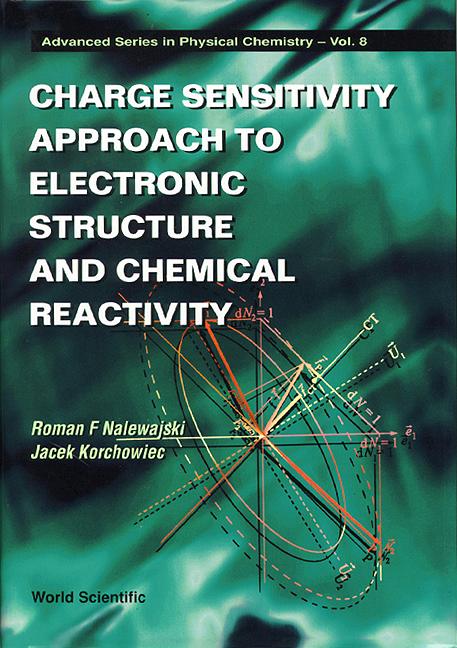
Charge Sensitivity Analysis (CSA) represents a linear response treatment of molecular systems, based upon the chemical potential and hardness/softness concepts established within density functional theory (DFT). Recently, it has been shown to provide an attractive framework leading to novel approaches to chemical reactivity of open systems. The monograph presents the conceptual and methodological basis of the CSA covering its DFT roots, alternative resolutions and representations, sensitivities of closed and open atomic and molecular systems, charge stability criteria and relaxational effects due to the system environment, and alternative collective modes of charge redistribution. The CSA interaction energy in donor-acceptor systems is investigated in the second-order approximation. In particular, the relaxational contributions to the chemical potential, hardness and softness quantities are examined and their physical implications are summarized. The charge sensitivity concepts for reactive systems include: one- and two-reactant reactivity criteria, mapping relations between equilibrium displacements in the electron population and nuclear position spaces, the intersecting state model of charge transfer processes, intermediate hardness decoupling modes and the minimum energy coordinates, all defined in the electron population space. The conceptual developments are illustrated using recent qualitative and quantitative results on selected molecules, catalytic clusters and chemisorption systems. The CSA description is shown to connect directly to intuitive concepts and rules of chemistry, e.g., those related to interactions between hard/soft acids and bases.
Pay easily by card, Klarna, Apple Pay or Google Pay. Not happy? You always have a 14-day money-back guarantee. Read more in our terms. If you have any questions, email us at hello@memmo.org.
Memmo makes studying easier – wherever you are in the world. We bring your course books and smart study tools together in one place: summaries, quizzes, podcasts and flashcards. Plus Ted, your study buddy who answers anything you wonder. Over 75,000 students already study here – built to help you learn faster and stress less.
You might also like
Buy the book0